
Lübeck: World Heritage, historic lanes and Hanseatic history
Lübeck is ideal for a cultural stay where the medieval street plan, Brick Gothic architecture and Hanseatic history are all within walking distance. The Old Town Island has been a UNESCO World Heritage Site since 1987; the seaside resort of Travemünde adds a distinct Baltic Sea destination to the Hanseatic city.
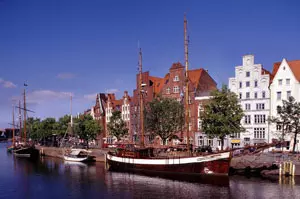 Museumshafen
Photo: © Torsten Krüger/www.luebeck-tourismus.de
Lübeck at a glance
- Surrounded by water, the Old Town Island forms Lübeck’s historic centre and has been part of the UNESCO World Heritage Site since 1987.
- The Holsten Gate, Town Hall, St Mary’s Church and the Hospital of the Holy Spirit are highlights of a first walking tour.
- Historic lanes and courtyards of charitable foundations lie behind the Old Town’s main streets. Many are open to the public, though some are private or locked at night.
- The European Hansemuseum tells the story of the Hanseatic League through Lübeck and international trading centres; a visit to the permanent exhibition takes around 90 minutes on average.
- Marzipan is a regional sweet with a long history of trade and production. The Niederegger Museum at the Town Hall Market explores the company’s history and the making of marzipan.
A route through the Old Town Island
For a first walk, start at the Holsten Gate and follow Holstenstraße to the Town Hall Market. The Town Hall and St Mary’s Church stand close together here; the Hospital of the Holy Spirit and the lanes are just a short detour away. This route takes you through the historic centre, not the whole of the modern city: UNESCO status applies to the medieval core of the Old Town Island and its outstanding heritage sites.
The medieval residential lanes and courtyards of charitable foundations offer a glimpse of the densely built Old Town beyond its grand façades. A tourist overview counts around 90 of the approximately 180 complexes that originally existed. Many passageways are freely accessible and worth a daytime detour; some entrance gates are locked at night, while other courtyards are private. Treat these areas as residential neighbourhoods and observe any signs. The Füchtingshof on Glockengießerstraße is a notable example, showing how these complexes are laid out around courtyards and small houses.
For a rainy day or a deeper dive, visit the European Hansemuseum on Untertrave. Its permanent exhibition traces the history of the Hanseatic League through trading centres such as Novgorod, Bruges, London and Bergen. It provides a thematic complement to the churches and Brick Gothic façades in the centre; the average museum visit is listed as around 90 minutes. The current opening hours are daily from 10 am to 6 pm, except on 24 December. If you have a long journey to get there, the museum recommends booking a ticket for your preferred time for the permanent exhibition.
Brick, trade and marzipan
The Holsten Gate and Town Hall evoke Lübeck’s past as a trading city, but the city is more than just two landmarks. St Mary’s Church, the gabled houses and historic courtyards illustrate how trade, churches and residential neighbourhoods developed on the island. If you want to learn more about the city’s commercial connections, head to the Hansemuseum after your Old Town walk; if you’d rather explore its culinary side, Café Niederegger by the Town Hall has a marzipan museum on the second floor.
Local sources trace marzipan’s journey from trading and production centres in the Orient to Lübeck, and document the development of local confectioners and companies. The Niederegger Museum tells the company’s history and explains how marzipan is made, as well as displaying life-size marzipan figures. It is on Breite Straße, directly opposite the Town Hall, making it easy to include in your walking tour. The city is closely associated with this sweet treat, which is made from almonds and sugar.
Combining Lübeck with the Baltic coast
For a stay that combines World Heritage and seaside resort, set aside one day to explore the Old Town Island and another for Travemünde. Here, the beach promenade, ferry port and Priwall peninsula meet. Travemünde is administratively part of Lübeck, but has the character of a seaside resort in its own right. In Timmendorfer Strand and Niendorf, the piers, spa gardens and fishing harbour are the main attractions; Scharbeutz connects its promenade with Haffkrug and the surrounding countryside.
If you want to be within easy reach of the Old Town’s sights, choose accommodation on the island or close to the city centre. If you’re also planning beach days, consider staying in the seaside resort of Travemünde as a second base. The accommodation in Lübeck and the Holstein excursion guide can help you plan city visits and coastal trips together.
Frequently asked questions about Lübeck
Is all of Lübeck part of the UNESCO World Heritage Site?
No. World Heritage status applies to the medieval centre on the Old Town Island. Surrounded by water, this area includes the historic street and neighbourhood layout as well as important Brick Gothic buildings.
How much time should I allow for the Old Town?
You can plan a half-day walk to the Holsten Gate, Town Hall, St Mary’s Church and the historic lanes. Allow around 90 minutes more for the permanent exhibition at the European Hansemuseum; visiting additional courtyards, churches or museums will take longer.
Where can I find out more about Lübeck marzipan?
The Niederegger Museum is on the second floor of the café on Breite Straße, opposite the Town Hall. It explores the company’s history and the making of marzipan, and is easy to combine with a tour of the Old Town.
