Holstein
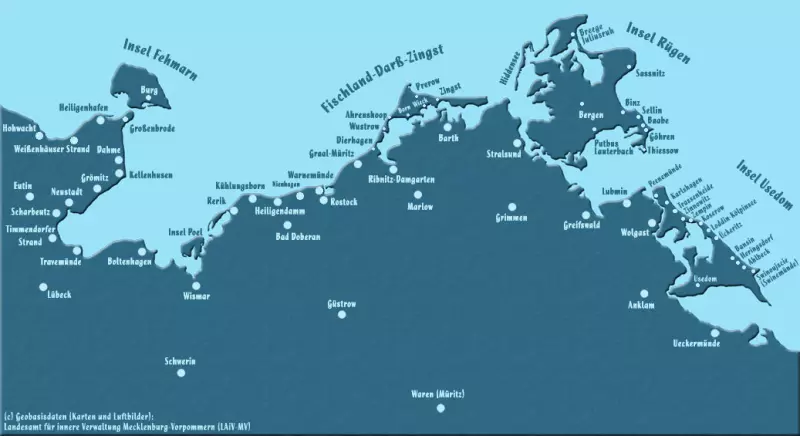
The historic Duchy of Holstein stretches between the North Sea and the Baltic Sea. The River Eider and the eastern section of the Kiel Canal form Holstein’s northern border with neighboring Schleswig. The Elbe forms Holstein’s southern border, though not including Hamburg. Like Schleswig, Holstein serves as a link to Denmark. Until the Second Schleswig War of 1864, Holstein was under Danish sovereignty. It then became a Prussian province, where Kiel gradually developed into the main city and today’s state capital of Schleswig-Holstein. Tourism began to develop as early as that time. The largely unbroken coastline is dominated by the Wagrien Peninsula and the island of Fehmarn. From the entrance to Kiel Fjord, via Hohwacht Bay and the offshore island of Fehmarn, and continuing along Lübeck Bay to the outskirts of the old Hanseatic city of Lübeck, numerous seaside resorts soon sprang up one after another. Today, Holstein’s Baltic coast is one of the most popular holiday destinations on the entire Baltic Sea.
Halfway between Kiel and Lübeck, not far from the Baltic coast, lies Holstein Switzerland. The Holstein coast and its hinterland are among the best-developed and most popular excursion regions in the entire Baltic Sea area. The triangle formed by Kiel, Lübeck and Fehmarn is also home to numerous sights from the region’s rich cultural history.
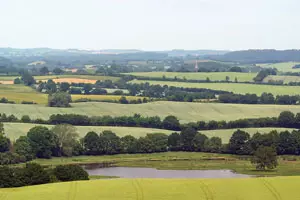 Holsteinische Schweiz
Photo: © Tourismus-Service Malente
Holsteinische Schweiz
Photo: © Tourismus-Service Malente