
Nehatu: Manor History and River Nature
Accommodation in Nehatu
Nehatu brings together the history of a former manor, river nature, and specific information about health running and health walking. If you are weighing local history, nature, and physical activity when choosing a destination, these themes offer different points of interest: the manor provides a historical connection, the Pirita River Habitat Area draws attention to protected habitats, and a shared-use path is associated with health activities.
Manor History and Village Chronicle
The centre of the former Nehatu Manor is located by the Pirita River. The manor existed at least as early as the 14th century; a mill was already mentioned alongside Nehatu Manor in 1394. For the chronology, it is important to note that 1394 is the year the mill was mentioned, not the year the manor was founded. The manor’s history dates back at least to the 14th century. This distinguishes two time periods: the manor’s early history and the specific historical reference to the mill.
The main building of Nehatu Manor has been preserved and is used as a residence. This adds a built heritage connection to the manor’s historical development, and its current residential use is also part of how the manor is understood.
The Nehatu village school was founded in 1867. The building’s foundations and part of a large apple orchard remain at the former school site. The founding year and the surviving traces offer different points of reference: the date places the school in time, while the foundations and orchard remnants are linked to its former location. Another landmark in the village’s history is the Nehatu Educational Society, which was active in the village from 1936 to 1940. Its clearly defined period adds a later cultural connection to the school’s founding.
River Nature and Protected Habitats
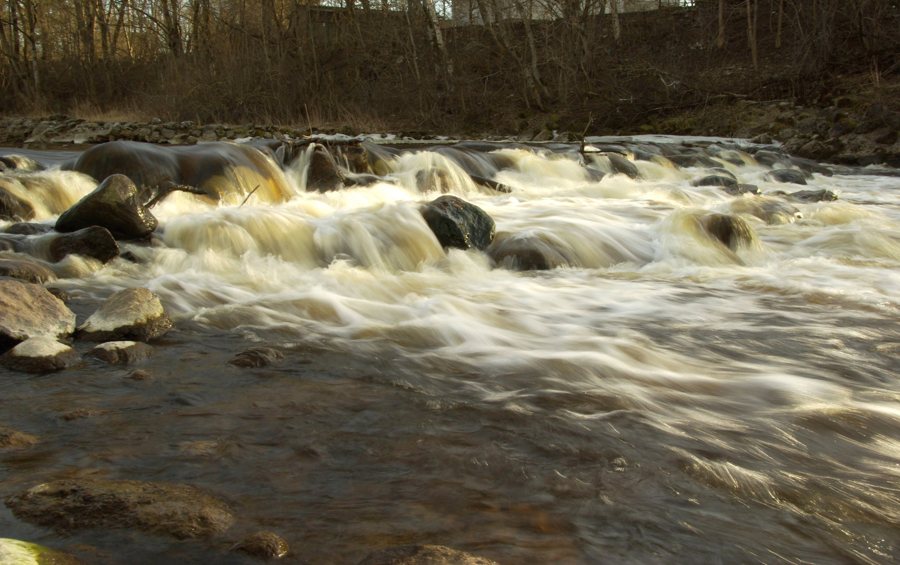
The Pirita River Habitat Area in Nehatu protects the habitats of the spined loach Cobitis taenia, the bullhead Cottus gobio, the river lamprey Lampetra fluviatilis, and the salmon Salmo salar. These four species give the nature theme a clear focus: protecting their habitats. For nature enthusiasts, this is a distinct point of interest alongside the manor’s history and the village chronicle. If you compare destinations by interest, this nature conservation connection can be clearly distinguished from the historical points of interest.
Paths and Physical Activity
As of 4 March 2026, the Nehatu–Loo–Lagedi shared-use path is used for health running and health walking. These two types of use give active travellers specific guidance: both running and walking are mentioned.
As of 2021, the Nehatu shared-use path was listed as a 223-metre-long walking and cycling path near Nehatu and Iru. The path descriptions emphasise different aspects: the Nehatu–Loo–Lagedi shared-use path focuses on shared use and activities, while the Nehatu shared-use path is described in terms of its length and its designation as a walking and cycling path. This gives you a specific distinction for planning your trip: one description covers types of use, while the other gives the path’s length.
For a broader travel overview: Nehatu.

