
Vasalemma: rural cycling route and limestone history
Accommodation in Vasalemma
Vasalemma combines a rural cycling route with a local history linked to limestone quarrying. For travelers interested in active days or industrial history, this offers two concrete ways to explore the area: the route through the village and the long history of stone quarrying.
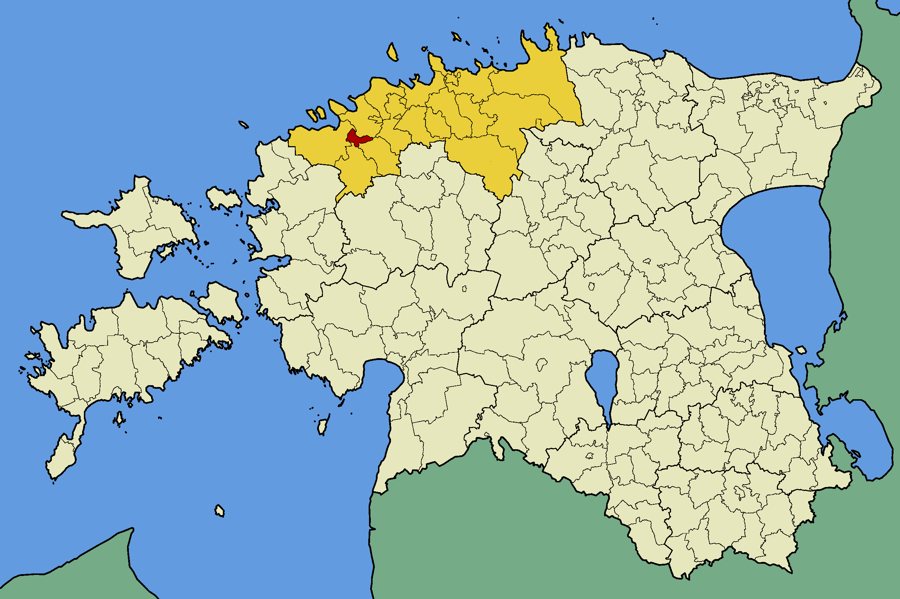
Cycling route through Vasalemma
The “Kloogaranna–Ohtu–Vasalemma–Kloogaranna” cycling route passes through Vasalemma alevik and runs mostly along village roads. Its description recommends it to people who enjoy rural tranquility. This gives the route a clear profile to help you decide: its rural character is not just a general impression of the area, but an explicitly stated feature of the route. It also passes a rallycross track built on the site of a former limestone quarry. The route therefore brings together a rural feel and a connection to the area’s former quarrying activity. This may make it particularly appealing if local industrial history is part of what you enjoy about a trip, alongside cycling.
Limestone and local history
The settlement of Vasalemma grew particularly during the 1920s in connection with the stone industry. This is a different point in time from the history of limestone quarrying: limestone has been quarried in Vasalemma and its immediate surroundings since at least the 13th century; 1878 is considered the beginning of industrial limestone production in the Vasalemma area. These three details illuminate different periods: the early history of quarrying, the start of the industrial period, and the later growth of the settlement. The dates are therefore not interchangeable; together, they show that limestone quarrying, industrial production, and settlement development are distinct but related parts of local history.
The Vasalemma limestone quarry is one of the largest limestone quarries in the region. This classification answers a different question from the dates: it places the quarry in a regional comparison of size, while the historical details explain the timeline. For travelers interested in industrial history, the two perspectives complement each other—the regional scale of the named quarry and the long period during which limestone quarrying and the stone industry have been associated with Vasalemma. This makes it possible to understand the subject both geographically and historically, without conflating the different dates into a single event.
A name that can be misleading
The name of the spoil heap behind the Vasalemma limestone quarry is also worth noting: it is mistakenly called “Rummu tuhamägi” in everyday speech. If you want to identify the local landmark, locate the hill behind the Vasalemma limestone quarry and avoid treating the commonly used expression as its correct name. The distinction is useful because a description of the hill’s location and a misleading colloquial name are used side by side.
You can choose what to explore based on your interests: the cycling route appeals to travelers who want to focus on rural village roads and cycling, while the details about limestone quarrying reveal a longer local and industrial history. Both perspectives come together in Vasalemma, but they answer different questions when planning a trip: What kind of route are you looking for, and what makes the destination interesting? If you want to combine both, Vasalemma offers a thematic starting point.
Discover more destinations: Rummu.
Go to the main travel overview: Vasalemma.

