
Tapa: Railway Station History and Churches
Accommodation in Tapa
Visitors choosing Tapa as a destination can start by exploring its railway station and local history. The railway station was built in 1870 and is located at a railway junction with connections towards Tallinn, Tartu, and Narva. This offers two perspectives on the place: the station as a building and its role in the rail network. Churches, a park name, and a historical nickname open up further, distinct topics.
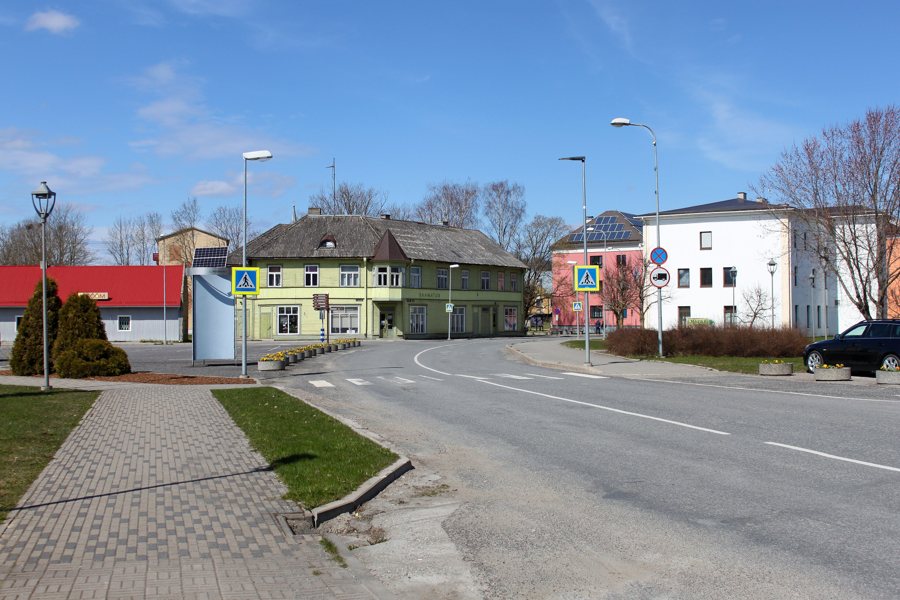 File:Tapa town central square 1 May 2020.jpg
Photo: Liilia Moroz via Wikimedia Commons, CC-BY-SA-4.0
Railway Station and Architectural History
The main building of the railway station is designated as a cultural monument. In addition, Tapa railway station is the only surviving specially designed stone railway station from the period before the First World War. These statements emphasize different aspects: the designation applies to the main building, while the statement about survival refers to the type of railway station. Together with the year of construction, 1870, they provide a more precisely defined architectural history than simply mentioning an old railway station. Anyone interested in architectural and transport history will find a clear focus here: the year of construction, cultural monument status, and its distinctive preservation each describe a separate aspect.
Congregations and Church Chronology
The ecclesiastical history can also be traced through different dates. The Tapa St. John the Baptist Apostolic Orthodox Congregation was founded on 2 January 1895. Tapa’s independent Lutheran congregation was established in 1921. The building of Tapa St. James’s Church was completed in 1932, during a difficult economic period, using donations collected for the purpose. The years therefore represent different stages: the founding of two congregations and the completion of a church building. For travelers interested in local history, this distinction is more informative than a single date that combines all three developments.
Kirikupark and Place Names
Kirikupark, also called Vabaduse väljak, covers 0.83 hectares and is named after Tapa St. James’s Church. Both names refer to the same park; the area indicates its size, while its name links it to the history of the church. This means the theme appears not only in the founding of congregations and architectural history, but also in the name of a park. If you come across Vabaduse väljak in descriptions, you can identify it as Kirikupark.
An Active Diversion
Tapa pumptrack rada adds a sporting focus. Tapa pumptrack rada is a paved course about 110 meters long, with small rises and jumps (as of 12 February 2024). Skateboards, bicycles, and roller skates are listed as suitable uses. This makes the pump track quite different from the historic buildings: here, the focus is on wheeled equipment, the surface, and obstacles. If you include the track in your travel plans, check local conditions before your trip.
A Historical Nickname
Tapa’s economic and culinary culture is also part of its local history. Because of Tapa’s significant meat and sausage industry and the high quality of Tapa sausages, the town of that time acquired the nickname “Vorstilinn.” The name points to a historical economic significance and adds another perspective on the place alongside its architectural and ecclesiastical history.
For the broader travel overview: Tapa.

