
Vainupea: River Mouth, Coast and Chapel
Accommodation in Vainupea
Vainupea lies on the eastern border of Lahemaa National Park, at the mouth of the Vainupea River. If you are weighing up coastal scenery, trails and local history when planning a trip to the Baltic Sea, you will find several specific points of interest here. The village can be viewed through more than just its beach: the river mouth, a coastal trail, a suspension bridge and the chapel offer different perspectives on a stay.
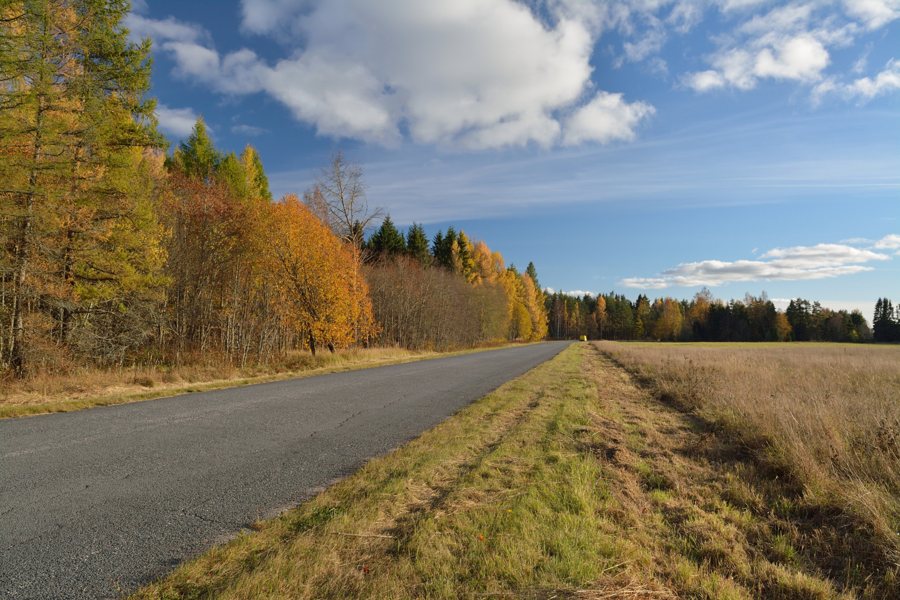 File:Võle-Vainupea-Kunda kõrvalmaantee Võle külas.jpg
Photo: Ivar Leidus via Wikimedia Commons, CC-BY-SA-3.0
Coast, Trails and Nature Destinations
At the Vainupea rest area, a boardwalk leads from the car park to the coast. At the end of the village is Suureliiva Beach, with a stony shore. This gives you a concrete distinction to consider when choosing where to go: a rest area with access to the shore or a named beach with a stony shoreline. These are two distinct coastal options if you do not want to judge Vainupea solely by a general idea of a beach holiday.
From the village centre, the Kaarna erratic boulder, also known as Pruudikivi, can be reached via the coastal trail towards the mouth of the Vainupea River. The two names are useful when searching for this natural attraction: Kaarna and Pruudikivi refer to the same erratic boulder. Vainupea’s historic suspension bridge can be crossed safely year-round. This is a clear, practical detail for choosing when to travel. A 13-kilometre section of the Forest Trail hiking route runs from Vainupea to Oandu. This gives you a specific distance and destination for a longer hike, which you can consider as a separate part of your travel plans. The bridge offers a safe crossing year-round, while the hike is a 13-kilometre route to Oandu.
Summer Resort and Chapel History
Vainupea has been known as a summer resort since the 19th century. The beach at Vainupea was first mentioned in writing in 1499. These dates raise two different questions: since when has the village been known as a summer resort, and when was the beach first mentioned in writing? Together, they give you a historical perspective alongside the natural appeal when choosing a coastal destination.
The Vainupea Chapel was first mentioned in 1741. The Vainupea St John’s Chapel was built in the historicist style from 1888 to 1893. The dates refer to different details: its first mention and its period of construction. Historicist refers to an architectural style that draws on earlier historical styles. For visitors interested in architecture, the construction period provides a useful point of reference. Concerts and church services are held at Vainupea Chapel. If you would like to combine your visit with a concert, check the schedule in advance.
Choosing Vainupea as a Destination
The beach and river mouth offer a connection to the landscape, the chapel to architectural history and events, and the hike to Oandu to a longer tour. Decide on your focus before searching; that way, you will be looking for more than an abstract Baltic Sea destination—you will be searching for the kind of experience you want from your trip.
For the broader travel overview: Vainupea.

