
Dobbin-Linstow: Nature Park and Local History
Accommodation in Dobbin-Linstow
The locality of Dobbin, in the municipality of Dobbin-Linstow, lies in the Nossentiner/Schwinzer Heide Nature Park. In Linstow, the museum and local history provide a different focus. Visitors wishing to plan their stay around nature and architectural history, or the history of migration and settlement, can explore these topics in their respective localities. The names Dobbin and Linstow can also help you find your way when looking for accommodation within the municipality: the village church and Shepherd’s Beech are in Dobbin, while the museum and manor house are in Linstow.
Dobbin: Village Church, Altar and Shepherd’s Beech
Dobbin Village Church is a brick building made of large, old church bricks, dating from the early 14th century. Inside is an approximately 500-year-old Marian altar. The building and altar thus offer two different historical points of reference: the church’s early architectural history and a work of art created later. Together, they give the locality its own cultural and historical character.
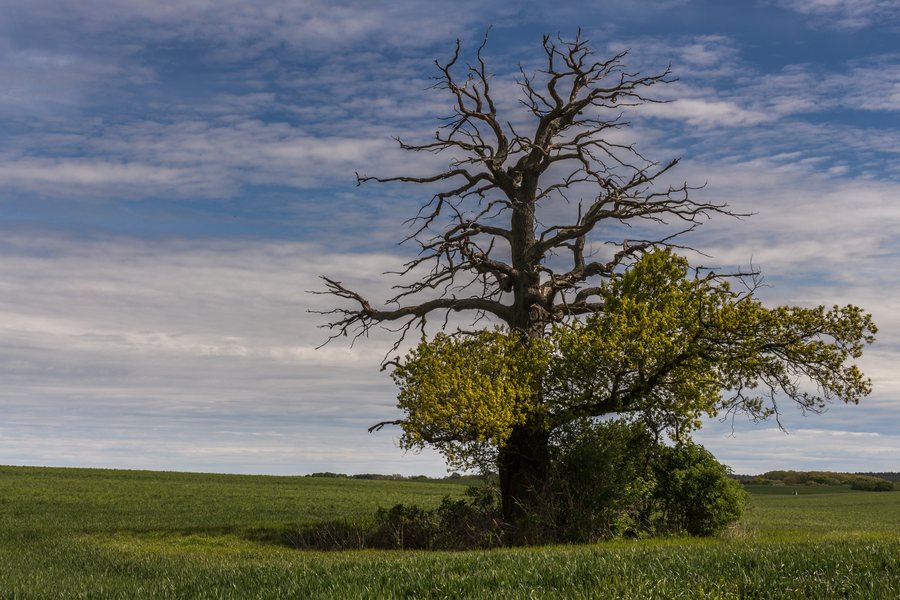
The Shepherd’s Beech stands near Dobbin. Its trunk circumference is 840 centimetres, making it one of the largest beeches in Europe. As a pasture beech, it is a remnant of woodland grazing, which was practised around Dobbin until the beginning of the 20th century. This example brings together a tree’s present-day recorded circumference and a historical form of land use.
Linstow: Museum and Local History
The centrepiece of the Volhynian Resettlers Museum is a former farmhouse built in 1947 by a family of Volhynian Germans using traditional timber construction. In 1990, the municipality began reconstructing the house, which was at risk of demolition. Since 1993, it has been a place for learning, remembrance and encounters on the subject of flight and expulsion. The building’s history and its later role as a place of learning and remembrance stand side by side.
Through its varied exhibits of everyday culture, the museum illustrates the migration, settlement and way of life of the Volhynian Germans. Another point of reference in local history is the former Linstow estate: from 1945, around 40 families settled there, and their history continues to shape the village today.
The museum offers educational and cultural activities for children, young people and adults. These include guided tours, project days, lectures, readings, concerts, museum festivals, educational trips and conferences. If you are planning to attend a particular activity, check the relevant dates in advance. The ground floor of the museum and the event barn, including the sanitary facilities, is accessible without steps. If you have specific access requirements, it is advisable to clarify the details directly.
The Nature Park and Cycle Route as Further Points of Reference
The Nossentiner/Schwinzer Heide Nature Park is among the regions in Germany with the lowest levels of light pollution; visitors can observe the starry sky there. This adds a broader nature experience to the nature park setting of the locality of Dobbin. Linstow Manor House is right on the Berlin–Copenhagen cycle route and offers another specific point of reference for planning your trip.
Discover more destinations
Discover more destinations: Kuchelmiß, Hoppenrade, Lalendorf, Langhagen.
For the broader travel overview: Amt Krakow am See.

