
Passee: Hotels and accommodations
Culture and history
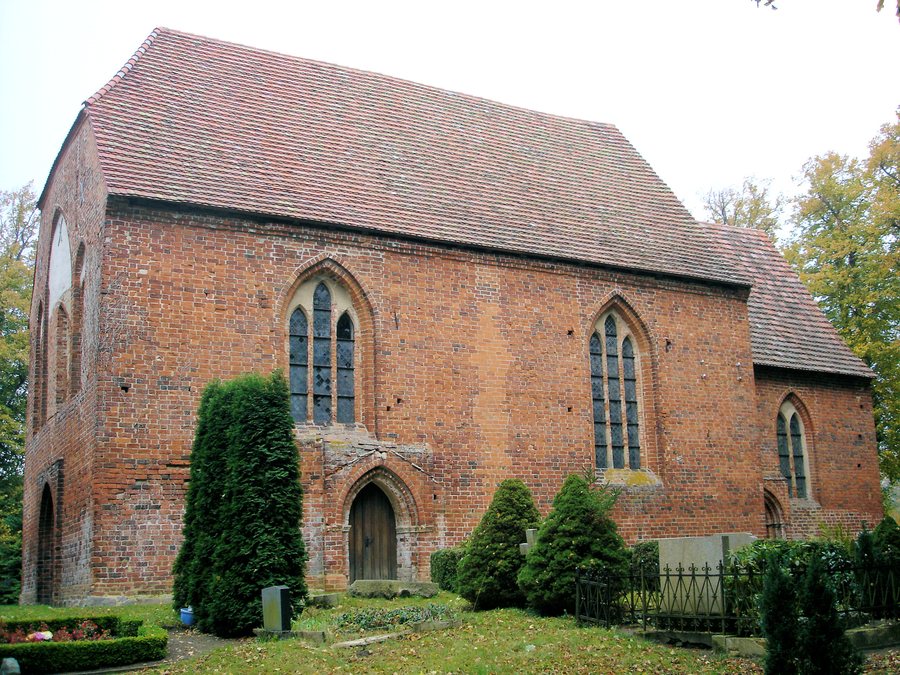
The brick church at Church and Motte Passee was first mentioned in 1318. From 2008 to 2012, the Passee brick church was closed due to the risk of collapse.
The neo-Gothic altar of the Passee church is dated 1866 and was reconsecrated in 2022. A mechanical organ in the church was built in 1859 by Friedrich Wilhelm Winzer from Wismar. Engraved sundials are located on the south wall.
The motte at Church and Motte Passee is a well-preserved motte-and-bailey castle with a moat and ramparts. By contrast, the former freestanding bell frame at Church and Motte Passee has not been preserved.
Visits to Church and Motte Passee are limited to the programs on offer. The Passee village church hosts small film festivals organized by the parish.
Nature and landscape
North and east of Passee lies a complex of deciduous forests with several burial mounds and Slavic settlement sites. The area around Passee supports active recreation, exploration, and getting to know the local fauna and flora.
Extensive forests, moorlands, and very hilly terrain around Passee are associated with a diverse abundance of species. Cranes and greylag geese also breed in the Passee area; the stork associated with Passee continues to nest in a tree.
At 118 meters, Lünenberg is the highest elevation in Northwest Mecklenburg and is considered an interesting destination for an excursion.
You can find other places at the same level here: Züsow, Zurow, Bibow, Lübberstorf, Jesendorf, Glasin, Warin.
For the overview of travel destinations at the higher level: Amt Neukloster-Warin.
Check prices, availability, and amenities for your travel dates directly at Booking.com.
View accommodations and offersAdvertisement · Partner link to Booking.com
