
Broderstorf: Local History and Estates
Accommodation in Broderstorf
Broderstorf was laid out as a street village and was first mentioned in a document on 16 October 1327. The village was also situated on the important historic trade route from Lübeck via Rostock to Szczecin. Its settlement pattern and historic trade connection offer two different points of reference for its local history.
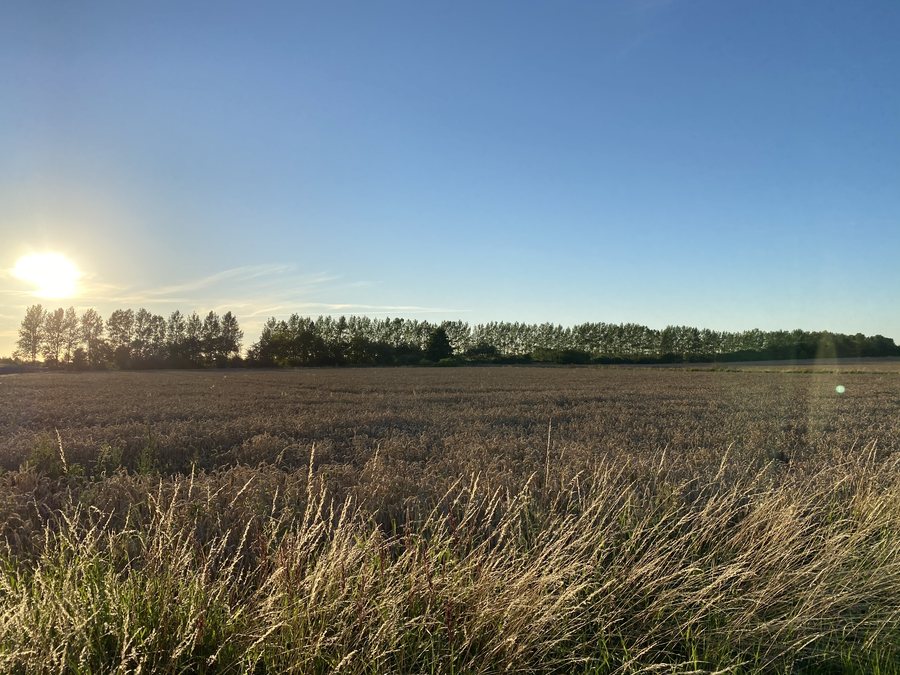 File:Broderstorf (50177405061).jpg
Photo: Thomas Woodtli from Zürich, Switzerland via Wikimedia Commons, CC BY-SA 2.0
Village Character and Train Station
The Rostock district’s list of historic monuments, as of 14 May 2024, includes the station building in Broderstorf, at Rostocker Chaussee 2. A residential building at Rostocker Chaussee 1 is also listed. Train departures, operating days and possible timetable changes are provided for Broderstorf station. Check the timetable before travelling and make sure to note the operating days that apply to your journey.
Estates and Architectural History in the Municipality
Teschendorf is a locality in the municipality of Broderstorf. There, the former Teschendorf estate has been designated a conservation area by ordinance; the area includes historic streets and routes. The manor house is a single-storey, Neo-Baroque stucco building with eleven bays. Its richly decorated central avant-corps has three bays and two storeys and is flanked by Corinthian colossal columns. Its façade can be viewed in terms of its structure and the prominent central section. The manor house was built in 1830 and acquired its present appearance around 1900. The estate is a characteristic example of a Mecklenburg estate, preserved with rare completeness; its form is rooted in medieval predecessors and took shape in the modern era.
Steinfeld and Öftenhäven also add their own points in time to the municipality’s local history. Steinfeld was first mentioned in a document on 13 May 1334; the Steinfeld estate had been a domain since 1781. Öftenhäven Manor House was remodelled by 1918, as indicated by the tower’s weather vane. It stood empty for many years after 1990 and was later renovated by a new owner. These histories of construction and use therefore extend beyond Broderstorf’s early mention.
Landscape and Nearby Cycle Path
The municipality of Broderstorf lies on a plateau between the valleys of the Warnow and Recknitz rivers. The Carbäk stream flows east to west through the municipal area. Nearby, a 1,690-metre-long and 2.5-metre-wide cycle path opened on 18 June 2026. It connects Thulendorf to the existing cycle path along the B110 from Sanitz to Rostock and ends right by Carbäk Primary School. From Thulendorf, it makes it easier to get to the train station, the municipal administration in Broderstorf and Rostock. If you are planning a specific cycling trip, check the condition of the infrastructure beforehand.
Rostock as a Wider Travel Destination
The wider travel destination of Rostock offers coastal, nature and cultural attractions. The Rostock region is surrounded by 62 kilometres of Baltic Sea coastline, with a number of seaside resorts. The historic narrow-gauge Molli Railway runs between Kühlungsborn and Bad Doberan and is the oldest narrow-gauge railway on the Baltic coast. At Wildpark-MV, visitors can explore the park independently or join guided wolf, owl and evening walks. At the Volhynian Resettlers Museum in Linstow, guided tours with ethnographic objects, photographs and documents tell the story of the Volhynian Germans from the mid-19th century until their settlement in Mecklenburg after the Second World War. The museum offers tours for groups and individuals.
If you would like to discover more destinations, you can also find Thulendorf, Poppendorf, Roggentin and Klein Kussewitz here.
For the wider travel overview: Amt Carbäk.

