
Glasow: Hotels and Accommodation
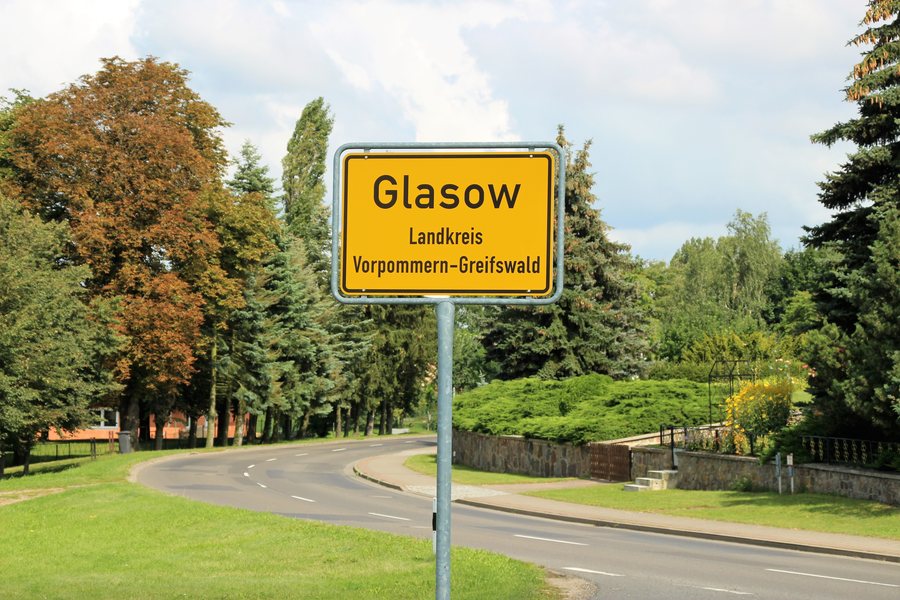
Glasow is situated in a hilly landscape.
History and Architectural Heritage
Glasow was first mentioned in 1497 as a farming village associated with Hohenholz. Until 30 June 1939, Streithof was an estate belonging to Alt-Eickstedt and originated as an outlying farm of Hohenholz in the Glasow area.
The church in Glasow is a flat-roofed fieldstone building from the 13th century. Three narrow pointed-arch windows are located on its east side. The wooden tower structure with a Neo-Baroque cupola dates from 1891. Its furnishings include a late-Renaissance pulpit from 1698.
Getting Around
The ILSE call bus stops at the Glasow Ausbau stop. It can be booked by phone, online or via smartphone, can serve as a feeder service to public transport, and connects rural stops with stops at local market towns.
Cycle Paths and Nature
Glasow is part of a tourism partnership with Penkun, Krackow and Grambow, which promotes cycle paths, bridleways, museums, attractions, dining establishments and accommodation.
The Randow Valley can be explored by boat and offers cycling and hiking trails. There is a hiking trail and a bathing facility at Lake Löcknitz.
One stage of the Oder–Neisse Cycle Route runs through Penkun, Krackow, Sonnenberg, Ramin and Löcknitz. It mainly uses flat, paved cycle paths along the Oder and Neisse rivers; rest areas are located along the route.
The same administrative area also includes Plöwen, Boock, Rossow, Löcknitz, Grambow, Ramin, Krackow and Nadrensee.
For the higher-level travel overview: Löcknitz-Penkun Administrative District.
Check prices, availability and amenities for your travel dates directly on Booking.com.
View accommodation and offersAdvertisement · Affiliate link to Booking.com
_-_OE_S.jpg)