
Lavassaare: Peat Industry and Narrow-Gauge Railway
Accommodation in Lavassaare
Those interested in peat extraction and Estonian narrow-gauge railways will find two defining themes of local history in Lavassaare. The present-day settlement grew up around the peat industry; the Eesti Muuseumraudtee is dedicated to the history of narrow-gauge railways. There are also memorial sites that shed light on different aspects of the past. Lavassaare can thus be explored through its collections, industrial history and remembrance.
Narrow-Gauge Railway and Museum Collection
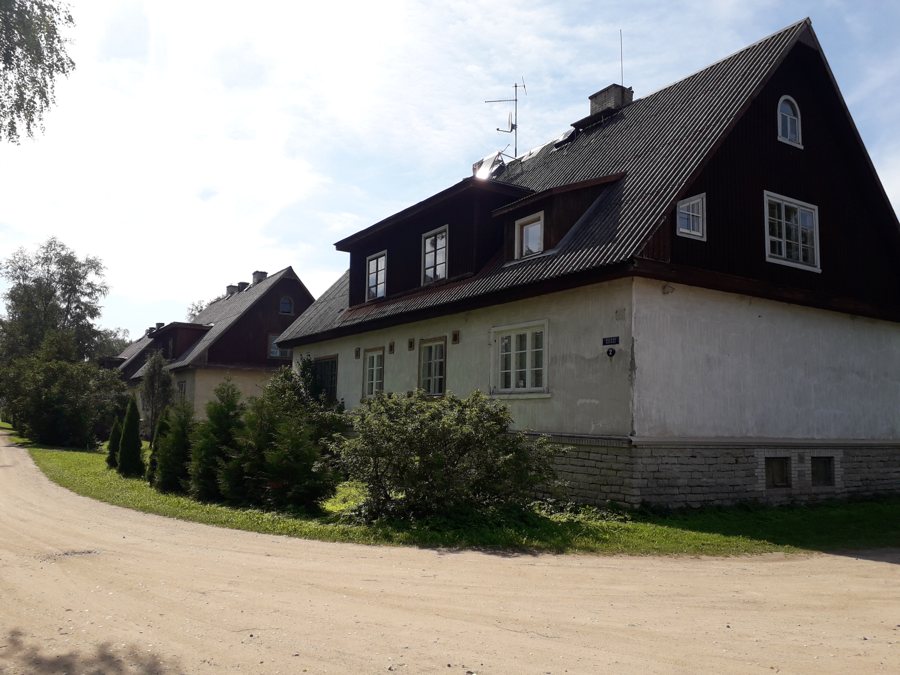
The Eesti Muuseumraudtee has more than 80 vehicles and other items of rolling stock, including five steam locomotives. Its indoor exhibition is housed in a former peat-industry residence. It displays more than 500 historical photographs, objects and documents relating to Estonian narrow-gauge railways. In addition to the history of public narrow-gauge railways, the museum documents the history of industrial and military railways in Estonia. The collection thus ranges from individual vehicles to the various uses of narrow-gauge railways. The VP-1-899 steam locomotive became the collection’s first exhibit.
A ride is also part of the heritage railway’s offerings: the 2-kilometre route is part of the outdoor exhibition, the ride departs from in front of the museum and lasts 25 minutes. A heritage train runs between the museum (Müramaa) and Lavassaare on Saturdays and Sundays from early June to the end of September. Check the timetable before your trip, as schedules may change. The visit can therefore include not only the exhibition, but also a specific train ride and seasonal weekend service.
Peat Extraction and the Development of the Settlement
The present-day settlement of Lavassaare emerged in 1919 with the founding of the Lavassaare peat industry, also known as the Jõõpre peat industry. The peat-industry site in Lavassaare was selected as the location for building the collection. The history of the settlement and that of the museum meet here: the peat industry is part of the origins of the present-day settlement and also of its railway history.
A Lavassaare–Pärnu (Pootsi)–Sindi railway line was completed in 1924 to transport peat. Its purpose connects the railway with local industrial history. A former residence, known as the “raba kontor”, also tells a story of relocation: it was brought from Aruküla to Lavassaare in 1923. The house was dismantled in Aruküla and its beams numbered; it was then rebuilt in the old settlement of Lavassaare. Numbering the beams is as much a part of the building’s history as rebuilding it at another location.
Memorial Sites and Landscape
Around 60 prisoners of war from Camp 286 are buried in Lavassaare’s cemetery, which covers about 650 square metres. The cemetery lies in a peat extraction area with a high groundwater level and vegetation typical of this terrain. From the car park, it can only be reached on foot, via a roughly 250-metre path that is partly paved and reinforced with wooden planks. Allow time for this walk when planning your visit.
A carved erratic boulder at Ülejõe 6 marks the site of the demolished barracks of the Lavassaare camp. Its inscription reads: “Seisata. Meenuta. Mõtle. Aastatel 1941–1944 oli siin fašistlik koonduslaager”. Alongside railway and industrial history, the area’s memorial sites also bring places with a direct connection to local events into focus.
The history of the peat industry provides the broader context for the development of the settlement.
For an overview of the wider trip: Lavassaare.

