
Chwaszczyno: Churches, Chapel and Local History
Accommodation in Chwaszczyno
Chwaszczyno invites visitors to explore local church and community history. The Church of the Holy Apostles Simon and Jude Thaddeus, a historic wayside chapel and a monument represent different ways of learning about a place’s past. There is also an annual pilgrimage tradition. For travellers who want to take cultural themes into account when choosing a destination, this provides a clear focus: religious history, architecture and shared remembrance.
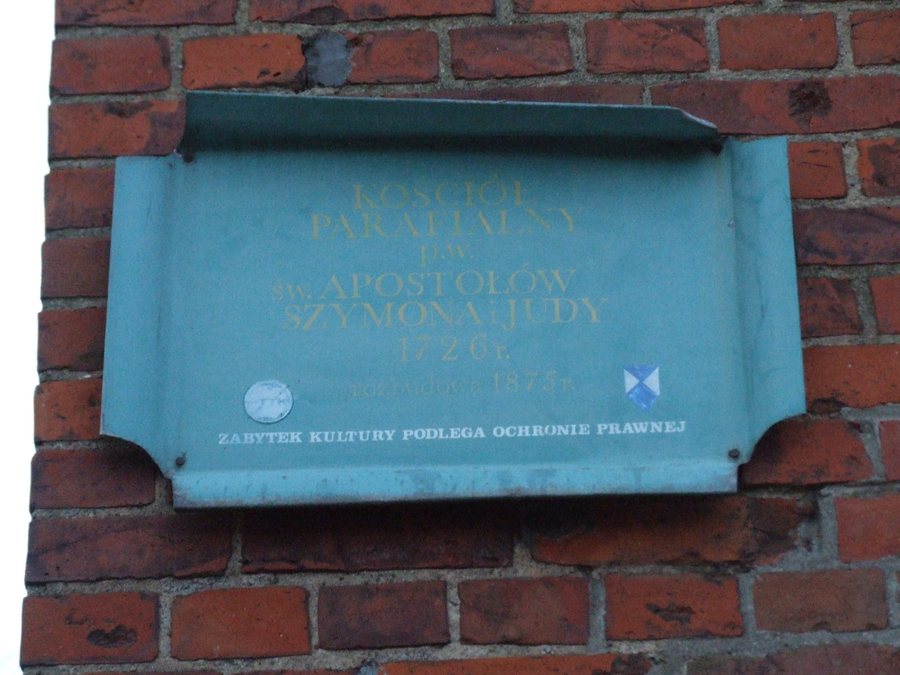 File:Chwaszczyno - Kościół parafialny pw. św. Apostołów Szymona i Judy - 011.JPG
Photo: Joymaster via Source, Public domain
The church and medieval history
The Church of the Holy Apostles Simon and Jude Thaddeus, together with its cemetery, is first mentioned in the 13th century. A wooden predecessor church was built in 1283 by Cistercians from Oliwa. This brings together two historical reference points: the early mention of the church and cemetery, and a wooden structure with a specific date. Both belong to the medieval history of the church, but relate to different aspects of the place. Anyone interested in older churches will find both an early historical reference and the story of a particular predecessor building here.
Design and extension
The church is a small, single-nave building with a rendered exterior; the exception is the western section added in 1875. “Single-nave” describes a layout with one main nave and succinctly identifies the building’s basic form. The western section, by contrast, represents a specific, dated addition. The layout and the extension can therefore be considered as two distinct features, rather than reducing the architecture to a single date. For understanding its cultural significance, this combination of a simple basic form and a later addition is particularly revealing.
Wayside chapel and pilgrimage tradition
Another historical trace leads to the wayside chapel on ul. Dobrzewińska near Lisie Błota. It has stood there for over 100 years and was built in 1908 at the initiative of its founder, Jan Lidzbarski. The chapel is also associated with an annual custom: local residents gather there, decorate it and prepare it for the pilgrimage from Żukowo to Wejherowo for the indulgence festival on the Feast of the Ascension. Residents welcome and bid farewell to the pilgrims on their way there and back.
The tradition thus connects the chapel’s location with preparations, a religious occasion and encounters with pilgrims. The chapel’s architectural history and the annual proceedings offer different perspectives: one points to its construction, the other to its role in the pilgrimage custom. If you would like to include this occasion in your travel plans, check the specific date of the festival in advance.
A monument to local remembrance
A monument donated by residents of Chwaszczyno commemorates the “Polaków z Gromady Chwaszczyno”. Alongside church architecture and religious practice, it adds a shared point of remembrance. The monument names the group being commemorated; its focus therefore differs from the architectural history of the church and the pilgrimage tradition associated with the chapel. For travellers interested in local history, this perspective on shared remembrance adds another local dimension to the religious themes.
Chwaszczyno as a travel destination
Chwaszczyno is particularly worth considering if you would like to include local church history, architectural development and religious customs in your trip. The pilgrimage occasion on the Feast of the Ascension provides a specific seasonal connection; check the date of the festival in advance if it matters to your plans.
For the broader travel overview: Miszewko.

