
Discover Leźno: Palace, Park and Church
Accommodation in Leźno
Leźno can be explored through two distinct historical perspectives: a palace with a landscaped park and a church featuring a large fresco in the presbytery. If you would like to include architectural history and religious art in your travel plans, the place offers two clearly distinct themes. The historical periods span from the early 18th century to the construction of the church between 1985 and 1992. This means the history of the place cannot be reduced to a single era.
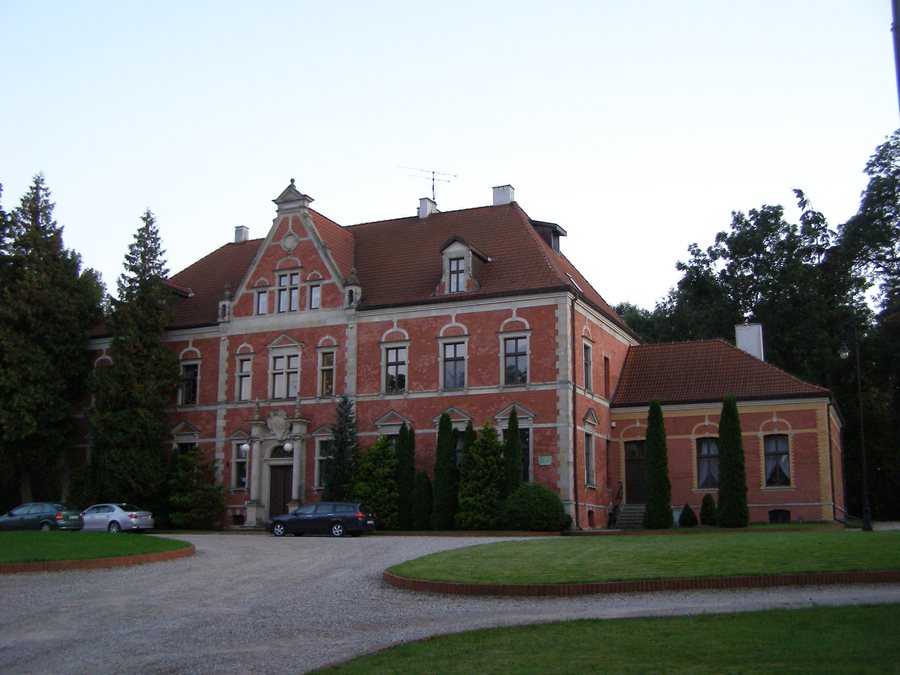
Palace and landscaped park
A palace was built in Leźno between 1720 and 1722, surrounded by a small landscaped park. In 1884, Georg Hoene had the 18th-century palace extensively renovated. As part of this transformation, the landscaped park was redesigned. More than 160 years separate the construction from the renovation. The dates therefore mark two clearly distinct phases: first, the construction with its small surrounding park; later, the extensive alteration of the palace and the redesign of the landscaped park. It is important to keep these steps separate when putting the history in context. The palace and park belong to the same story, but the dates do not describe the same phase of development.
In the palace park, illuminated paths lead to a dance floor, a gazebo and a barbecue area. These features add a sense of place to the historical context by showing which elements shape the park. If you would like to include the park's features in your stay, check visiting options in advance.
Church and fresco
The Church of St Stanislaus the Bishop and Blessed Karolina Kózkówna was built between 1985 and 1992. The parish in Leźno was established in July 1982. The parish was therefore founded before construction began; the two dates refer to distinct steps and should be kept separate chronologically. A fresco covering an entire wall extends across the presbytery. It depicts the martyrdom of St Stanislaus. Both the subject and scale are specific details that help place the work in an art-historical context: the subject is identified, and the fresco fills an entire wall in the presbytery. The church's name also refers to St Stanislaus, so the dedication and the fresco share a common point of reference. Alongside the construction dates, this offers another way to understand the building.
The choice of historical focus is clear: the palace tells a story of long-term development, from its construction in 1720–1722 to its renovation in 1884; the church's story centres on the establishment of the parish, the later construction period and a specific subject depicted in art. If you are most interested in tracing changes to a historic complex, you can use the palace as your point of reference; if you would like to consider church chronology and religious imagery together, the church offers a different perspective. The themes complement each other without telling the same kind of story.
Discover more destinations: Delowo, Łączyno, Miszewko, Garcz, Przyjaźń, Czeczewo, Mezowo, Grzybno.
For the broader travel overview: Karthaus.

