
Wda between the River and Tuchola Forest
Accommodation in Wda
Wda lies on the northeastern edge of Tuchola Forest and by the Wda River. This gives travelers two distinct points of reference when choosing a destination: its riverside location and the landscape on the edge of the forest. The town also has a history that spans from its presumed origins during the time of the Teutonic Order, through its manor-house period, to the inns of the late 19th century. Today, Wda is a holiday resort and a stopover for canoe trips on the Wda River. If you are looking for accommodation here, you can plan your stay around two interests: river activities or local history and architecture.
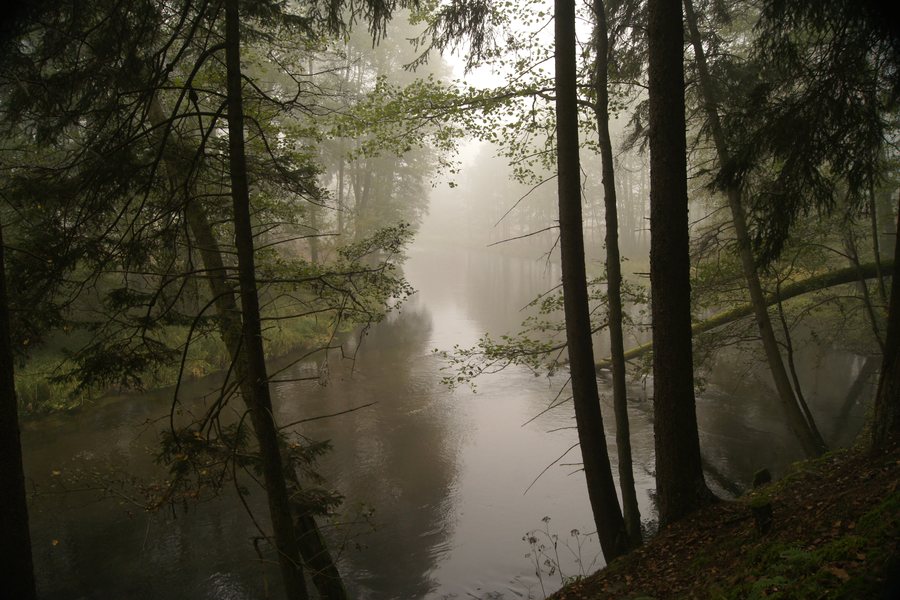 File:Rzeka Wda, Wdecki Park Krajobrazowy.jpg
Photo: Kinga Wiśniewska via Wikimedia Commons, CC BY-SA 3.0 pl
Riverside Location and Canoe Trips
Its riverside location defines Wda’s connection to the landscape; as a stopover for canoe trips on the Wda River, the town also has a clear connection to outdoor activities. Wda is also a holiday resort. If canoe trips are what draw you, this makes Wda a practical choice of destination. Tuchola Forest offers a different geographic point of reference: Wda lies on its northeastern edge. The river and the forest are two distinct features of the town, not two ways of describing the same experience. Your travel decision can therefore depend on whether you are more interested in the river as the setting for a canoe trip or in the town’s location on the edge of the forest.
Manor-House History in Wda
Wda was presumably founded during the time of the Teutonic Order. Later, it was a manor estate belonging to Starostwo Gniewskie; reconstruction of the manor house began from scratch in 1677. The timeline therefore runs from the town’s presumed origins, through its later manor-house period, to a reconstruction with a precisely recorded date. The year 1677 marks the start of that reconstruction, not Wda’s presumed founding. For travelers interested in cultural history, this adds a historical perspective to the town’s role as a holiday resort.
Church and Architecture
One cultural point of interest is the Church of the Sacred Heart of Jesus (Najświętszego Serca Pana Jezusa) in Wda. Its facade and the lower parts of the side walls are made of cut stone; the remaining sections of the walls are made of plastered lime brick. The church is 28 m long and 10 m wide. The materials and dimensions provide two different points of reference for understanding its architecture: the distribution of building materials and the size of the structure. These details make the church a more tangible landmark than its name alone. For travelers who are interested in local architecture as well as the river and landscape, it is a cultural point of interest in its own right.
Wda Along Historic Routes
Wda’s travel history can also be traced to a specific period. At the end of the 19th century, Wda had two inns that served travelers on the route from Zblewo via Ocypel to Skórcz. This historical detail adds another dimension to the manor-house history: not ownership and reconstruction, but travel. The inns served travelers at the time; Wda’s role as a holiday resort and a stopover for canoe trips on the Wda River reflects a different kind of activity.
Discover more destinations: Szteklin.
Return to the overview of destinations: Wilcze Błota.

