
Klappholz: Hotels and Accommodations
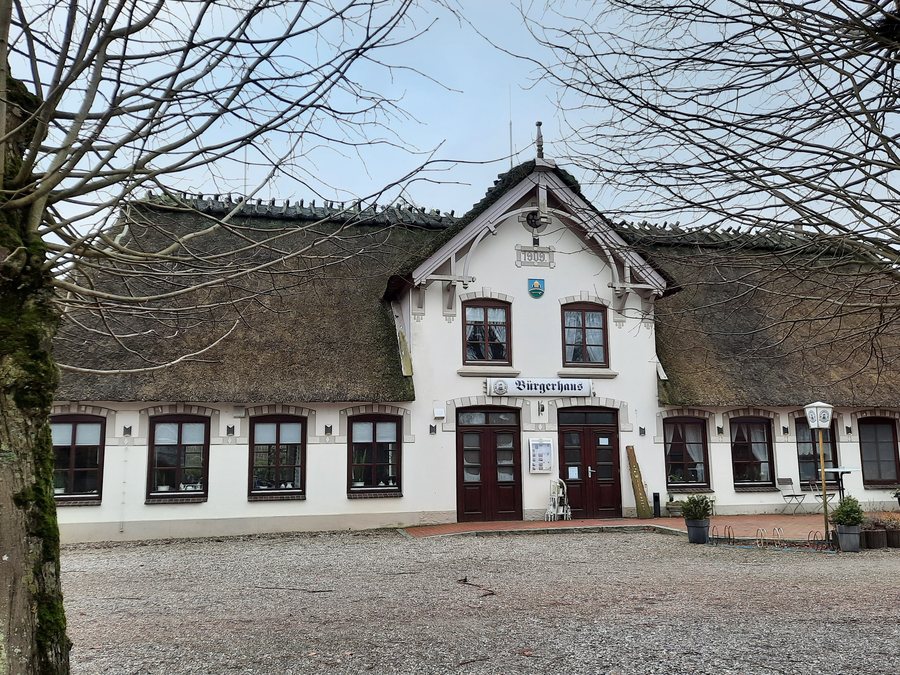 File:Schulgebaeude Klappholz von 1845.jpg
Photo: Herzogvonnassau via Wikimedia Commons, CC BY-SA 4.0
File:Schulgebaeude Klappholz von 1845.jpg
Photo: Herzogvonnassau via Wikimedia Commons, CC BY-SA 4.0
In the Schleswig-Flensburg district, the Green Inland is characterized by attractive villages, clear lakes, beech forests, meadows, and hidden moors.
Nature
Salt marshes and the tranquil waters of the Noore provide habitat for numerous endangered bird species to breed, rest, and overwinter.
Klappholz is connected to the Nature Park hiking trail, a marked route around 160 kilometers long through the region’s diverse natural and cultural landscapes. Shorter stages and circular hikes are also available.
The nature park also provides for shorter circular hikes and individually planned tours.
Routes
The Baltic Sea Coast Cycle Route begins in Kupfermühle near Flensburg and leads via Maasholm on the Schlei, Eckernförde, Kiel, Hohwacht, and Fehmarn to Lübeck-Travemünde.
Culture and History
At the Molfsee Open-Air Museum, visitors are shown traditional weaving in the Klappholz House. A Klappholz colonist house was built in 1764 and is preserved today at the Molfsee Open-Air Museum near Kiel.
A handwritten chronicle of the Havetoft parish from 1927 discusses the history of Havetoft, Klappholz, and Hostrup. It also contains sections on the colonization of Westscheide and the school in Klappholz.
Surroundings
The surroundings of Klappholz include the Edelsturm ruins, Gottorf Castle, the State Museum, Haithabu, Mövenberg, Tolkschau, the Runestone, and St. Johannis Monastery.
The wider regional area includes Ruethstein, Habernis Beach, and Lindholm.
More local pages: Twedt, Brodersby, Nübel, Böklund, Taarstedt, Süderfahrenstedt, Idstedt, Neuberend.
To the higher-level travel overview: Südangeln.
Check prices, availability, and amenities for your travel dates directly on Booking.com.
View accommodations and offersAdvertisement · Partner link to Booking.com
