
Nowe Worowo
Accommodation in Nowe Worowo
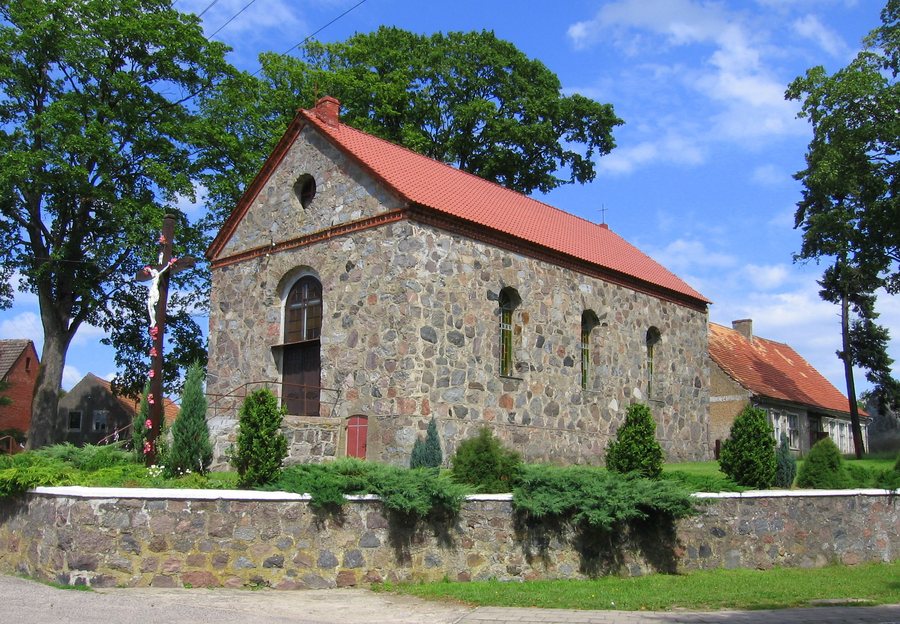
Nowe Worowo can be explored through several concrete traces of its local history: the Miedznik River, the manor park and surviving buildings from the 19th and 20th centuries. These are joined by the Church of the Assumption of the Blessed Virgin Mary, a Neoclassical stone building from the 19th century, and a Dutch windmill with a damaged mechanism. Each feature highlights a different aspect: the river locates the village geographically, while the park and buildings represent different historical contexts. Those choosing a destination for its cultural history and connection to the landscape can get a sense of Nowe Worowo through these features.
The Miedznik and its river connection
The Miedznik flows through Nowe Worowo and is a tributary of the Drawa. These two details give the river a precise place in the description of the village: the Miedznik is directly associated with the village, while its connection to the Drawa identifies the wider river system. Those who pay attention to rivers and their courses when choosing a destination can consider this geographical aspect alongside the historic buildings and manor park. The Miedznik thus offers a distinct way of describing Nowe Worowo, separate from the village’s architectural history.
Manor park: historic grounds and mature trees
The manor park is listed in the register of historic monuments. It was laid out at the turn of the 18th and 19th centuries as the grounds of a once-prosperous manor. This gives the park a clear historical context. Mature trees grow in the park, including small-leaved lime, pedunculate oak and common ash. Naming these species makes the tree population more specific than a general reference to a park. For travelers who do not want to focus solely on individual buildings, these historic grounds are one of Nowe Worowo’s distinctive features.
The church and surviving buildings
Buildings from the 19th and 20th centuries survive in Nowe Worowo. One specific example from the 19th century is the Church of the Assumption of the Blessed Virgin Mary. It is a Neoclassical stone building. This identifies both the church’s architectural style and its building material, characterizing it more precisely than its age alone would. Alongside it is the broader stock of surviving buildings from two centuries. These different scales complement each other without requiring every building to be assigned to the same period or style. Those interested in local history can thus appreciate the specific church and the more broadly dated buildings as distinct aspects of the architectural heritage.
The Dutch windmill
Another historical feature is the Dutch windmill in Nowe Worowo. Only the structure remains; inside, the damaged mechanism can be seen. In terms of its described condition, the mill differs from the Neoclassical branch church and the manor park with its mature trees. Those interested in historic technology will find a distinct theme here alongside architectural and park history. The damaged mechanism is as much a part of the mill’s description as the surviving structure.
For the broader travel overview: Warniłęg.

