
Kalundborg between the Middle Ages, the Coast and Røsnæs
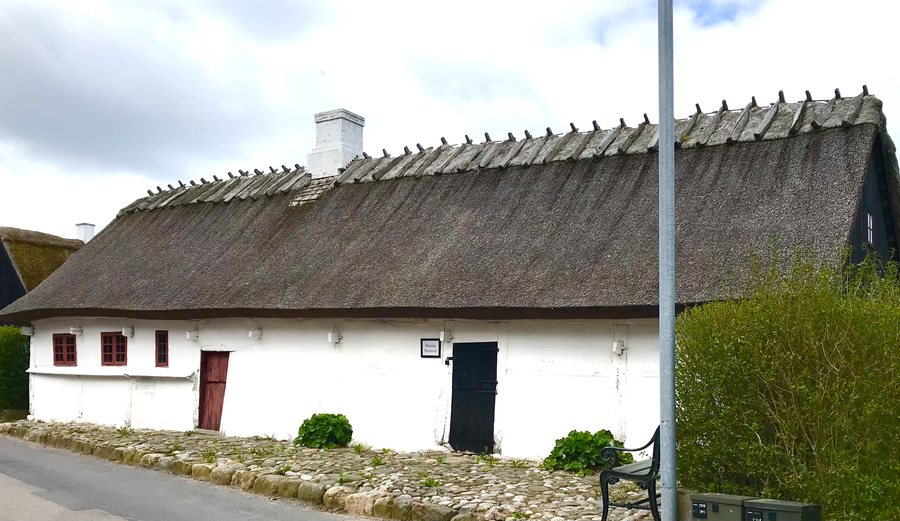 File:Reersø Museum, Kalundborg Kommune. Foto Hans Christian Hansen.jpg
Photo: XYZA-2400 via Wikimedia Commons, CC BY-SA 4.0
File:Reersø Museum, Kalundborg Kommune. Foto Hans Christian Hansen.jpg
Photo: XYZA-2400 via Wikimedia Commons, CC BY-SA 4.0
In the centre of Kalundborg, the medieval street plan is still clearly visible today. This includes Højbyen, a 90-hectare medieval urban environment regarded as Denmark’s best-preserved medieval urban environment. Vor Frue Kirke is Northern Europe’s only five-towered church.
Culture and history
The Kalundborg Museum is housed in Lindegården, one of Denmark’s best-preserved Renaissance town farms. The Carmen-Curlers exhibition reconstructs Kalundborg’s factory history in the 1960s and 1970s through scenography, original stories and staged experience spaces.
In the listed half-timbered building Andræjs Hus, the Reersø Museum provides insights into the everyday life of poor fishing farmers at the beginning of the 19th century. The Reersø Harbour Museum explores local fishing history through photographs, equipment and depictions of life at the harbour. Reerslev Landsbysmedje houses a working blacksmith museum in a building from the end of the 18th century worthy of preservation.
An exhibition at Fugledegård explores cult, culture and archaeology at Tissø and displays finds from the Viking Age as well as audio and visual material. Thus, in Kalundborg, medieval urban history stands alongside industrial, fishing and archaeological history at various exhibition venues.
Coast and landscape
Kalundborg Municipality has 160 kilometres of coastline with numerous bathing beaches as well as seasonal and year-round bathing jetties. Røsnæs was formed during the last Ice Age by the Storebælt Glacier as a terminal moraine. The peninsula lies along Sejerøbugten to the north and Kalundborg Fjord to the south; from several points, both coasts are visible at the same time.
The tip of Røsnæs is part of Natura 2000 site no. 166, “Røsnæs, Røsnæs Rev and Kalundborg Fjord”. At Røsnæs Fyr, there is an interactive exhibition for visitors about the nature and war history of Røsnæs, as well as the role of the landscape in military planning and battles.
Ferries run from Havnsø to Nekselø and Sejerø; the islands offer unique nature experiences and cultural landscapes. The Røsnæs peninsula is also home to five wineries where visitors can taste local wines, visit vineyards and learn more about wine production in Denmark.
Trails and outdoor activities
Røsnæs can be reached by bus 553 from Kalundborg Station to Bjørnstrup; from there, it is approximately four kilometres on foot to the tip and the lighthouse. The Røsnæsruten is a 17-kilometre cycling route from Kalundborg Station to Røsnæs Fyr.
The section of the Ice Age Route that runs through Kalundborg passes through moraine hills and forests shaped by the Ice Age and offers views of Tissø. Værslevstien is an approximately 26-kilometre trail between Kalundborg and Gørlev and partly follows an old railway line that was laid in 1896 and operated until 1970.
In Eskebjerg Vesterlyng, there is an 8.8-kilometre hiking loop through a protected area with beach meadows, dunes, heathland and coastal sections. Eskebjerg Vesterlyng also has a five-kilometre-long, flat beach that is particularly suitable for families. The Planetstien in Høng Skov is a 450-metre-long hiking trail depicting the solar system to a reduced scale.
The immediate urban area of Kalundborg includes Drøsselbjerg, Eskebjerg, Gørlev, Kaldred, Kalundborg, Reersø, Store Fuglede, Havnsø, Nostrup, Saltbæk, Ornum, Svallerup, Bildsø, Kongstrup, Bjerge, Vollerup, Melby, Nyrup, Sejerø, Jerslev Sj and Høng.
For the higher-level travel overview: Zealand.
Check prices, availability and facilities for your travel dates directly on Booking.com.
View accommodation and offersAdvertisement · Partner link to Booking.com
