
Smögen and Hunnebostrand
Smögen and Hunnebostrand lie on the Sotenäs peninsula along Bohuslän’s granite coast, but each has its own character: Smögen brings together harbour life and the famous Smögenbryggan, while Hunnebostrand combines its guest harbour with a history of fishing and stonecutting. You can plan your stay around the atmosphere you’re looking for.
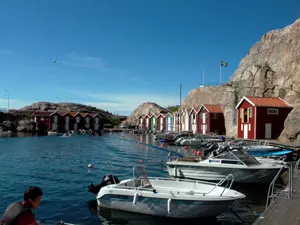 Urlaubsort Smögen an der schwedischen Westküste
Photo: nordlicht verlag
Smögen and Hunnebostrand at a glance
- Location: Both coastal towns belong to Sotenäs Municipality in the Swedish region of Bohuslän.
- Smögen: Smögenbryggan is beside the municipally operated guest harbour and defines the maritime heart of the town.
- Hunnebostrand: The town is a historic fishing village; according to the municipality, its settlement history dates back to the 13th century.
- Culture: Hunnebostrand offers several ways to explore local history, including the Lobster Academy, the Stonecutting Museum and Gammelgården.
- Nature: The protected Hållö Archipelago is part of the municipality.
- When to visit: Smögen is especially popular in midsummer; the shoulder seasons are ideal for a quieter experience.
Smögen: Harbour promenade and archipelago atmosphere
In Smögen, many of the highlights are clustered along Smögenbryggan. The promenade runs along the harbour, between the moorings and the buildings of the old coastal town. Cafés, restaurants and shops make it a lively place to stroll, while sailing boats and pleasure craft come and go in the harbour. The municipal guest harbour is right beside the famous waterfront promenade, making Smögen a particularly good choice if you want to focus on harbour life and a compact town centre.
The promenade is also a good starting point for exploring more of the coast. Bohuslän is known for its rocky skerries and fishing villages, and Smögen is one of the region’s most visited destinations. Expect the waterfront to be busier in midsummer; outside the peak season, the landscape takes centre stage. For help choosing accommodation based on location and the kind of stay you’re looking for, see the Smögen town guide.
Hunnebostrand: Fishing village and stonecutting heritage
Hunnebostrand is shaped more strongly by its long history and the work done in its granite quarries. The municipality traces the roots of the old fishing village back to the 13th century. In the harbour area, the Lobster Academy recalls the importance of fishing, while the Stonecutting Museum focuses on the tools and techniques used by stonecutters and their way of life. Gammelgården adds to this picture with historic buildings and a collection of everyday objects from the town’s past.
Together, these places give you a thread to follow, even on a walk away from the waterfront: from the harbour and fishing to the quarries where local granite was worked. Hunnebostrand is therefore a particularly good fit if you’d like to combine maritime history with craftsmanship and local culture. The Hunnebostrand guide brings together local coastal walks and cultural attractions.
Hållö Archipelago and the coastal landscape
Nature is an integral part of the landscape in Sotenäs, where rocky shores, small coves and offshore islands alternate with harbour areas. The municipality lists the Hållö Archipelago as one of its nature reserves. The island group makes a natural focus in its own right, alongside the town centres. If you’d like to spend the day on the water or by the coast, you can combine a walk along Smögen’s harbour promenade with an excursion into the surrounding skerries. Hunnebostrand adds another maritime perspective through its harbour and stonecutting heritage.
For an overview of the region, the Sotenäs travel guide brings together other places and nature destinations on the peninsula. The broader Göteborg and Bohuslän overview helps you place Smögen and Hunnebostrand in the context of a longer trip along Sweden’s west coast.
Which town is right for your stay?
Västtrafik bus 862 runs between Hallinden, Hunnebostrand and Smögen in both directions, so you can travel between the two harbour towns without a car. If you’re driving from Göteborg, the route described by Sotenäs follows the E6, then road 162 towards Kungshamn/Smögen, and road 171 from Hallinden. With a car, you can plan Smögen and Hunnebostrand as separate stops on the same trip around Sotenäs.
Smögen is a good choice if you enjoy strolling along a lively harbour promenade, watching the boats and visiting restaurants or shops near the harbour. Hunnebostrand is a better fit if you’d like museums, fishing history and regional stonecutting to shape your stay. Both towns are part of the same coastal landscape and can be visited as separate stops on a trip around Sotenäs. For a short visit, choose the one that best suits your plans for the day; with more time, experience their contrasting townscapes and add a visit to the protected archipelago.
Frequently asked questions about Smögen and Hunnebostrand
How are Smögen and Hunnebostrand different?
Smögen is best known for the Smögenbryggan harbour promenade and its lively maritime town centre. Hunnebostrand offers additional highlights in its fishing history, Lobster Academy and stonecutting heritage.
What does Hunnebostrand offer culture lovers?
The Lobster Academy, Stonecutting Museum and Gammelgården explore different aspects of local history: fishing, granite quarrying and everyday life in the past.
When is Smögen especially busy?
Midsummer is the most popular time to visit Smögen. In the quieter shoulder seasons, you can enjoy the coastal landscape with fewer people around the harbour promenade.
