
Copenhagen: Harbour, Old Town and Day Trips on Zealand
Copenhagen connects its harbour on the Øresund with a compact old town, royal landmarks and lively neighbourhoods. The city centre is easy to explore on foot on a first visit; canals, museums and parks add variety to the route.
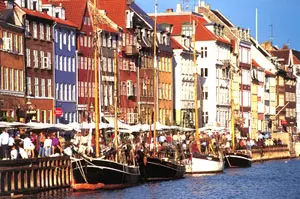 Nyhavn in Kopenhagen
Photo: Per Sihlberg/VisitDenmark
Copenhagen at a glance
- Copenhagen lies in the east of the Danish island of Zealand, on the Øresund.
- The city centre brings historic squares, canals, palaces and museums together within relatively short distances.
- Nyhavn is a historic harbour and a starting point for canal tours.
- Tivoli is next to the main railway station and first opened its gates in 1843.
- Walking, cycling and public transport make it easy to combine visits to different neighbourhoods.
- The city harbour bus carries bicycles with a bicycle ticket; bicycles travel free on S-trains.
Old town, palaces and famous squares
A first walk can start at City Hall Square or the main railway station. From there, Tivoli, the city centre’s shopping streets and several museums are easy to reach. Tivoli opened in 1843; the present-day Pantomime Theatre dates from 1874. The park combines historic design with rides, stages and gardens. Opening days and programmes vary throughout the year, so it is worth planning your day around what you want to see.
Christiansborg stands on the island of Slotsholmen and brings together several functions of the Danish state in one complex. Amalienborg Palace is the royal family’s residence, and the Marble Church is a short walk away. Rosenborg houses the royal collections in a Renaissance building in the King’s Garden. These sights can be combined in a cultural and historical walk, while the Round Tower, with its spiral ramp, offers views over the rooftops of the old town.
If you want to visit the main sights in a logical order, the Copenhagen city guide can serve as a helpful route-planning resource. It describes various tours of the city centre and excursions to the surrounding area.
Nyhavn, canals and harbour districts
With its colourful gabled houses, historic quayside and moored boats, Nyhavn is one of the city’s best-known views. Canal tours depart from here, exploring the waterways, Christianshavn and other parts of the harbour. You can combine a visit with a walk along the waterfront; the surrounding streets are home to cafés and restaurants. For a quieter view of the harbour, the Harbour Circle route follows an approximately 13-kilometre loop past Nyhavn, Christianshavn and Sydhavn. Bridges make it possible to walk or cycle shorter sections.
Christianshavn is characterised by canals and historic warehouses. A detour to the Church of Our Saviour adds a striking church tower to the waterfront scenery; climbing it is an attraction in its own right. Further contemporary buildings and public waterfront spaces line the harbour. In summer, swimming is possible at designated harbour baths. If you take the harbour bus, you can travel between waterfront areas by water and bring your bicycle along with an additional bicycle ticket.
On foot, by bike and on public transport
Many sights in the city centre are within walking distance of one another. A bicycle is useful for longer journeys between the centre, the harbour and outlying neighbourhoods. Copenhagen has dedicated cycle paths; cyclists should use them, keep to the right and signal turns with hand gestures. Dismount and push your bike on pavements and pedestrian crossings. After dark, a white front light and a red rear light are required.
Bicycles can be taken on S-trains free of charge. A bicycle ticket is required on the Metro and harbour buses; restrictions apply during weekday rush hours, including a ban on bicycles on the Metro and special rules at Nørreport station. For some neighbourhoods, combining cycling, rail and the harbour bus is practical if you plan your day’s route in advance around connections and peak times. If you prefer to travel without a bicycle, central destinations are accessible by Metro, S-train, bus and on foot.
How many days should you spend in the capital?
One day is enough for a compact tour of the city centre, including Nyhavn and one chosen palace or museum. Two to three days leave time for Tivoli, Christianshavn and more museums or harbour districts. With a longer stay, you can combine Copenhagen with destinations on the island: Roskilde, west of the capital, is home to the cathedral and Viking Ship Museum; Helsingør in the north combines an old town, Kronborg Castle and views of the Øresund. The Zealand overview provides an introduction to these excursions and the island’s different regions.
If Copenhagen is one stop on a Baltic Sea tour, you can combine your stay with another destination on Zealand. Choose where to stay based on your city itinerary, rail connections or coastal destination; the accommodation on Zealand page is a useful place to start exploring the region. An older personal account also describes arriving in Copenhagen by ferry from Oslo.
Frequently asked questions about Copenhagen
Which sights are close to one another?
Nyhavn, Amalienborg, the Marble Church and the city centre are easy to visit on foot. Rosenborg Palace and the King’s Garden make another short stretch of the walk. For Tivoli and the area around City Hall, consider a separate walk starting at the main railway station.
Can you visit Copenhagen without a car?
Yes. The main sights are accessible on foot, by bicycle and by Metro or S-train. Trains and buses serve destinations outside the city centre. Bicycles can be taken free of charge on S-trains and with a ticket on the Metro and harbour buses; restrictions apply on the Metro during weekday rush hours.
What can you do on a rainy day?
Museums, palace interiors and market halls offer activities whatever the weather. You can also plan short walks between cafés, cultural venues and covered stops in the city centre; longer harbour routes are better suited to dry weather.
Which day trips are suitable from Copenhagen?
Roskilde is a good choice for its cathedral, fjord and Viking Ship Museum. Helsingør combines Kronborg with views across the Øresund. Both cities work well as day trips and add different chapters of Danish history to a visit to the capital.
