
Zealand, Denmark: Towns, Coastlines and Day Trips
Zealand, Danish Sjælland, connects the capital region of Copenhagen with historic towns, fjords and a varied coastline. The island lies between the Great Belt and the Øresund; from its eastern shore, you can see Sweden across the Sound.
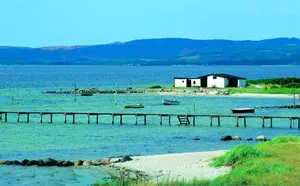 Blick auf den Roskilde-Fjord auf Seeland
Photo: © Sören Lauridsen/VisitDenmark
Zealand at a glance
- Zealand is Denmark’s largest island, lying between the Great Belt to the west and the Øresund to the east.
- Copenhagen lies in the eastern part of the island and makes a good base for trips north and west.
- Roskilde brings together the fjord, its UNESCO World Heritage cathedral and Viking history.
- Helsingør lies on the Øresund opposite the Swedish city of Helsingborg; Kronborg Castle defines this historic port town.
- Stevns Klint in the southeast reveals geological layers along a striking chalk and limestone coastline.
- A trip can combine city life, cultural history and coastal scenery without trying to cover every region in a single day.
Getting there from Germany and travelling to Copenhagen
By car, you can reach Zealand from Germany via two ferry routes: Scandlines sails from Puttgarden to Rødby, from where the E47 continues across Lolland and Falster to Zealand. The Rostock–Gedser route also takes you to Denmark; from Gedser, travel north across Falster. Alternatively, drive through Jutland, cross the Great Belt Bridge and continue towards Copenhagen. If you’re travelling without a car, direct train services run from Hamburg via Kolding, Odense and Ringsted to København H. From there, you can connect to trains and the metro in the capital, as well as train services to other destinations on Zealand.
Where should you base yourself on Zealand?
The best place to stay depends on how many destinations you want to combine. Copenhagen brings together big-city attractions, museums, the harbour and rail connections. From there, you can take trips north to the Øresund or west towards Roskilde. If you mainly want to see the best-known sights, you can use the capital as a base throughout your stay. For coastal destinations in the south and west, an additional overnight base makes day trips easier to plan and gives you more time at each place.
For a three- or four-day trip, consider focusing on Copenhagen and taking an excursion to Roskilde or Helsingør. A longer trip can also include the southeastern coast around Stevns Klint and smaller towns in the south or west. The island lends itself to being explored in stages: start with the capital and its surroundings, then move on to the fjord or coastal scenery. This keeps each day manageable and means driving doesn’t become the main event of your holiday.
Copenhagen: the capital and a convenient base
In eastern Zealand lies Copenhagen, with historic neighbourhoods, canals, royal palaces, museums and large green spaces. You can explore the city centre on foot or by bike, while the metro and S-train make it easy to cover longer distances. Several well-known sights are clustered around Nyhavn, Amalienborg Palace, Christiansborg and Rosenborg. Tivoli, museums and theatres offer more to see and do, depending on your interests and the weather. The city works both as a destination for a city break and as the first stop on a tour of the island.
A stay in the capital can be combined with trips to the Øresund. Coastal towns and cultural attractions lie to the north, while the route to Roskilde begins to the west. Train services make it possible to take day trips without changing your base every day. If you’re touring Zealand, you could make Copenhagen your first or last longer stop, then explore the more southerly landscapes at a slower pace.
Helsingør and views across the Øresund
Helsingør lies on the northeastern coast, at a narrow point of the Øresund. The harbour, old town and Kronborg Castle shape the town’s character. The fortress is closely associated with Danish history and Shakespeare’s Hamlet. Nearby, the Danish Maritime Museum adds a maritime perspective to your visit. If you allow several hours, you can combine the castle grounds and museum with a stroll through the streets and along the harbour.
From Helsingør, you can see across the water to Helsingborg in Sweden. This setting makes the town a good choice if you’d like to experience the connection between Denmark and Sweden. Visit as a stand-alone stop or combine it with a stay on the north coast. History and culture enthusiasts can explore Kronborg and the Maritime Museum; if you’re more interested in spending time by the sea, add a coastal walk to your visit.
Roskilde: cathedral, fjord and Vikings
Roskilde lies west of Copenhagen on Roskilde Fjord and offers several attractions that work well together on a day trip. The cathedral dominates the centre. Built in the 12th and 13th centuries, the brick building is the burial place of numerous Danish kings and queens. Its side chapels reflect centuries of architectural and artistic history. As a UNESCO World Heritage Site, the cathedral represents the development of brick architecture in Northern Europe and the long-standing relationship between the church and the Danish monarchy.
By the fjord, the Viking Ship Museum tells the story of the shipwrecks from the 11th century that were found here. Exhibitions and reconstructed ships show how shipbuilding, trade and seafaring were connected. The museum adds a maritime perspective to the royal history of the cathedral. You can walk between the station, old town, cathedral and fjord; plan your route around opening hours and your interests.
Stevns Klint and the southeastern coast
Stevns Klint stretches along the southeastern coast, reaching more than 40 metres above sea level at its highest point. Visible rock strata document the transition between the period before and after the asteroid impact around 66 million years ago. The thin fish-clay layer is what makes the cliff particularly important to the study of Earth’s history; the area is a UNESCO World Heritage Site. Viewpoints and paths offer access to the coastline, while the Stevns Klint Experience visitor centre presents the geology in an accessible way.
You can combine your trip with the old church at Højerup or the Stevns Fyr Centre. The landscape is ideal for a day that pairs coastal views with a specific theme in nature and history. When planning your time, allow for the journey, walks along the cliff and how long you’d like to spend at the visitor centre. Coastal trails offer extra sections for a longer hike; for a shorter visit, focus on a viewpoint and the exhibition. The southern part of the island is also home to Fakse and Køge.
Smaller towns in the west and south
Zealand also has plenty of worthwhile stops beyond its best-known attractions. Kalundborg lies on a bay in the west and makes a good base for exploring the western half of the island. In Næstved, town history meets the southern countryside. Slagelse and Korsør offer further options in the west, near the crossing over the Great Belt.
These towns are especially suited to a tour where you don’t start and end every day in the capital. A manageable itinerary might include stays in Copenhagen and Roskilde for culture, followed by one or two nights in the south or west. If you mainly want to see the major sights, you can stay in Copenhagen and take individual day trips. Choose your route based on whether city life, the coast or smaller historic centres are your priority. That way, you can enjoy a variety of experiences instead of cramming several far-flung destinations into a single day.
Choosing accommodation and a base
For a first visit, Copenhagen offers the widest range of city and cultural experiences. Roskilde is a good choice if the cathedral, fjord and Viking Ship Museum are your main interests. For the southeast, choose accommodation that makes it easy to fit trips to Stevns Klint and the coastal towns into your day. You can browse accommodation on Zealand by location and type of trip, making it easier to choose a base that suits your plans.
A tour with two bases cuts down on daily return journeys across the island. Copenhagen and Roskilde work well together for a city and culture break, while an additional stop in the south gives you more time for the coast and smaller towns. For a short visit, one base with a targeted day trip is usually enough. On a longer holiday, you can spread out your plans so that a big-city visit, a World Heritage Site and time in nature don’t all have to fit into the same day. If you’re travelling by public transport, plan your route around the most convenient train and bus connections.
When to visit for city breaks and coastal days
Copenhagen, Roskilde and Helsingør are worth visiting in any season, as long as you plan city visits, museums and historic sights around the available daylight. Spring in Denmark is generally mild; June to August are the warmest months and are particularly well suited to longer days on the coast. Sea temperatures are usually 17–22°C from June to August. In summer, seasonal activities such as boat trips on Roskilde Fjord are also available.
Autumn is often rainier and cloudier, while winter brings cold weather, with possible frost or snow. Shorter coastal walks and a greater focus on the city, museums and indoor attractions are a better fit for your itinerary at this time of year. For days out in nature at Stevns Klint and longer walks, daylight hours are an important factor, along with packing suitable clothing for the weather. Opening hours and seasonal activities vary by destination.
Frequently asked questions about Zealand
How many days should you plan for Zealand?
Three to four days is a good guideline for Copenhagen and a trip to Roskilde or Helsingør. If you also want to visit Stevns Klint and towns in the south or west, allow a few extra days for travel and time at each stop. You can tailor the trip to your interests without having to rush around the island.
Which attraction makes a good day trip from Copenhagen?
Roskilde is a good choice for combining the cathedral, old town and Viking Ship Museum. Helsingør is ideal for Kronborg, maritime history and views across the Øresund. For a day in nature, head to Stevns Klint; allow enough time for both the journey and your visit to the coast.
Can you explore Zealand without a car?
Yes. Copenhagen is a convenient base for train trips to Roskilde and Helsingør. To reach more remote coastal towns and Stevns Klint, you’ll need to combine trains, buses and walking routes. A car gives you more flexibility if you want to visit several rural destinations in one day; for individual towns and cultural attractions, public transport is a good option.
Which places are good for a history-focused holiday?
Roskilde combines its UNESCO-listed cathedral with the Viking Ship Museum. In Helsingør, Kronborg Castle and the town’s maritime heritage take centre stage. Copenhagen adds royal palaces, museums and historic neighbourhoods to the mix. Together, these places showcase different chapters of Danish history and can be visited on separate day trips.
