
Kokkola: Wooden Town, Museums and Tankar Island
Kokkola on Finland’s west coast brings together the historic wooden town of Neristan, museums in the city centre and an excursion to the archipelago. It makes a great base for a culture-focused stay, which you can extend with a seasonal boat trip to the lighthouse island of Tankar.
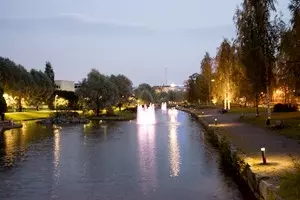 Blick auf Kokkola an der Ostsee in Finnland
Photo: © City of Kokkola
Kokkola at a glance
- Kokkola is on the Gulf of Bothnia in Central Ostrobothnia; Karleby is the city’s Swedish name.
- Neristan comprises twelve blocks with hundreds of wooden houses and courtyards.
- The old quarter’s present-day street plan dates back to the period after the city fire of 1664.
- The K. H. Renlund Museum and Kieppi are in the city centre and feature local history, art and natural history collections.
- Tankar is a lighthouse island in the outer archipelago, with a 1.5-kilometre nature trail that circles the island.
- The railway station is in the city centre, while Kokkola-Pietarsaari Airport is about 20 kilometres from the centre, near Kruunupyy.
Neristan: Kokkola’s historic wooden town
Neristan is the city’s defining neighbourhood for a walk through Kokkola’s history. Hundreds of wooden houses and courtyard buildings are spread across twelve blocks. After the great fire of 1664, the district was given its regular street plan in 1665, which is still visible today. The low-rise homes, courtyards and wooden gates tell the story of the artisans and sailors who lived here. Seafarers brought porcelain figurines to Kokkola; porcelain dogs in windows are a reminder of this maritime connection.
You can explore the area independently with a free brochure or book a guided tour. Look out for the stone foundations of the houses and the small courtyards: the layout shows how life and work were organised in the old port town. Oppistan, the Upper Town district of wealthier merchants and shipowners, lay to the south; the town hall and church were built there. A short walk therefore reveals two distinct social and architectural sides of the city.
Museums and city life
In the museum quarter in the city centre, the K. H. Renlund Museum explores local history, with art also on offer. Kieppi complements a visit with its natural history, mineral and butterfly collections. Those interested in rural Central Ostrobothnia can visit the Kaarlela Local History Museum in the Kirkonmäki district. You can shape a day in the city around your interests: start with Neristan and the history of its merchants, then move on to art or natural history.
The compact centre makes it easy to reach the main sights on foot. For a longer stay, the accommodation options in Kokkola provide a convenient base close to the city’s history and everyday life. This makes it easy to combine a visit to the wooden town with a day at the museums, while Tankar offers a separate excursion into the archipelago.
Tankar: lighthouse and island nature
Tankar lies out in the archipelago and can be reached seasonally by the M/S Jenny from Kokkola. The island combines maritime history and nature: its lighthouse was completed in 1889 and is still in operation. A 1.5-kilometre circular trail passes information boards and winds through the island landscape; stops along the way include a bird observatory and an observation tower. Tankar is part of the Natura 2000 area of the Luoto archipelago.
Wear sturdy footwear for the nature trail. The boardwalks by the harbour are wide enough for wheelchairs and pushchairs. A summer café stop and the option to stay overnight in former pilot accommodation give you more ways to enjoy the island. Boat departures are seasonal, making Tankar a full day out in its own right.
If you would rather experience the archipelago from land and see a different stretch of coast, head further south to Pietarsaari / Jakobstad, known for Skolparken, the old town of Skata and the Seven Bridges Archipelago. North of Kokkola, Oulu is a larger city at the mouth of the Oulujoki River. The overview of Finland’s west coast can help you link these places as distinct stops along the Gulf of Bothnia.
Getting there and planning your trip
Kokkola railway station is in the heart of the city and connects it to Finland’s long-distance rail network. The bus station is right next to the railway station, with long-distance buses travelling north, south and east. Kokkola-Pietarsaari Airport is about 20 kilometres from the city centre, in the municipality of Kruunupyy, and has scheduled flights to and from Helsinki. You can book a taxi in advance for the airport transfer.
If you’re travelling from Sweden, you can take the ferry to Vaasa and continue overland from there. The city’s main sights are close together, while a trip to Tankar also involves getting to the departure harbour and taking the seasonal boat. This makes Kokkola especially well suited to combining local history with a focused island and nature experience.
Frequently asked questions about Kokkola
What is there to see in Neristan?
The old wooden town comprises twelve blocks with hundreds of houses and courtyards. Its regular street plan took shape after the fire of 1664. Porcelain dogs and the former homes of artisans and sailors bring the city’s maritime history to life.
How do you get to Tankar?
The lighthouse island is served seasonally by the M/S Jenny from Kokkola harbour. A 1.5-kilometre nature trail circles Tankar; the lighthouse, bird station and island landscape are the main stops.
How do you get to Kokkola?
The railway station is in the city centre, and the adjacent bus station has long-distance connections. Kokkola-Pietarsaari Airport is about 20 kilometres from the city centre, in Kruunupyy.
