
Pietarsaari / Jakobstad: Wooden Houses, Gardens and Coast
Pietarsaari, known as Jakobstad in Swedish, combines a historic wooden-house district with coastal paths, beaches and a historic harbour. Choosing how to spend the day is easy: Skata and the gardens shape a city visit, while Fäboda and the Old Harbour lead you to the water and into nature.
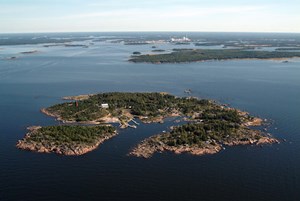 Schären bei Pietarsaari / Jakobstad in Finnland
Photo: © Helifoto
Pietarsaari / Jakobstad at a glance
- This bilingual city lies on Finland’s coast along the Gulf of Bothnia.
- Skata comprises 40 blocks of houses and has been protected since 1982.
- Fäboda combines sandy and rocky beaches with forest trails and routes for hiking.
- The Old Harbour offers boathouses, woodland, a beach and a large playground.
- Skolträdgården Botanical Garden is in the city centre and covers around 1.35 hectares.
- Kokkola-Pietarsaari Airport is about 33 kilometres away; Jakobstad-Pedersöre railway station is in Pännäinen.
Skata: wooden houses and maritime history
Skata, also known as Norrmalm, is one of Finland’s largest contiguous historic wooden-house districts. The first houses were built in the early 18th century. Until the late 18th century, the area was mainly home to sailors and their families; as the Strengberg tobacco factory grew, Skata later developed into a working-class district. It has been protected since 1982 and has largely retained its historic character.
The best way to explore Skata is on foot. Colourful wooden houses, ornate façades and quiet streets make the district a destination in its own right. The Old Harbour is just a short walk away, making it easy to combine the wooden-house district with its maritime surroundings. The tourist information office arranges guided walks by prior appointment. If you prefer to explore independently, you can round off your walk with a visit to the harbour and a break at a café.
The Malm House explores the city’s history and seafaring heritage, with ship portraits and models offering a glimpse into its past as a trading town. The Strengberg Tobacco Museum tells the story of the tobacco factory, which was among Finland’s largest in the early 20th century. Nanoq adds an Arctic museum to the mix, with exhibitions on Arctic cultures, history and nature. The Strengberg Museum is open in summer and by appointment; Nanoq is open from September to May on request.
Gardens and the Old Harbour
The Aspegren Garden and the Rosenlund parsonage combine garden design with local history. Nearby, the Skolträdgården garden is home to a wide variety of plants across around 1.35 hectares; it makes a peaceful counterpoint to Skata and the harbour and can be included in a walking tour of the city. Guided tours of Rosenlund are available by prior booking.
At the Old Harbour, traditional red-painted boathouses recall the coast’s former use. The harbour area is also a place to relax, with a beach, woodland and a small marina; a large playground adds to the appeal. The Old Harbour is ideal for a shorter walk, while Fäboda offers more space for longer trails and observing nature.
Fäboda: beaches, forests and trails
Fäboda lies outside the city centre and combines sandy and rocky stretches of coast with woodland. Along the shore, you can enjoy smooth rocks and sweeping sea views. The trail network offers short, waymarked loops as well as longer hikes of up to 33 kilometres; huts, an observation tower, rest areas and barbecue spots are dotted along the routes. You can keep your visit to a beach walk or plan a full day of hiking.
For a family outing, Fäboda has a nature trail with activities, animal sculptures and a balance course. In winter, the forests are open for cross-country skiing; mountain biking and berry picking are other ways to enjoy the outdoors. The accommodation options in Jakobstad make it easier to choose between staying in the city or focusing your trip on Fäboda. The area offers both easy access to Skata and the museums and opportunities to explore the forest and coast.
For a comparison along the Gulf of Bothnia, head north to Kokkola / Karleby, with its Neristan district and the seasonal island destination of Tankar. To the south lies Vaasa / Vasa, where a ferry crosses the Kvarken to Umeå. The guide to Finland’s west coast presents these places as distinct stops on a longer coastal journey.
Getting there and choosing how long to stay
Kokkola-Pietarsaari Airport is around 33 kilometres from Jakobstad. Jakobstad-Pedersöre railway station is in Pännäinen; bus services connect it to the city and other places in the region. The train is therefore a convenient way to travel on Finland’s long-distance rail network, while the regional bus covers the final leg to Jakobstad. In the city, Skata, the gardens and the Old Harbour are close enough to visit together.
A longer stay is worthwhile if you also want to visit Fäboda or explore the archipelago. For a day trip, combine Skata, the Malm House and the Old Harbour. You could spend another day at the Botanical Garden and the Strengberg Museum; set aside a separate block of time for Fäboda, depending on the hike you choose.
Frequently asked questions about Pietarsaari / Jakobstad
What is the difference between Skata and Fäboda?
Skata is a protected wooden-house district with a history of city life and seafaring. Fäboda is a coastal and forest area with beaches and trails for walks and longer hikes.
Which attractions can you combine in the city centre?
Skata, the Malm House, Aspegren Garden and the Old Harbour make an easy-to-combine sequence of wooden houses, a museum, a garden and maritime surroundings.
How can you get to Jakobstad without a car?
Trains stop at Jakobstad-Pedersöre railway station in Pännäinen; regional buses connect the station with the city and the surrounding area. Kokkola-Pietarsaari Airport is about 33 kilometres away.
