
Kamień Pomorski on the Kamieński Lagoon: Cathedral, Organs and Old Town
Kamień Pomorski lies on the Kamieński Lagoon, slightly inland from the Baltic Sea. It is especially worth visiting for its medieval cathedral, peaceful cloister and historic town centre; the waterfront and marina add a waterside dimension to a stroll around town.
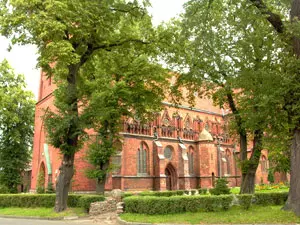 Dom St. Johannis in Cammin
Photo: © nordlicht verlag
Kamień Pomorski at a glance
- Townscape: The cathedral precinct, market square, town hall and Wolin Gate are the main historic landmarks.
- Highlight: The cathedral church was founded in 1175; its Baroque organs are a defining feature of the interior.
- Location: The town lies on the Kamieński Lagoon; the Baltic coast is not right beside the cathedral centre.
The cathedral precinct and organs
Start your visit in the cathedral precinct at the Konkatedra św. Jana Chrzciciela (Co-Cathedral of St John the Baptist). The Pomeranian Duke Casimir I founded the church after the bishop’s seat was moved here in 1175. The building combines Romanesque and Gothic forms; the town also highlights its cloister and historic organ collection. The cloister is a peaceful courtyard within the cathedral precinct, offering a second architectural perspective alongside the spacious church interior. So, when you visit, take time to look beyond the façade and nave.
The Kamień organs are described by the town as having 3,300 pipes and 47 stops. They are the focal point of the International Organ and Chamber Music Festival, which has been part of the town’s cultural life for decades. The cathedral and cloister are also worthwhile architectural attractions in their own right outside concert season.
The old town between the market square and waterfront
From the cathedral precinct, head to the market square and town hall. The town dates the construction of the town hall to the late 13th or early 14th century. It still serves as the seat of the municipal administration, making it primarily a landmark for orientation in the historic centre. From there, continue towards Wolin Gate, a Gothic defensive structure listed among the region’s notable buildings in the municipal heritage register. Together, the church, market square and fortifications make for a compact walking route through the town’s history.
If you have time to visit another church, you can add St Nicholas’ Church in the town park. It dates from the 14th century and stands on a rise in the park. The bishop’s palace and remnants of the town walls offer further points of interest in the historic quarter. Choose one of these stops if you want to explore the cathedral in more depth; for a short walk, the cathedral, town hall square and Wolin Gate make a connected route.
Kamień lies on the Kamieński Lagoon, while the Baltic beaches are farther away. The municipal visitor guide places the town about eight kilometres from the coast. This makes it a different kind of base from seaside resorts right on the water: here, the cathedral, old town and lagoon setting take centre stage. Round off your town visit by the waterfront, enjoying the view across the water; for a day at the beach, continue on to the coast.
Where to stay and what to visit in West Pomerania
If you choose Kamień Pomorski as a quiet base between the historic centre and the lagoon, compare accommodation using the local guide to Cammin. In the West Pomerania region, you can also visit Wolin, with its regional museum and harbour setting. For a combination of lagoon and Baltic Sea, Dziwnów is the nearby coastal counterpart: beaches and the Dziwna Bridge shape a stay there, while Kamień Pomorski is defined by its cathedral and old town.
Frequently asked questions about Kamień Pomorski
How far is the town from the Baltic Sea?
The municipal tourist guide gives the distance between Kamień Pomorski and the Baltic coast as around eight kilometres. A visit to the cathedral and old town therefore does not include direct access to the beach.
What are the highlights of the cathedral precinct?
Alongside the Romanesque-Gothic Co-Cathedral, the cloister and Baroque organs are notable features. According to the town, the organs have 3,300 pipes and 47 stops.
Can I visit the cathedral and see the organs outside the festival?
Yes. The organs and cloister are part of the historic cathedral precinct and can be experienced as part of a town walk, independently of any concert.
