
Molfsee Open-Air Museum
Since finally becoming part of Germany in 1864, Kiel, the state capital of Schleswig-Holstein, has developed into a major city on the Baltic coast. Kiel is a popular destination for holidaymakers on the Baltic coast between Flensburg and Lübeck. The Schleswig-Holstein region as a whole is also of great cultural and historical significance, not least because of the many contacts between Germans and Danes in this area. Its inhabitants felt a duty to this rich heritage. In 1958, they founded an association with the primary aim of preserving—or even rescuing—the valuable rural buildings of Schleswig-Holstein. The Schleswig-Holstein Open-Air Museum Association began its work in 1960 on a scenic, 60-hectare site on the southwestern edge of Kiel, interspersed with numerous bodies of water. In 1965, what is now northern Germany’s largest open-air museum opened in Molfsee.
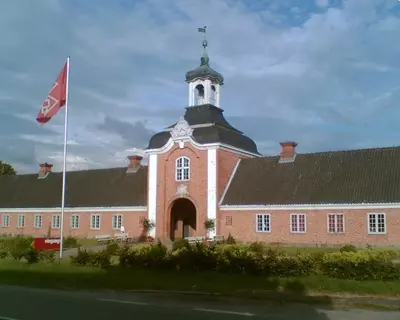 Freilichtmuseum Molfsee
Photo: © C Wiki Trinsath Gemeinfrei
Freilichtmuseum Molfsee
Photo: © C Wiki Trinsath Gemeinfrei
An open-air museum that draws visitors
More than 70 historic buildings from the various regions of Schleswig-Holstein can be seen and explored across the museum’s extensive grounds of meadows, gardens, fields and ponds. They include complete farmsteads with their original furnishings, household items used in farming, and tools and equipment for livestock breeding and cultivation. Animals of the kinds once kept on farms provide an authentic complement to the exhibits. The museum’s overall design, including its buildings and grounds, closely follows historical models, bringing to life the way people lived and worked in centuries past. To complete the authentic historical experience, craftspeople demonstrating traditional trades—including basket makers, blacksmiths, turners, potters, weavers and woodcarvers—show how their work was done, and some even sell their products.
In addition to their original furnishings, several buildings house individual collections of agricultural equipment, toys and dairy machinery. Exhibits explore the history of milling, while displays and equipment document whaling, poor relief and life on a Hallig island. A pharmacy, complete with an exhibition and herb garden, offers a glimpse into the history of pharmacy.
A museum railway takes visitors comfortably around the extensive grounds. At the historic fairground, two carousels, a swing boat and a large playground offer plenty of fun. Dairy products and treats from the bakehouse, smokehouse and fish smokehouse cater to visitors’ appetites, while snacks are available at the dairy and kiosk. At the entrance, the Drathenhof Museum Restaurant welcomes visitors.
The museum has since grown from a place of exhibition into a center for scientific research. Membership in the active Friends’ Association brings benefits to its members while also supporting the museum’s valuable work. This benefits, not least, the many holidaymakers on the Baltic coast, who can enjoy a relaxing and enriching family holiday on the Baltic Sea, combined with a visit to northern Germany’s largest open-air museum (Hotel Kiel).
Hamburger Landstraße 97
24113 Molfsee
Telephone: (04 31) 659 66-0
