
Youth trips in Schleswig: Haithabu, the Schlei and group activities
Schleswig is ideal for children’s and youth groups looking to combine the Baltic coast and the Schlei with archaeology and German-Danish border history. The Viking Museum Haithabu offers a ready-made group activity: school classes and youth groups can choose between a guided programme and exploring independently.
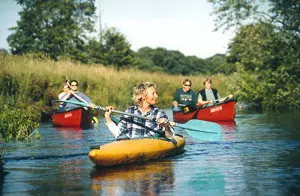 Jugendreisen Schleswig: Kanutour
Photo: © Tourismusbüro Bad Bramstedt/na-sh
Youth trips in Schleswig: key facts
- Focus: Haithabu and the Danevirke bring together the Viking Age, archaeology and the history of a border region.
- Group activities: The Viking Museum offers programmes for nurseries, schools, school classes and youth groups.
- School class package: This compact programme lasts 4.5 hours and combines the museum, the archaeological site and a hands-on activity.
- Self-guided tour: A museum backpack accompanies school classes and youth groups on an approximately two-hour exploration of the Viking houses.
- Season: The compact school class package is available from April to October; bookings should be made at least two calendar weeks in advance.
- Where to stay: Schleswig combines a visit to Haithabu with other cultural attractions at the innermost end of the Schlei.
Planning a group programme at Haithabu
The Viking Museum Haithabu is located near Busdorf, south of Schleswig, and offers the region’s most tangible group activity. Together with the Danevirke, the site forms the UNESCO World Heritage Site “Archaeological Border Complex of Haithabu and the Danevirke.” This creates a varied theme for a youth trip: Haithabu illustrates the early medieval trading history of the Schlei, while the Danevirke provides context for the border landscape and its archaeological remains. The visit thus connects everyday life in a historic settlement with Schleswig-Holstein’s position between the North Sea and the Baltic Sea.
The “Compact School Class Package” begins with an approximately one-hour guided tour of the museum. The group then crosses the historic site to the Viking houses. After a break planned by the group, a two-hour hands-on programme follows, with options such as archery, bread-making, childhood and games, felting, runes or amber. Including the break, the programme lasts 4.5 hours. It works well as the main activity for a day, without packing the trip with too many changes of location.
According to the current programme, the package is available from April to October. As of October 2026, the listed group rate is €190, plus €1 per person for materials and the museum admission fee; bookings should be made two calendar weeks in advance. The Viking Museum Haithabu programme lists the respective activities, age groups, season dates and prices.
Explore the Viking houses independently
For school classes and youth groups who want to organise their own visit, the museum provides a museum backpack. The materials are designed for around two hours and include activities about Haithabu and the Vikings: a quiz, games, a Nordic tale, a scavenger hunt around the houses and a short rune activity. This makes for a shared exploration with different stops, giving the group a chance to shift its attention between the exhibition, the site and its own questions.
A self-guided tour is particularly suitable when leaders want to allow plenty of time for breaks and discussion. Groups hoping to combine several learning objectives or receive an expert introduction on site can instead book the guided package. Both options focus on the Viking houses; the exact season and itinerary depend on the current programme. For more information about visiting Haithabu, getting there and opening hours, see the Viking Museum Haithabu visitor guide.
Schleswig as a base for culture and the coast
Schleswig lies at the innermost end of the Schlei and complements a visit to Haithabu with cultural attractions in town. The cathedral, Old Town and Gottorf Island Museum offer different activities from the archaeological landscape near Busdorf. A group can plan one day at Haithabu and another in town, rather than squeezing every stop into a single visit. The guide to Schleswig, including the cathedral, Gottorf and Haithabu provides more detail on the cultural attractions and how to plan a visit.
For a longer stay, the Schlei can provide a second thematic strand. Its shoreline links Schleswig with harbour towns and villages, while the Flensburg Fjord farther north connects the trip to the Danish border and the German-Danish cultural region. A youth programme can therefore combine archaeological history with coastal landscapes, harbour life or a stop by the water. The Schlei guide can help you choose places to visit and excursions; the Schleswig region overview compares the fjords, the Schlei and the open Baltic coast.
When planning accommodation, choose a base that suits the trip’s focus: groups centring their visit on Haithabu and the history of Schleswig can look at the town and its surroundings. If the trip is to end with several days on the eastern Schlei, Kappeln can also be included as a harbour town. The Kappeln accommodation guide provides a point of comparison if the trip includes the eastern Schlei.
Frequently asked questions about youth trips in Schleswig
Which group activity is right for a school class?
The compact school class package combines a guided tour, the archaeological site and a hands-on programme over 4.5 hours. For a self-guided visit, the museum backpack provides activities for around two hours.
How much time does a group need at Haithabu?
The compact package takes 4.5 hours, including a break. A self-guided exploration with the museum backpack takes around two hours; allow extra time for getting around and taking breaks, depending on the day’s schedule.
How can the trip include German-Danish history?
Together, Haithabu and the Danevirke form the archaeological border complex within the UNESCO World Heritage Site. A stay on the Flensburg Fjord, which borders Denmark, is another option; the choice of additional stops depends on the trip’s length and the group’s focus.
