
From Qi Gong to Rügen Healing Chalk
Qi Gong
As an important component of Traditional Chinese Medicine (TCM), Qi Gong (Qi = life energy, Gong = practice) refers to a collection of exercises performed in motion and at rest, combined with a focus on breathing, and is intended to stimulate the optimal functioning of the body’s meridians. Its aim is to cultivate body and mind and harmonize Qi. Medical Qi Gong is used for arthritis, pulmonary emphysema and carcinomas. To achieve an effect, daily training of about 15 minutes is necessary and sufficient.
Rasul bath
In this care ritual, which originated in ancient Egypt, valuable therapeutic muds are applied to the skin and massaged in. After about half an hour, the muds are rinsed off, also removing old flakes of skin. Metabolism is stimulated, circulation is improved and the immune system is strengthened. This very gentle treatment is also suitable for children.
Reiki
A simplified translation from Japanese is “healing with universal (divine) energy.” Reiki—part of ancient Buddhist healing methods—is intended to promote the flow of energy in the body and activate its self-healing powers through the Reiki master laying hands on more than 20 points on the body. Reiki, as it is said, can neither be learned nor taught, but only passed on. Claims of healing through the laying on of hands alone should be treated with skepticism; despite a long tradition of use, they have not yet been scientifically proven. Reiki treatments, on the other hand, may be effective for some individuals as relaxation practices alone.
Rolfing
This method, based on physical manipulation, was developed by the American Ida Rolf in the 1950s. Rolfing is intended to realign body parts whose positions in relation to one another have become misaligned. The resulting chronic muscle tension is addressed using massage and movement techniques while lying down, sitting, walking and standing. The approach attributes poor posture not only to orthopedic abnormalities, but also to suppressed emotional states, and is therefore holistic. Treatment consists of ten precisely structured sessions. As a precaution, the practitioner (Rolfer) should be able to demonstrate training and experience in physiotherapy and psychotherapy.
Roman bath
This bathing culture, rooted in Roman tradition, involves a sequence of bathing rooms with varying temperatures and humidity levels. The Tepidarium (warm bath), at 37 to 39 °C, is a room that is gentle on the circulatory system and is described as a restorative bath. In contrast, the Caldarium (hot bath) is a steam grotto with high humidity and a temperature of 40 to 50 °C. In the Laconium, the body begins to sweat after a short time at 55 to 65 °C. The Frigidarium (Frigidus = cooling) is a cold room used for revitalization.
The gradual increase in temperature makes the use of the different rooms gentler on the circulatory system than a traditional sauna. Moist steam heat improves circulation in the respiratory tract.
Rügen healing chalk
This fine-grained material is one of the healing remedies specific to the Baltic Sea region and, like Fango mud packs, is generally used as a heat therapy treatment. The chalk pack, warmed to about 45 °C, is a good preparation for a massage. In addition, this mineral substance detoxifies the body and stimulates acid production. When applied cold, at 3 to 4 °C, Rügen chalk has a beneficial effect on inflamed joints or muscles, as well as on varicose veins.
Photo: Dr. Jerzy Dyczynski
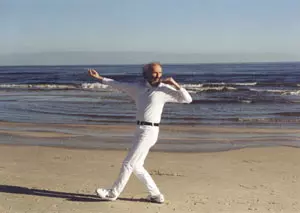 Qi Gong (Foto: Dr. Jerzy Dyczynski)
