
Wellness A–Z
A wellness holiday on the Baltic Sea is always associated with water and the sea—in other words, salt water. This is where the term thalassotherapy comes from: thalassa is the Greek word for water. A wellness holiday on the Baltic Sea offers a wide range of treatments, with many terms that need explaining. We’d like to help you find your way around by explaining the most common treatments and their background, while also taking a critical look at some of the wellness services on offer.
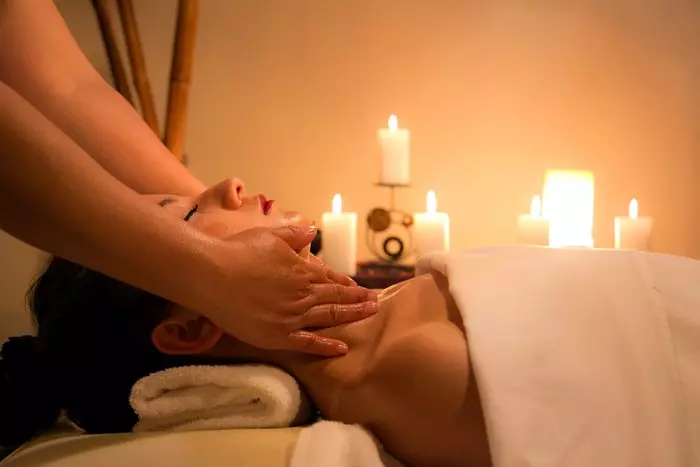 Wellness-ABC
Photo: © pixabay.com/blueland/CC0
Wellness-ABC
Photo: © pixabay.com/blueland/CC0
Many of the treatments you may encounter on a wellness holiday on the Baltic Sea originate in Asia. The various branches of Traditional Chinese Medicine (TCM) feature prominently. Acupuncture is undoubtedly the best known; it is increasingly even part of a family doctor’s repertoire. Qi Gong, a movement practice focused on cultivating body and mind, also belongs to this tradition. Ayurveda, by contrast, comes from India. Like TCM, it takes a holistic approach, meaning that holidaymakers on the Baltic Sea can enjoy treatments that address both physical symptoms and psychological well-being.
The Cleopatra bath and the hammam originate in the Mediterranean region. The Egyptian queen Cleopatra is said to have bathed in donkey’s milk, while the hammam is a Turkish-Oriental bathing ritual for deep cleansing the body. Rasul, a treatment method from ancient Egypt, is also included here. A bathing ritual rooted in Roman tradition is the Roman bath, which consists of a sequence of baths at varying temperatures and humidity levels.
Our wellness A–Z gives you detailed information about these and many other treatments you may come across on a wellness holiday on the Baltic Sea.
