
Okome: Hiking Trails, Forest and Cultural History
Accommodation in Okome
Okome combines hiking trails through forests and uplands with traces of church and milling history. The Boa kyrkstig follows a historic route from Boa to the church in Okome; the Ödemarksstigen lies in the uplands between Okome and Gällared and connects several nature reserves. The church and mill also offer their own historical highlights.
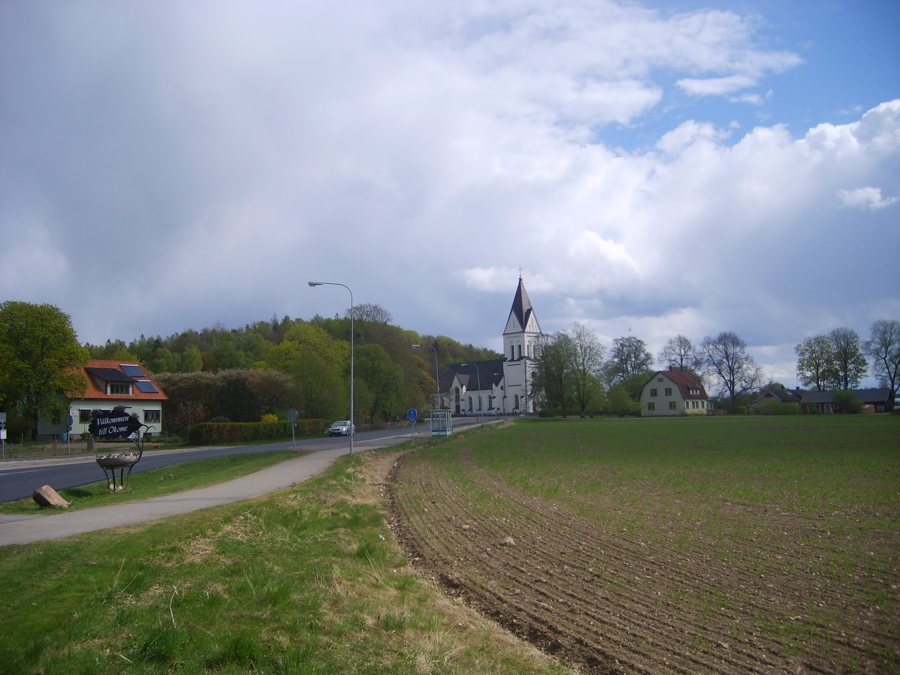
Hiking trails in Okome: two different routes
The Boa kyrkstig is six kilometres long and runs from Boa to Okome. Its route follows the historic path that the residents of the village of Boa used to take through the forest to the church in Okome. This gives the trail a clear connection to the area: it represents the villagers’ journey to church, not just a link between two place names. Its length, starting and finishing points, and former purpose together provide a way to understand the route.
The Ödemarksstigen offers a different scale: it lies in the uplands between Okome and Gällared, is twelve kilometres long, and can be divided into two loops of six kilometres each. The route connects the Kålabro, Skogen, Bergs naturskog and Boa nature reserves, and also passes through other forest areas in Falkenberg Municipality. Compared with the Boa kyrkstig, this route can be understood in terms of its loop structure and the nature reserves it connects.
Okome kyrka: building history and historic furnishings
The present-day Okome kyrka was built in 1891 on the site of the demolished old Okome kyrka. The pulpit and canopy date from 1649, making them older than the present church building. The site brings together the history of the predecessor building, the late-19th-century church, and older furnishings.
Following a renovation completed in the same year, the church was reconsecrated on 29 September 2013. This date marks a later stage than the building’s construction in 1891 and places the more recent building history in context.
Okome kvarn: milling history by the dam
Milling has taken place at Okome kvarn since the 19th century. The surroundings of Okome kvarn och såg include a dam and several Falun-red wooden buildings dating from the late 1930s. This makes it possible to distinguish the long history of milling from a considerably later phase of construction at the same site.
The buildings next to the dam are used by the local heritage association and parish association as a local heritage centre and museum. Alongside the historic milling activity, this also highlights the buildings’ current use by local associations.
Bringing hiking and local history together
When choosing a route, you can compare a historic link from Boa to the church with a longer trail featuring loops and connected nature reserves. The church and mill complement these hiking themes with building and usage history from different periods. Okome can thus be explored through both its trails and forest areas and the history of its buildings.
Discover more destinations: Glommen, Grimsholmen, Vinberg, Skrea, Vessigebro, Abild, Tågarp, Ugglarp
See the main travel overview: Falkenberg.

