
Güstrow: Hotels and Accommodations
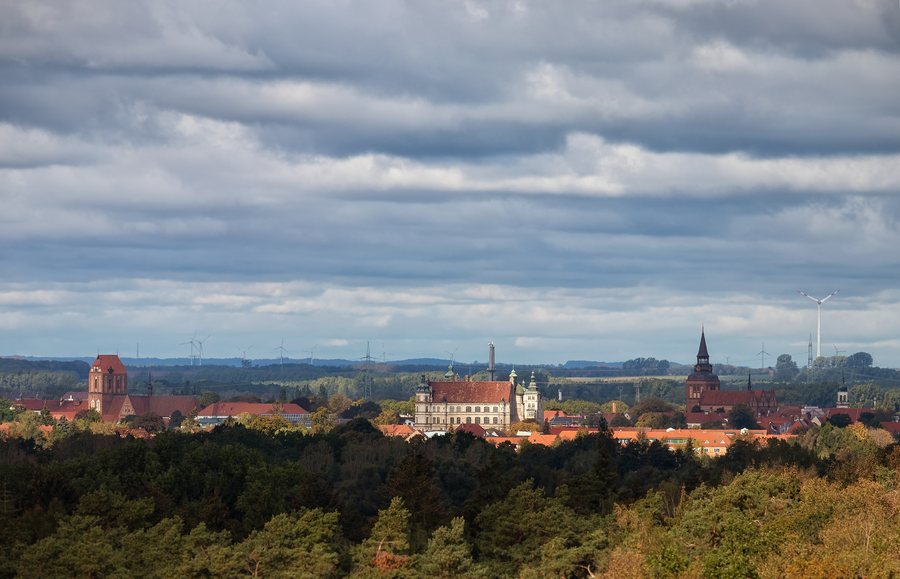
Culture and Cityscape
Güstrow’s visitor attractions include the cathedral, the historic city center, and museums. The church houses Ernst Barlach’s bronze sculpture “The Floating One,” one of the city’s most important Barlach sites, was built between 1226 and 1335, and shows the transition from Romanesque to Gothic architecture. The Gothic Gertrud Chapel near Güstrow city center houses around 30 sculptures and reliefs by Ernst Barlach, created during his time in Güstrow. These attractions also include Güstrow Palace, the market square with its town hall and parish church, the City Museum, and the North German Nativity Museum; the palace is located approximately in the immediate vicinity of Güstrow city center.
Visitor Attractions
The visitor attractions include a walking tour of the old town, the Nature and Environment Park, the OASE water park, and the Inselsee/Heidberge recreation region.
Landscape and Surroundings
The Mecklenburg-Western Pomerania Wildlife Park is located approximately in the immediate vicinity of Güstrow. Dornbusch is an old site approximately in the surrounding area of Güstrow. Bützow Palace is located approximately in the surrounding area and the wider regional area of Güstrow, as is the Thünen Museum.
Güstrow is situated in a hilly glacial terminal moraine landscape that was particularly shaped by the Weichselian glaciation. Former meltwater lakes are located around the city. Priemerberg and Blocksberg are hills approximately in the immediate vicinity of Güstrow. Liepse is an island approximately in the surrounding area and the wider regional area of Güstrow.
Check prices, availability, and amenities for your travel dates directly on Booking.com.
View accommodations and offersAdvertisement · Partner link to Booking.comFurther destinations
Graal-Muritz, Bad Doberan, Neubukow, Niekrenz, Amt Laage, Amt Warnow-West, Mandelshagen, Amt Neubukow-Salzhaff
To the overarching travel overview: Rostock.

