
Groß Kiesow
Accommodation in Groß Kiesow
In Groß Kiesow, medieval architectural history and pilgrimage routes meet. St. Lawrence Church and the paths around the village give a trip here a clear cultural and active focus. Those who take these interests into account when choosing a destination will find specific points of interest in the local building phases and the various details of the pilgrimage routes.
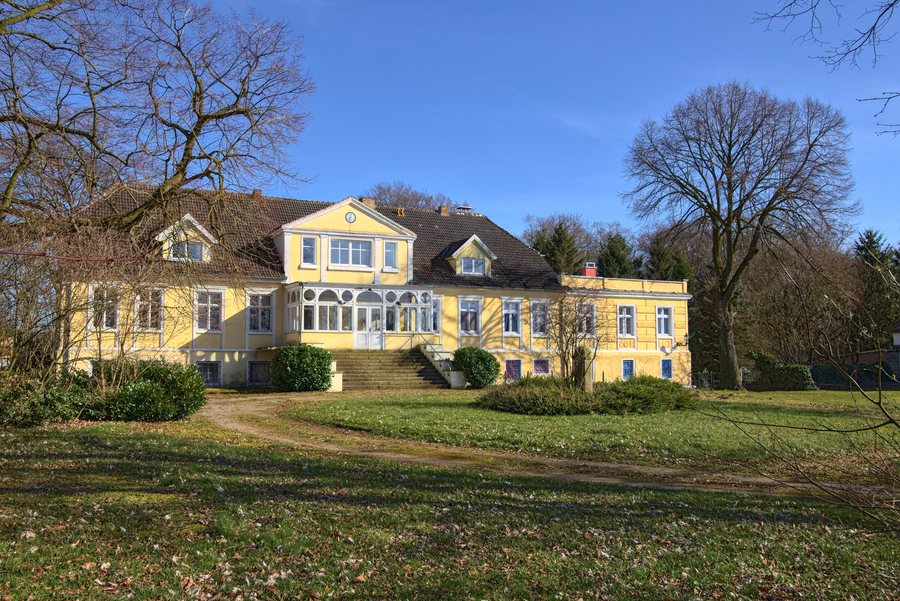
St. Lawrence Church: Building History and Features
In the center of the village, a medieval cemetery gate leads into the cemetery surrounding St. Lawrence Church. The choir was built in the second half of the 13th century from dressed and coursed fieldstones. The nave and eastern gable, made of brick, were added in the 14th century. This identifies building phases from two successive centuries at the church: the fieldstone choir from the later 13th century and the brick extensions of the 14th century. As a testament to the Middle Ages, the church is of great significance for heritage conservation.
The church’s furnishings also invite visitors to look beyond its architectural history. It contains 17th-century wall paintings. Its heraldic panels also date from the 17th century and are considered popular sights in the Lutheran church. Those interested in historic church art can explore these paintings and panels alongside the different building phases as part of learning about St. Lawrence Church.
Pilgrimage Routes and Stops Around Groß Kiesow
Seven Lord’s Prayer stones guide pilgrims along a route around Groß Kiesow. Their relief panels bear the seven petitions of the Lord’s Prayer. The starting stone of the circular pilgrimage route stands at St. Lawrence Church; it is also the route’s destination and is named “Stone of Offense.” The 18-kilometer pilgrimage route passes through fields, meadows and villages.
The spire of St. Lawrence Church remains visible to hikers on the pilgrimage route as a central landmark and point of orientation. A pilgrimage path with eight marked stops also begins beside the church. Each stop is marked by a glacial erratic. The details about the seven Lord’s Prayer stones and the eight erratic-stone stops describe different features of the pilgrimage routes and their markers; when planning a trip, you can first decide whether you are particularly interested in the route, its religious themes or the design of its stops.
Culture and Cycling Route
Another cultural point of interest is in the associated municipality: the Old Cultural House in Dambeck offers readings, music and concert evenings, lectures, travel talks, workshops, creative networking events and cultural gatherings for all generations. Those wishing to include cultural activities in their travel plans can consider this venue alongside the church and pilgrimage-route themes.
For cyclists, a section of the cycle route along district road VG 13 is described: it runs from Klein Kiesow to the entrance to Groß Kiesow and is about 1,100 meters long. The resurfaced section has a two-layer asphalt surface and is 2.50 meters wide. On May 5, 2025, it was described as fully accessible and safe for everyday, recreational and school traffic. The date refers to that description of the section at the time. Together with the pilgrimage routes, the cycle route offers another reason to consider Groß Kiesow as a destination for cultural and active pursuits.
The overview of places at the same level also includes Bandelin, Murchin, Lühmannsdorf, Gribow, Schmatzin, Wrangelsburg, Gützkow and Klein Bünzow.
For the broader travel overview: Amt Züssow.

