
Pärnu: Beach, River and Medieval History
Accommodation in Pärnu
Pärnu can be explored through three distinct themes: its broad white sandy beach, the mouth of the Pärnu River in the city centre, and the city’s medieval history. You can therefore consider the beach, river and culture as different focal points for your trip.
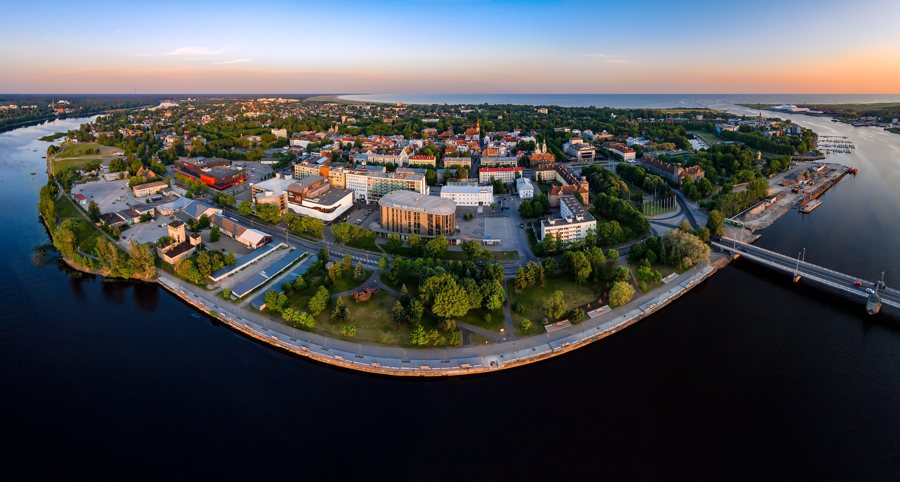 File:Pärnu kesklinn - Aerial photo of Pärnu in Estonia (2).jpg
Photo: Kristian Pikner via Wikimedia Commons, CC-BY-SA-4.0
Beach and River
Pärnu Beach is a broad sandy beach with white sand, within walking distance of the city centre. The sea is shallow and warms up quickly, making it suitable for families with children. In addition to swimming, the beach has surf clubs, beach volleyball and tennis courts, and mini golf. The water conditions and the range of beach activities can therefore help guide your choice of holiday activities.
The river also shapes the way you get your bearings in Pärnu: the mouth of the Pärnu River, Estonia’s second-longest river, is in the centre of the resort town. The Jaansoni rada runs along the right bank of the Pärnu and connects the bridge in the city centre with the Papiniidu Bridge. The river mouth and riverside path thus provide two concrete points of reference for experiencing Pärnu as a city on a river.
Coastal Landscape and Nature
Another landscape to explore is the Pärnu Rannaniidu Nature Reserve. It covers 341 hectares and includes wooded areas, lagoons and coastal meadows. These three landscape types offer a different perspective from the open sandy beach and give nature lovers a distinct way to experience Pärnu.
The Pärnu Rannaniidu hiking trail is suitable for visitors with a pram or wheelchair. If you are planning your trip around your mobility, this information provides a practical point of reference for this trail.
Museums and Medieval City History
The Pärnu Museum is located in the city centre. Its permanent exhibition explores the history of Pärnu and Pärnumaa in the context of the Baltic Sea and Estonia. There is also an open storage area where collections that normally remain hidden from visitors are displayed. The museum thus connects regional history with the broader context of the Baltic Sea and Estonia, while also making collections visible that are usually not seen.
Punane Torn is the city’s oldest and only surviving medieval building. It was built in the 15th century as part of Pärnu’s medieval fortifications. The tower houses a branch of the Pärnu Museum, with a circular panoramic cinema about the medieval city and the history of the tower. Here, a surviving piece of the city’s history meets its portrayal in a cinema.
The Koidula Museum offers a different perspective on historic living spaces: visitors can see a typical school and a typical home from the mid-19th century. In contrast to the medieval Punane Torn, the focus here is on rooms and everyday settings from a later period.
Guided tours of Villa Ammende introduce the villa and explain its history and present-day life. This offers a different focus from the museum exhibitions: the tour centres on the villa itself and its place in time.
Pärnu Linnagalerii has exhibition spaces at Kunstnike Maja and Endla Teatrigalerii. Together with the museums, these two gallery spaces add further exhibition venues to the city’s cultural offerings.
Discover more destinations: Salu, Papsaare, Kurgja, Paikuse, Uulu, Saulepa, Leina.
Back to the main travel overview: Pärnu.

