
Pawłowo – Manor House and Local History
Accommodation in Pawłowo
Pawłowo is a possible choice for travelers who would also like to shape their stay around architecture and local history. Two specific topics provide a starting point: the brick Neoclassical manor house at 15 Tucholska Street and the history of the parish church, which was built using half-timbered construction and burned down in 1945 during wartime hostilities. There is also a practical geographical connection: Provincial Road 240 runs through Pawłowo. Cultural and historical interest and the road location thus speak to different aspects of a travel decision.
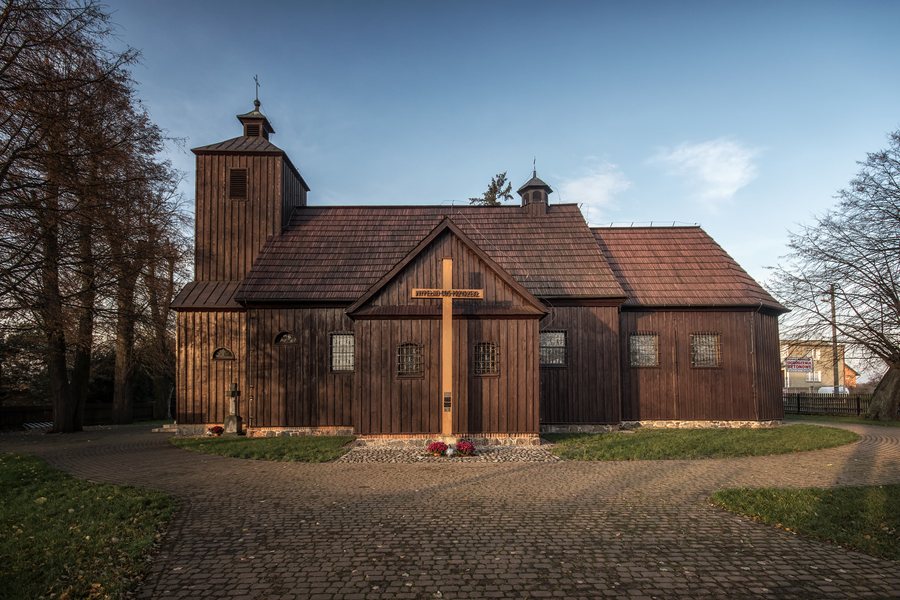 File:SM Pawłowo Kościół św Marcina 2019 (6).jpg
Photo: Sławomir Milejski via Wikimedia Commons, CC BY-SA 4.0
Manor House and Style
A brick Neoclassical manor house stands at 15 Tucholska Street. It is part of Pawłowo’s listed building stock. The address pinpoints the building; brickwork identifies its construction, while Neoclassicism identifies its style. These terms refer to different aspects of architecture: brickwork concerns construction, while the style places the house in a broader architectural context. Neoclassical architecture generally draws on forms from classical antiquity. Those wishing to include historic architecture in their choice of destination will find a specific point of reference here, connecting a general interest in architecture with a precisely named address.
The architectural style and heritage listing offer different perspectives: one concerns the house’s designation as a listed building, the other its architectural style. If you are interested in architectural history, you can consider whether Pawłowo suits your plans because of this specific building, its Neoclassical style, or both.
Parish Church and Local History
The parish church in Pawłowo offers a different perspective on local history. It was built using half-timbered construction and burned down in 1945 during wartime hostilities. Half-timbering and brickwork can be compared as different construction methods; Neoclassicism, by contrast, refers to the style of the manor house. This creates an objective contrast between two architectural terms and a historical event. The year 1945 places the church’s destruction in Pawłowo’s history, while the information about the manor house concerns a building at a specific location.
For culturally minded travelers, these are two different points of entry. The manor house represents construction and style; the former church represents the history of a building that burned down in 1945. Depending on whether architectural forms or local history interest you more, one aspect or the other may carry more weight in choosing a destination. Both, however, can be part of the travel decision.
Road Access and Choosing Where to Stay
Provincial Road 240 runs through Pawłowo, adding a geographical reference to the cultural perspective. For your own planning, it serves a different purpose than the manor house and parish church: it helps you place Pawłowo along a named road route, while the two historical topics provide a cultural reason to consider the place more closely. When choosing somewhere to stay, you can weigh these aspects separately: Does Pawłowo fit your travel plans, and does its connection to architectural and local history match your interests? The answer first guides your choice of destination; choosing a particular hotel is a separate step.
Discover more destinations: Czersk, Olszyny, Konarzyny, Charzykowy, Krzyż, Brusy, Chojnice, Męcikał
For the broader travel overview: Conitz.

