
Discover Żuławki
Accommodation in Żuławki
When choosing a travel destination, the beach does not have to be the only deciding factor: Żuławki can also be explored through its historic village connections and waterside landscape. Here, you can find your bearings through the specific relationships between Żuławki, nearby Drewnica and the Szkarpawa. A mill with a precise construction date and the Gdańska Głowa lock add another perspective. If you want to make these themes a part of your trip, you can consider them separately: as the history of two places, or as a geographical connection along the rivers.
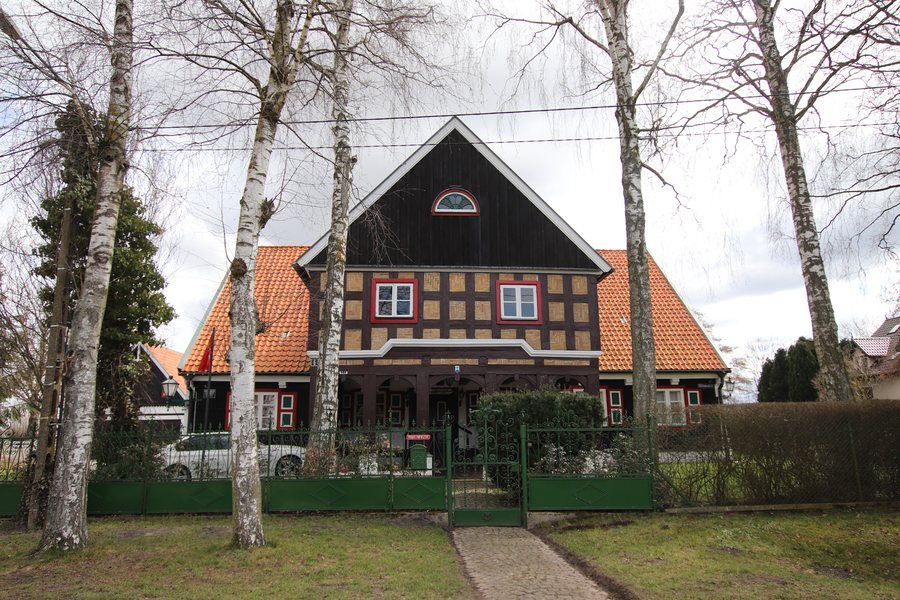
Żuławki and Drewnica: two places with a river between them
Żuławki and Drewnica are former Mennonite villages separated by the Szkarpawa. To find your bearings, it makes sense to keep both place names in mind: their shared historical context does not make them a single place, and the river is a clearly identified part of their geographical relationship. This gives the local history a concrete framework. Rather than assuming a general story about the region, you can think of the two villages and the Szkarpawa as separate points of reference. If you are interested in historic village connections, this gives you a specific starting point for planning your trip.
A post mill with a construction date
In nearby Drewnica stands a grain mill of the “koźlak” type, or post mill, built in 1718. Its construction date and precise type make it a concrete point of reference near Żuławki for anyone with a general interest in the history of mills. If you take buildings and historical connections between places into account when choosing a travel destination, you can specifically seek out a dated mill of a particular type here. The building’s location is important: the mill is in Drewnica, not Żuławki. Together with the history of the two villages, it offers a cultural perspective that can be explored through clearly identified places and a specific building.
River connections around Gdańska Głowa
The Gdańska Głowa lock near the village offers another point of reference. It connects the Vistula with the Szkarpawa; the Szkarpawa flows into the Vistula Lagoon. This makes it possible to understand the waterside landscape through named waterways and the relationships between them. This is a different way of looking at the area from the history of the former Mennonite villages: here, the focus is on river names and the connection to the lagoon. For travellers who like to explore landscapes through their geographical connections, these details offer an independent point of reference. The Szkarpawa features both as the river separating Żuławki and Drewnica and as part of the described connection between the Vistula and the Vistula Lagoon.
Which themes should shape your trip?
The facts offer two different focuses to help you decide: the earlier village history of Żuławki and Drewnica, and the waterways around the Gdańska Głowa lock. The mill in Drewnica is another specific point of reference for architectural and cultural history. When choosing your travel destination, consider which of these connections matters more to you. The historical connections between places can be understood through the names of the two villages and their separation by the Szkarpawa; the water-geographical perspective follows the connections between the Vistula, the Szkarpawa and the Vistula Lagoon. This keeps your decision grounded in the actual features of the place, rather than combining different themes into a single activity.
Discover more destinations: Sztutowo, Nowy Dwór Gdański, Kobyla Kępa, Jazowa, Nowa Cerkiew, Stegna, Jantar, Myszewko.
Go to the main travel overview: Tiegenhof.

