
Łężyce – Nature, Horse Riding and Manor House History
Accommodation in Łężyce
Łężyce lies within the buffer zone of Tricity Landscape Park. If you want to take nature and active pursuits into account when choosing a destination, you’ll find two specific points of interest here: supervised horse rides and the location of a stork’s nest on the eastern edge of the village. A manor house with a history as a former family estate is another local point of interest. When planning your trip, you can give different weight to experiencing nature, being active and exploring the area’s history.
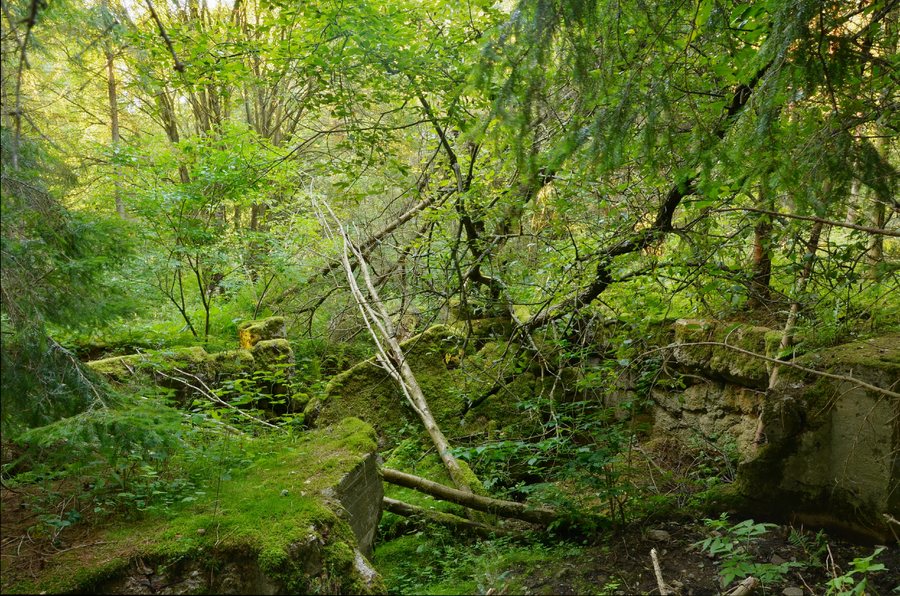 File:Ruiny bunkra niemieckiego, Łężyce - panoramio.jpg
Photo: pzdziarski via Wikimedia Commons, CC BY-SA 3.0
Nature and Storks
At the eastern edge of Łężyce, near Obwodowa Street, a large, old white stork’s nest stood on a utility pole disconnected from the power grid in July 2022. If you want to look for it during your visit, check beforehand whether the nest is still there.
The landscape park’s buffer zone and the stork offer two different perspectives on Łężyce: one places the village in its geographical context, while the other draws attention to a specific spot on its outskirts. For travellers who like to plan their days around nature, this distinction can be helpful when finding your way around.
Horse Rides and Trails in the Adjacent Park
The Ośrodek Jeździecki „Pomerania“ offers riders with prior riding experience guided rides along one of the forest trails, accompanied by an instructor. The riding stable borders Tricity Landscape Park. The adjacent park has several trails specifically designated for horses. The rides are therefore intended for people who already have riding experience; the instructor’s guidance is also part of the offer.
When choosing where to stay, you can consider whether a horse ride fits your travel plans or whether the surrounding landscape is what matters most to you.
The Manor House as a Historical Landmark
The manor house in Łężyce dates from the 19th century and was formerly the estate of the Pobłocki and Roszczynialski families. This historical background adds another perspective on the area alongside its nature and horse-riding themes. If you are considering Łężyce as a place to stay, you can focus on different interests: the landscape, a horse ride subject to the requirements described above, or the history of the former estate.
Culture in the Wider Destination of Wejherowo
For a broader cultural perspective on the wider destination of Wejherowo, the cultural institutions and historic sites in Wejherowo offer a separate area of interest. Kalwaria Wejherowska was the fourth Calvary complex established during the Polish–Lithuanian Commonwealth. After Bishop Mikołaj Albert Gniewosz of Aleksandrów approved its construction on 9 June 1649, work began on its chapels. These dates provide a clearly defined historical context for the complex.
The Muzeum Piśmiennictwa i Muzyki Kaszubsko-Pomorskiej in Wejherowo was founded in 1968. It is a treasure trove of regional artefacts and a centre of Kashubian culture, particularly the Kashubian language. The permanent exhibition at Książnica prof. Gerarda Labudy, devoted to the history of the Kashubians, offers another perspective. Visitors interested in regional culture and language can explore these subjects alongside Łężyce’s nature and local history, without conflating them.
The exhibitions in Wejherowo also focus on different subjects: the historic town hall displays models of the town and Kalwaria Wejherowska. The Muzeum Piaśnickie commemorates the victims of the Pomeranian crimes on two floors, using the Piaśnica crime as an example; relics of the Piaśnica crime are located in the basement. These exhibits give a cultural addition to the wider destination of Wejherowo its own historical focus.
Discover more destinations: Słajkowo, Sychowo, Choczewo, Zamostne, Gościcino, Jeleńska Huta, Rozlazino, Donimierz.
Go to the wider travel overview: Wejherowo.

