
Zamostne: Local History and Kayaking on the Reda
Accommodation in Zamostne
Zamostne offers two distinct points of interest for planning a trip: local history involving a manor house, former uses and archaeological features, and a 22-kilometre kayaking stretch on the Reda to Reda. These offer separate focuses on cultural history and an active river route. If you are looking for accommodation in Zamostne, you can first consider whether local and landscape history or paddling will play a greater part in your stay.
Landscape between Zamostne and Kniewo
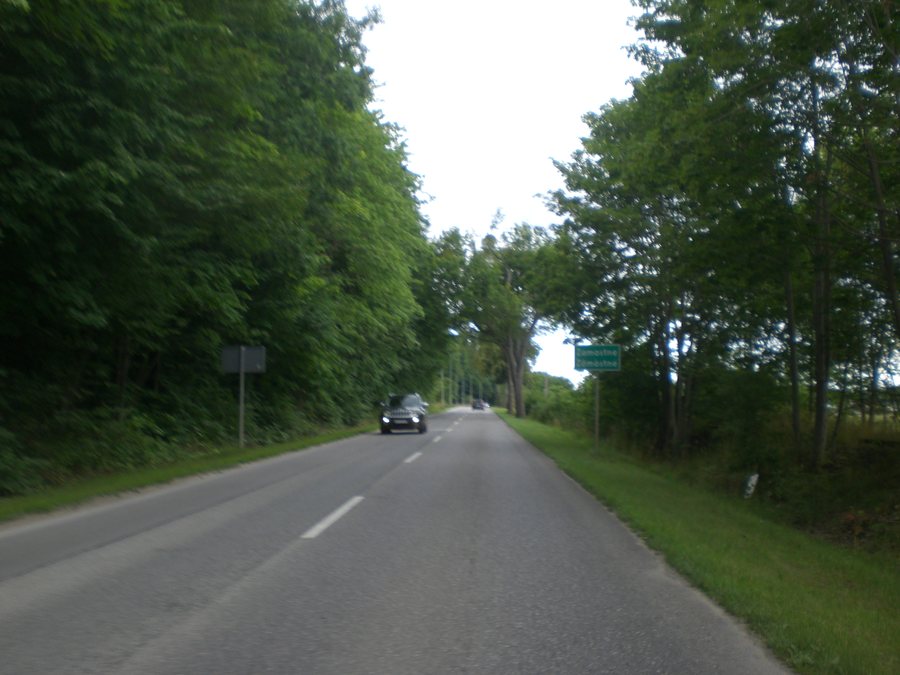
From Wejherowska Street in Zamostne, the view opens onto the countryside and the village of Kniewo. There is also a linden avenue running between Zamostne and Kniewo. These two landscape features offer different perspectives: the view is tied to a specific location, while the avenue connects the two place names. If you would like to understand Zamostne through more than individual buildings, this also offers a perspective on the landscape and its named points of reference.
Manor complex, cemetery and former uses
A manor house forming part of a manor complex stands on Wejherowska Street; an evangelical cemetery is also located on this street. A dairy and a chimney stand on plot 128. Two archaeological motte-and-bailey strongholds, each with its own landform, add another perspective to these local features: unlike the buildings and their uses, the strongholds are characterised by their landforms.
The history of individual buildings also forms part of the picture. There was a butcher’s shop at 34 Wejherowska Street; the building is now a residential house. There was a post office on plot 129, and that building is also now a residential house. Taken together, these examples show a change from commercial or postal use to residential use. This distinguishes them from the manor house as part of a manor complex and from the cemetery, while the dairy and chimney are further architectural features on the street.
The kayaking stretch to Reda
The kayaking stretch from Zamostne to Reda is 22 kilometres long and is rated as moderately difficult and strenuous overall. Paddling is easy and pleasant at the start in Zamostne; the gentle beginning contrasts with the demanding overall rating. The bed of the Reda narrows and widens along the way. Weirs, bridges and footbridges are obstacles where the kayak must be carried. When assessing the trip, therefore, consider not only the conditions at the start, but also the changing stretches of river and the portages required. River conditions may vary; take this into account when planning.
Culture in the wider destination of Neustadt
The wider destination of Neustadt includes other cultural sites and historical topics in Wejherowo. Kalwaria Wejherowska was the fourth Calvary complex to be established during the Polish-Lithuanian Commonwealth. After Bishop Mikołaj Albert Gniewosz of Aleksandrów approved its construction on 9 June 1649, work began on building its chapels. Founded in 1968, the Muzeum Piśmiennictwa i Muzyki Kaszubsko-Pomorskiej is a treasury of regional artefacts and a centre of Kashubian culture, particularly the Kashubian language.
The permanent exhibition on the history of the Kashubians at the Książnica prof. Gerarda Labudy and the models of the town and Kalwaria Wejherowska in Wejherowo’s historic town hall offer further insights into regional history. These topics are part of the wider destination of Neustadt and complement the landscape and local features found in Zamostne with a distinct cultural context.
Discover more destinations: Bychowo, Salino, Bieszkowice, Nowy Dwor Wejherowski, Barłomino, Nadole, Luzino, Sasino
For the wider travel overview: Neustadt.

