
Bjuv: Discover Building and Mining History
Accommodation in Bjuv
Those choosing a place to stay for its architectural and industrial history will find several different themes in Bjuv. A terraced housing area designed by Jørn Utzon and a workers’ residential district offer different perspectives on the town’s history. The Gruvmuseet is dedicated to mining; five cultural graves tell the stories of individual people. There is also an outdoor swimming pool for children and adults. This means you can choose Bjuv based on a range of interests, rather than just one theme.
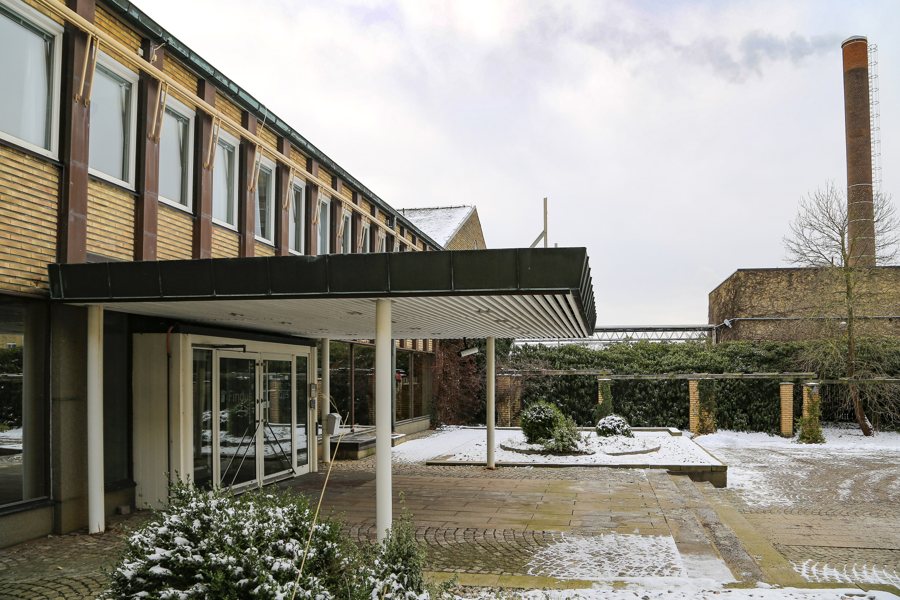 File:20180206 Findus Bjuv Huvudentre 1690 (40130920541).jpg
Photo: News Oresund via Wikimedia Commons, CC-BY-2.0
Residential Areas and Architectural History
Prästkragen is a terraced housing area in Bjuv designed by architect Jørn Utzon. Here, architecture is represented on the scale of a residential area. Kvarteret Freden, also known as Lindallén, has a different focus: this workers’ residential district is in eastern Bjuv, was built between 1916 and 1920, and consists of apartment buildings. The two examples can be distinguished by their types of housing: terraced houses in Prästkragen and apartment buildings in Freden. Freden’s construction period and designation as a workers’ residential district are also relevant, while Utzon’s design is the architectural reference point for Prästkragen. If you want to focus on the town’s built history, you can compare these aspects directly.
Mining at the Gruvmuseet
At the Gruvmuseet, the building and its subject are closely connected: it is housed in the engine house of Shaft III at the mine site at the end of Ågatan in Bjuv. The last mine closed in 1979, and the mining era is preserved in the museum. The exhibition covers the history of mining in Bjuv, Billesholm and Ekeby. Guided tours of the Gruvmuseet can be booked throughout the year. If you plan to take a tour, arrange your preferred date when booking.
Personal Stories and Leisure
There are five cultural graves in the cemetery in Bjuv. The QR code at the entrance links to a map showing the graves; each grave has another QR code with the story of the person buried there. The presentation takes you from an overview of the five graves to each individual life story. Unlike the mining history at the Gruvmuseet, the focus here is on the personal stories of those buried there. If, among cultural topics, you are more interested in individual people than in mining, you can take this different focus into account when choosing where to visit.
The outdoor swimming pool in Bjuv offers a distinctly different focus. It provides activities and relaxation for children and adults. This adds a leisure option for both age groups alongside the historical themes. If you want to consider more than cultural history when choosing where to stay, this is a specific point of comparison.
The dates also help put things in context: 1916–1920 is the construction period of Kvarteret Freden, while 1979 is the year the last mine closed. The two dates relate to different topics—residential construction and mining—and can therefore be considered as separate historical reference points.
Discover more destinations: Billesholm.
Back to the main travel overview: Bjuv.

