
Saint Petersburg Between Water and Architecture
Accommodation in Saint Petersburg
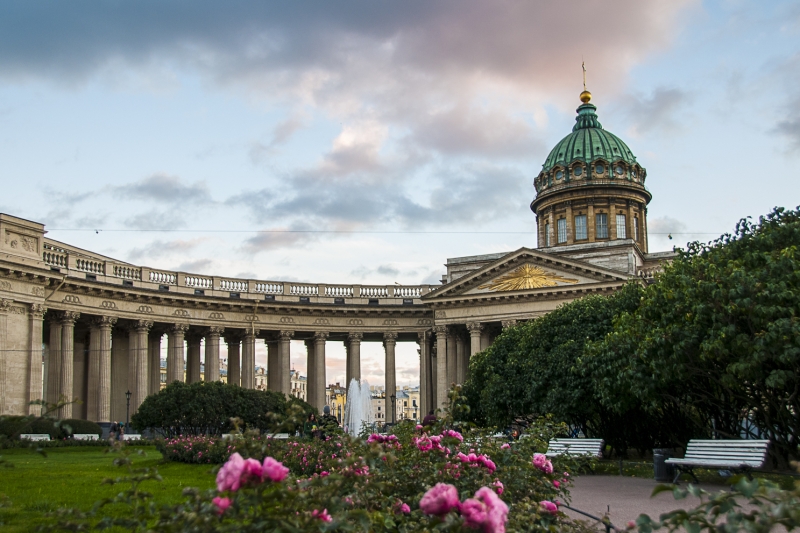
Saint Petersburg’s historic center is shaped by the interplay of architecture and waterscapes. The Neva Estuary, where the Neva meets the Gulf of Finland, forms the cityscape of this port and capital city. The historic network of canals, streets and embankments also tells the story of the city’s development: it took shape gradually from the reign of Peter the Great (1682–1725). Nevsky Prospekt did not become the main east–west thoroughfare until 1738. These connections make Saint Petersburg a destination where city walks, architectural history and art collections come together.
Cityscape and Walks
A walk along Nevsky Prospekt passes tall buildings that embody the spirit of Peter the Great’s city. The street can be viewed as a historic east–west thoroughfare, while the canals and embankments offer another way to experience the city. On Vasilievsky Island, the 6th and 7th Lines form a street partly designated for pedestrians. This offers a different way to navigate than walking along Nevsky Prospekt: here, the focus is on a particular street on the island; there, on the city’s main thoroughfare.
Fortress, Churches and Architectural History
The Peter and Paul Fortress was founded by Peter I in 1703 and is a monument to fortification architecture from the 18th to the 20th century. Within its ensemble, the Peter and Paul Cathedral is an architectural monument of Petrine Baroque and is considered Saint Petersburg’s oldest church. The bell tower offers a special vantage point, too: visitors can climb it on a guided tour and look out over Saint Petersburg from a height of 43 meters. Check current tour times in advance.
The fortress grounds and its beach are open for free visits; it is advisable to check current operating details before your visit. Some of the underground passages are open to visitors. The entrance to a potern is in the Tsar’s Bastion. No dates are given for this part of the visit, so it is worth checking current visiting options in advance.
Saint Isaac’s Cathedral represents a different architectural style: it is an outstanding example of Late Classicism, with Neo-Renaissance, Byzantine and eclectic features. It is also Saint Petersburg’s largest Orthodox church. The Menshikov Palace is considered the city’s first stone building and was built in the Petrine Baroque style. It was built for Alexander Danilovich Menshikov, a confidant of Peter I and Saint Petersburg’s first governor. The palace houses an exhibition dedicated to the history and culture of Russia during the reign of Peter the Great; check current access arrangements before your visit.
Art Collections and Museums
The Russian Museum offers a broad historical overview: its collection comprises more than 450,000 exhibits and spans Russian art from the 10th to the 21st century. It is considered the world’s largest museum of Russian art. The main retrospective is housed in the Mikhailovsky Palace and the Benois Wing. The museum is also an architectural and artistic complex in the historic center, bringing together significant monuments of palace architecture and garden and park design. Here, the art collection and the cityscape are not separate from each other.
The museum “Anna Akhmatova. The Silver Age” has nine exhibition halls and a lecture and concert hall. Hall titles include “Tsarskoye Selo,” “Slepnyovo,” “The Stray Dog (Petersburg 1),” “N. Gumilyov’s Journey,” “Petersburg 2,” “Requiem,” “Komarovo,” “Poem Without a Hero” and “Memory Room.” Those interested in the history of public collections will find another historical connection at the Kunstkamera: it is the successor to Russia’s first state public museum, founded by Peter I in 1714.
The history of individual cultural venues can also be read in their buildings. The Hermitage Theatre was built by Giacomo Quarenghi on the commission of Catherine II between 1783 and 1789, on the site of the former Winter Palace of Peter I. The cruiser Aurora became one of the first museum ships in Saint Petersburg. Both examples add the history of theater and shipping to the picture of museums and churches, without conflating their distinct building and use histories.
Gardens and Historical Perspectives
The Summer Garden was laid out in 1704 at the behest of Peter I, modeled on well-known Western European parks of the time; Peter I himself drew up the first plan. Just a few years after it was created, the garden became a center of political and official life, as well as court ceremonies and celebrations. Its history adds another perspective to the city’s buildings, showing the role a garden played in the city’s early development.
If you would like to extend your itinerary beyond Saint Petersburg, you can also consider Peterhof. Discover more destinations: Repino, Aleksandrovskaya, Levashovo, Gorelovo, Sestroretsk.
Back to the main travel overview: Saint Petersburg.
