
Discover Biesal: Railway Station and Cycling Routes
Accommodation in Biesal
Biesal combines a rich railway history with several cycling routes that start in the village or loop back here. Those interested in historic architecture will find various buildings and structures from the late 19th century in the railway station complex. For active days, the signposted routes specify exact distances and, for one route, an approximate journey time.
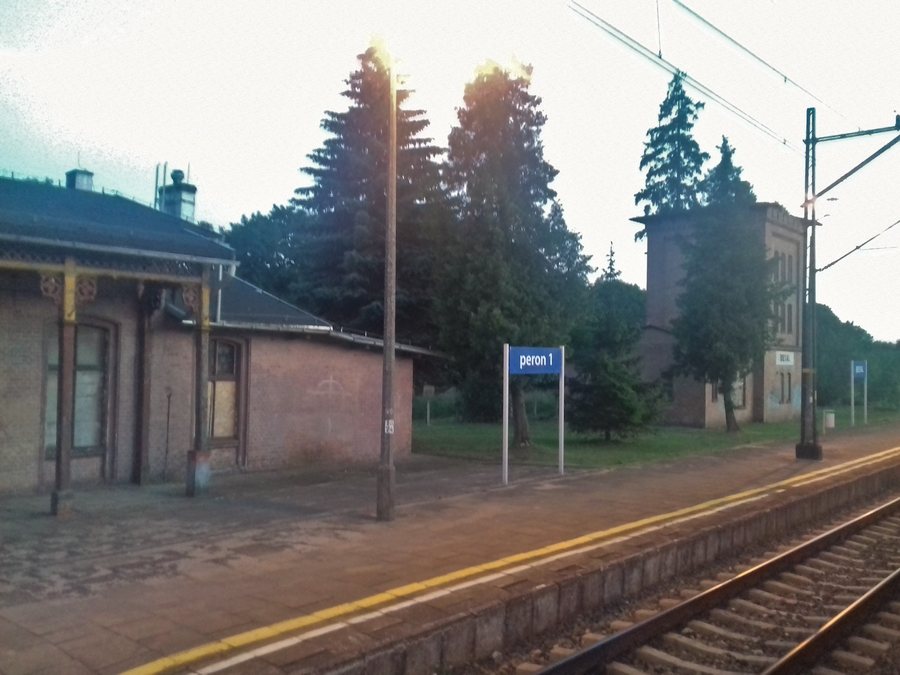
Railway Station Complex and Access
The Biesal railway station complex was built from 1871 to 1873 in connection with the construction of the so-called Thorn–Insterburg main line. It was entered in the register of monuments in 2012. The complex includes the station building, a water tower with a pumping station and storage building, a well and a freight forwarding building. Residential buildings with outbuildings, an access road and green spaces are also part of the site. The green spaces are near the station building, the water tower and the level crossing on the road to Podlejki.
The station building is made of brick on a stone plinth; original window and door fittings have been preserved. The building’s history can therefore be seen not only in the overall site but also in the surviving details of the building. Access to the railway station complex is restricted: the interiors of the buildings can be visited by arrangement with their respective owners and users. The ground floor of the station building is an exception and is generally accessible. Check access conditions before visiting, as they may change.
Chapel and Local History
Another historic place in Biesal is the former Protestant chapel. It was built in 1924 on land donated by the estate owner Hugo Striewski. After the Second World War, the chapel became the property of the Catholic Church. A simple soldier’s grave dating from 1945 is located in the adjacent cemetery. The chapel, cemetery and grave thus connect architectural history with local memories of different periods.
Several single-family houses from the interwar period also form part of the village’s preserved character. They are referred to as “kochówki” or “zydlung.” Those who want to get to know Biesal beyond its railway station will find another point of historical interest in these houses.
Cycling Routes of Various Lengths
The Black Cycling Route starts in Biesal and passes through Tomaryny, Śródka, Guzowy Piec, Salminek and Jadaminy before returning to the village. The loop is listed as 15.6 kilometres long. The route makes Biesal both the starting point and the finish; check local conditions before setting out.
The “Śladami leśnych osad” cycling route starts at the bus stop in Biesal. At the beginning, it follows a paved road through the village; its route also includes surfaced forest roads that are sandy in places. The route is listed with options of 17 or 19 kilometres. At a leisurely pace, the estimated cycling time is two to two and a half hours. The listed options are longer than the Black Cycling Route; however, an approximate journey time is given only for “Śladami leśnych osad.” Surface conditions and route conditions may change, so it is advisable to check them before setting out.
The “Ścieżkami mazurskiej puszczy” cycling route also loops back to Biesal. Another option is Route 5: a cultural and historical guide from 2021 describes it as a 23-kilometre car or cycling excursion from Gietrzwałd via Tomaryny, Biesal and Guzowy Młyn, returning to Gietrzwałd. This historical route description differs from the cycling tours that start in Biesal.
Getting to the Starting Point
Biesal is on the Toruń–Olsztyn railway line. Local tourist information lists travelling by train as one way to reach the starting point of the Black Cycling Route. Check current train services before travelling.
Discover more destinations: Klewki, Nowe Kawkowo, Siła, Pluski, Włodowo, Naterki, Rzeck, Tumiany.
See the broader travel overview: Olsztyński.

