

The Baltic Sea is ссonnected with the Atlantic only by the straits of Skagerrak and Kattegat. That’s why it’s considered to be the biggest brackish water sea (salinity from 0.1 to 1%) on the earth. The area of the sea is about 413,000 square kilometers and its deepest point is at the level of 459 meters. It was formed more than 12,000 years ago when the last ice age had ended. Scientists think that it formed its coastal relief about 2,500 years ago and since then it has hardly changed.
Because of such origination you can find here very diverse coastal forms. Especially deeply divided is the so-called front Baltic Sea with the Danish islands as well as the southern (German) Baltic coast up to Oder estuary. The biggest islands are the Danish islands including Bornholm, Gotland and Öland (Sweden), Saarema and Hiiumaa (Estonia), Rügen, Fehmarn (Germany), Usedom (Germany, Poland) and Wollin (Poland).
The history of the region had been marked by a very rapid changing of dominating cultures and even civilizations in the last 1,500 years. Even today its legacy in the form of major cities as centers of the culture and past civilizations prove it. The process of uniting Europe had also made a trace in its history and, actually, the Ostsee-Netz.de exists thanks to this process.
First of all, we want to look at the Baltic region as a whole and uncover its features. The whole Baltic region is becoming a significant European tourist region and its attractions are an essential part of these features. We present, regardless of the state borders, the historically growing regions of the Baltic Sea and we begin with its southern part.
Beginning with the descriptions of tourist destinations, other places of interest and background information we want to introduce the Baltic coast as one of the best holiday destinations which is becoming more and more popular nowadays and offering you a wide range of services.
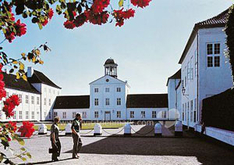
After the division of Schleswig into the Danish north and the German Südschleswig (in 1864/1920) the real Südschleswig is understood in...
|
||
|
The historical the duchy of Schleswig has always served as a mediator between Denmark and Germany. The German part of Schleswig today is actually...
|
||
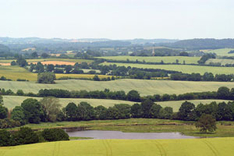
The duchy of Holstein is situated to the south from Schleswig and closely сonnected with it. In spite of the Danish supremacy (for some time the...
|
||
