
Rakvere
German origins – many rulers
About halfway between Estonia’s eastern border at Narva and the capital, Tallinn, and 20 kilometres from the Baltic Sea, lies the city of Rakvere, first mentioned in a document in 1250 under its German name, Wesenberg. It is situated in the historic region of Livonia and changed hands several times. From 1720 until 1918, the city was part of the Russian Empire, but as late as the end of the 19th century, just over a third of its inhabitants were German. Rakvere lies on the route between Tallinn and Narva and is easy to reach.
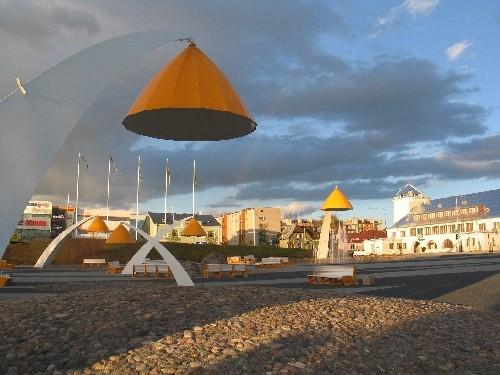 Rakvere, zentraler Platz
Photo: oben: Rakvere linnavalitsus; Mitte (2) bretagne 32 / pixelio.de; unten: Bagno_Viru_Wiki_Lysy_CC3.0
Rakvere, zentraler Platz
Photo: oben: Rakvere linnavalitsus; Mitte (2) bretagne 32 / pixelio.de; unten: Bagno_Viru_Wiki_Lysy_CC3.0
Sights – the Order Castle
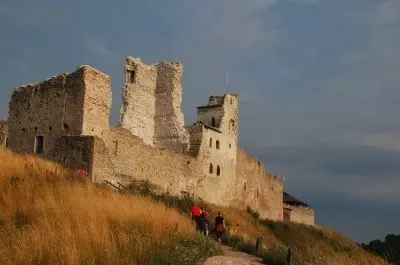 The best-known destination in Estonia’s fifth-largest city is its former Order Castle. It was abandoned around 1700, and its stones were used to rebuild the destroyed city. Today, the well-preserved castle brings the Middle Ages to life and offers plenty of exciting experiences for children and adults alike. Visitors can practise archery and crossbow shooting, jousting and sword fighting, try their hand at blacksmithing, mould clay, mint a castle coin and much more. An exhibition presents the castle’s history, historical weapons and the torture chamber. The castle cellar has medieval wines on offer.
The Bull of Rakvere
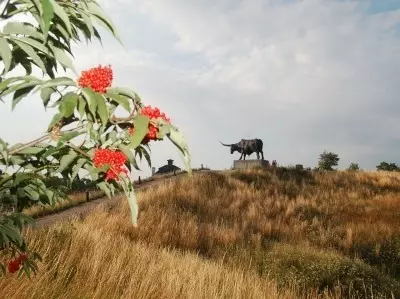 The striking sculpture outside the city, known in Estonian as the Tarvas statue, is also called an ox or even an aurochs. At seven metres long, four metres high and weighing seven tonnes, it is considered the largest animal sculpture in the Baltic States. It was unveiled to mark the city’s 700th anniversary. Touching its testicles is said to bring strength and power.
Lahemaa National Park (Lahemaa Rahvuspark)
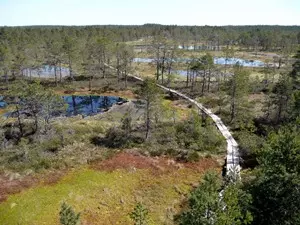 It stretches along Estonia’s Baltic coast across an area of more than 700 square kilometres, northeast of the capital, Tallinn. The nature reserve consists of two-thirds forest and approximately one-third water. Its aim is to preserve the landscapes of northern Estonia, with their old-growth trees, lakes, grasses and mosses. Lahemaa National Park is considered one of the last unspoilt regions along the entire Baltic Sea coast. Its proximity to the capital, Tallinn, and the northeastern region of Estonia also makes it a popular local recreation area. Several peninsulas that extend far into the sea and a number of bays also give the national park its name: Lahemaa means “Land of Bays”.
You can book hotels in Rakvere directly.
