
Estonia
A long history under foreign rulers
A completely new language greets travellers on the journey west from the Russian city of St. Petersburg. The Estonians are a people related to the Finns and have inhabited this region for more than 10,000 years. Finland lies just 80 kilometres away and is connected to Estonia by ferry. Throughout their history, Estonians have had to endure rule by various powers. Danes, Germans, Swedes and Russians took turns governing the country, before Estonia became an independent state for the first time from 1920 to 1940, and again in 1991. Yet throughout their long history, Estonians have managed to preserve their national pride.
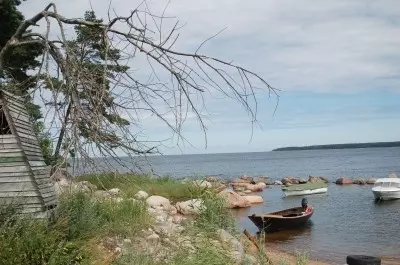 Küste in Nordestland
Photo: alle: © bretagne 32 / pixelio.de
Küste in Nordestland
Photo: alle: © bretagne 32 / pixelio.de
New self-confidence with a long tradition
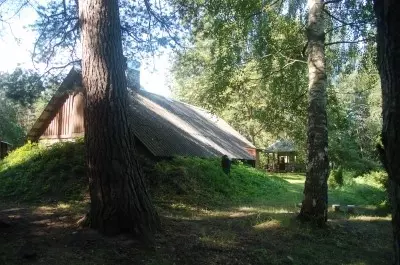 With just 1.3 million inhabitants across 45,000 square kilometres, Estonia is one of the most sparsely populated countries in Europe. Its young population, however, is very open to modernity. The Estonian government was the first in the world to introduce paperless cabinet meetings. Estonians are proud to belong to the EU and NATO.
Historical relics of successive rulers
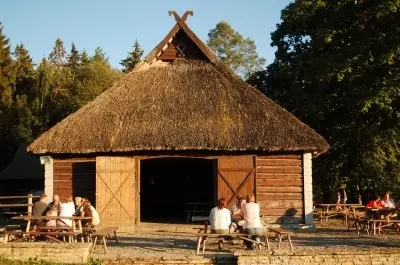 The old towns of the capital, Tallinn, numerous manor houses and castles, as well as legacies of Swedish, German and Russian rule, shape the architectural landscape. Estonia offers a rich history within a compact area. This reflection of European tradition in the Baltic region is one reason to spend a holiday on Estonia’s Baltic coast.
Unique natural landscapes
Half of the country is covered in forest. Kilometres of Baltic coastline offer a blend of unspoilt nature and attractive coastal scenery, ranging from flat shores to cliffs sculpted by imaginative wind erosion. More than 1,500 islands lie off Estonia’s Baltic coast. The largest are Saareema (Ösel) and Hiuumaa (Dagö), which separate the Gulf of Riga, belonging to Latvia, from the open Baltic Sea. A well-preserved Swedish language and settlement tradition can be found especially on the islands. Because of its geographical location, Estonia has long, cold winters, and the Baltic Sea is usually frozen over. Estonia’s northern coast forms the southwestern boundary of the Gulf of Finland.
Cities as tourist attractions
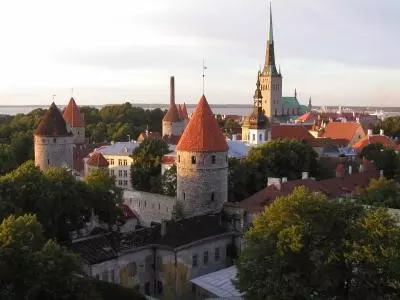 The capital, Tallinn (500,000 inhabitants), is by far the country’s largest city. The second-largest city is Tartu, in the south of the country. The Song Festival, a tradition dating back to 1869, is internationally renowned. Every five years, thousands of singers come together for folk festivals.
Tallinn is a blend of a medieval old town with a Hanseatic character and a modern business and shopping centre. Its spacious urban layout, highly developed public transport system and proximity to the Baltic Sea make Tallinn Estonia’s most popular tourist destination.
