
Rudkøbing: Old Town, H.C. Ørsted and Harbour
Rudkøbing combines a well-preserved old town with a lively harbour on Langeland. Narrow lanes, places commemorating the scientist H.C. Ørsted, and waterfront paths are close enough together to explore the town centre on foot. The harbour adds ferry connections, bathing spots and historic harbour buildings.
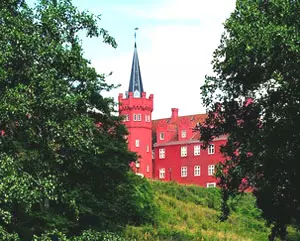 Schloss Tranekær auf Langeland (Foto © Bob Krist/VisitDenmark)
Photo: © Bob Krist/VisitDenmark
Rudkøbing at a glance
- Location: Rudkøbing lies on the west coast of Langeland and is the island’s largest town.
- Old town: Merchant houses, small townhouses and winding, partly cobbled streets define the centre.
- H.C. Ørsted: The scientist, born in Rudkøbing in 1777, grew up near Gåsetorvet, where a statue commemorates him.
- Harbour: Highlights include a warehouse dating from 1916, the historic Sekskanten harbour kiosk, a marina, and the fishing and industrial harbour, which is still in use.
- On foot: The signposted town walk leads through harbour areas, squares and historic streets.
- Island setting: Ferries run from the harbour to Ærø and Strynø.
An old town of lanes and trading history
Rudkøbing is a great place to discover Langeland’s history in the everyday townscape. In the centre, merchant houses stand alongside smaller townhouses, with narrow, winding streets running between the buildings. Rather than one major attraction, these streets, squares and historic façades set the scene for a walk around town. Stroll through the centre at an unhurried pace to spot details on the houses, and take a detour into the shopping streets along the way.
A self-guided town walk links historic buildings and squares with the harbour and places associated with H.C. Ørsted’s childhood. Distinctive markers make the route easy to follow, and brief explanations accompany the stops. This lets you explore the old town independently and extend your walk according to your interests. For a broader overview of the island’s towns and connections, see the guide to Funen, Langeland and Ærø.
H.C. Ørsted and Gåsetorvet
Rudkøbing is the birthplace of Hans Christian Ørsted, whose work in the natural sciences and electromagnetism became internationally renowned. He was born in 1777 and grew up near Gåsetorvet. A statue there commemorates him. Butterfly motifs can also be found around town. These stops give the walk a personal dimension and a focus on the history of science.
You can connect the story of Ørsted with the streets and squares of the old town: start at Gåsetorvet, continue through the historic centre, and then make your way to the harbour. An exhibition about his life and scientific work provides further insight into the subject. If you are planning to visit other harbour towns in the South Funen Archipelago, you can combine Rudkøbing with Svendborg as part of a trip to Funen.
Harbour life, bathing spots and ferry routes
The harbour is close to town and offers views of the Langelandsbroen bridge and the island-dotted sea. Its different areas tell different stories: the marina is in the north, while fishing and industry remain part of the harbour in the south. Along the waterfront are a warehouse dating from 1916, the more than hundred-year-old octagonal Sekskanten harbour kiosk, and a waiting room from the 1920s. Together, they form a route from the historic town centre down to the water.
The bathing establishment and a sandy beach are in the southern harbour area. The harbour is also the starting point for ferries to Ærø and Strynø. Rudkøbing is therefore well suited both to a town walk and to a stop on an island-hopping trip. If you are combining your journey with a stay on Ærø, the town guide to Ærøskøbing introduces one of the neighbouring island’s historic harbour towns.
Plan a walking tour for your stay
For a first visit, a simple itinerary is a good choice: start in the centre, take time to explore the little streets and squares, and then follow the marked route towards the harbour. There, you can see the old harbour buildings, walk along the water and, depending on the season, include the bathing area. This will give you a sense of the town’s history, harbour activity and island setting.
If you have more time, you can add a ferry trip or a longer walk to your stay. The ferry destinations make good day trips; plan your onward journey according to the timetable valid for your travel date. For a stay with everything within easy reach, pair accommodation in Rudkøbing with a visit to the old town and harbour.
Frequently asked questions about Rudkøbing
What are the highlights of Rudkøbing?
The winding streets of the old town, the squares around Gåsetorvet, and the harbour—with its warehouse dating from 1916 and the historic Sekskanten harbour kiosk—are among the town’s defining features. The signposted walk connects several of these stops.
What is H.C. Ørsted’s connection to Rudkøbing?
H.C. Ørsted was born in Rudkøbing in 1777 and grew up near Gåsetorvet. A statue and other motifs around town commemorate the scientist and his work.
What trips can you take from the harbour?
Ferries run from the harbour to Ærø and Strynø. The bathing establishment and sandy beach are in the southern harbour area, making it easy to combine a walk by the water with a swim.
How can you explore Rudkøbing on foot?
A signposted walking route passes through historic streets, squares and the harbour area. You can start at Gåsetorvet and extend your visit with a detour around the old town or waterfront.
