
Tåsinge: Troense, Valdemars Slot and Island History
The Danish island of Tåsinge lies in the South Funen Archipelago between Funen and Langeland. The island’s history is especially evident in Troense, at Valdemars Slot and at the memorial sites associated with Elvira Madigan.
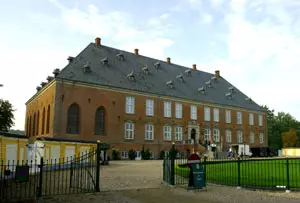 Waldemars Schloss auf Tåsinge
Photo: © Bess / wikimedia
Tåsinge is part of the South Funen island world near Funen, Langeland and Ærø.
Tåsinge at a glance
- Troense: A seafaring town on the eastern shore, with half-timbered houses dating from the 18th century.
- Valdemars Slot: A castle estate near Troense, built for Valdemar Christian and later redesigned by Niels Juel.
- Island history: Troense’s seafaring heritage, fruit growing and the history of the castle estate shape local traditions.
- Elvira Madigan: She and Sixten Sparre are buried in the cemetery near Landet.
- Landscape: Bregninge Bakker, orchards and the coasts around Tåsinge offer different perspectives on the island.
Troense: a seafaring town with half-timbered houses
Troense lies on Tåsinge’s east coast. Streets such as Grønnegade are lined with well-preserved half-timbered houses from the 18th century; orchards behind the houses recall the island’s long tradition of fruit growing. Local history is closely tied to seafaring: Troense developed as a town of shipmasters, and the former wooden shipyard at the harbour operated from 1848 to 1985. A walk through the streets and down to the harbour brings these traces together within a small area. Accommodation in Troense is ideal for a stay among half-timbered streets and harbour views.
Valdemars Slot and its architectural history
Christian IV had Valdemars Slot built between 1639 and 1644 for his son Valdemar Christian. His son later did not live on Tåsinge. During the Swedish Wars, the castle was occupied and badly damaged between 1658 and 1660. After his victory in Køge Bay in 1677, naval officer Niels Juel acquired the estate and had it redesigned in the Baroque style. His grandson later commissioned the architect G. D. Tschierscke to design parts of the ensemble that defines the site today. The castle’s history thus reflects several turning points in Denmark’s past, as well as the transformation of a private country residence over generations.
Landscape and memorial sites
The protected landscape area of Bregninge Bakker is home to the Tåsinge Museum and Bregninge Church. The museum features exhibitions on the island’s history, including the story of Elvira Madigan, while the church stands on the island’s highest hill. Landet lies to the south: Elvira Madigan and Sixten Sparre are buried in the church cemetery. Their story ended in 1889 and is one of Scandinavia’s best-known tragic love stories. The sites can be visited in a thematic sequence: head south from Bregninge, with its museum and church, to Landet, then round off the trip with Troense’s maritime history. If you are using Funen as a base for your trip, accommodation on Funen is another way to include Tåsinge in a wider island itinerary; the harbour town of Svendborg offers another destination along the sound.
Frequently asked questions about Tåsinge
What defines Troense?
Troense combines 18th-century half-timbered houses with its history as a seafaring town. The harbour, former shipyard and orchards each tell a different part of this story.
How did Valdemars Slot come about?
Christian IV had the castle built for his son between 1639 and 1644. After it was damaged during the Swedish Wars, Niels Juel acquired the estate and redesigned it in the Baroque style.
Where are Elvira Madigan and Sixten Sparre buried?
Both are buried in the cemetery beside the church in Landet, in the south of Tåsinge. The Tåsinge Museum in Bregninge has an exhibition dedicated to Elvira Madigan.
