
Palanga: Beach, Amber Museum and Birutė Park
Palanga lies on Lithuania’s Baltic coast, south of the Latvian border, and combines a seaside resort, promenade and culture. The beach shapes a stay by the sea, while the Amber Museum and the history of Tiškevičiai Palace add to a visit to Birutė Park. The beach and town centre each offer their own highlights.
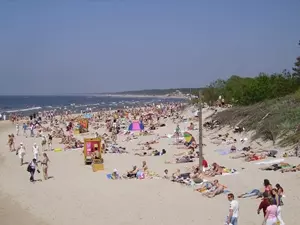 Strand von Palanga
Photo: © Knutux / Wikipedia gemeinfrei
Palanga at a glance
- Location: Seaside resort on Lithuania’s short Baltic coastline, near the Latvian border.
- Coastal attractions: The beach, pier and promenade along J. Basanavičiaus Street form the maritime heart of the town.
- Culture: The Amber Museum is housed in the former Tiškevičiai family palace in Birutė Park.
- Park: Birutė Park brings together landscaped grounds, the palace and paths leading to the beach.
- Travel style: Days at the beach can be combined with museum visits, walks and events.
Beach, pier and promenade
The wide sandy beach is Palanga’s main attraction for a stay by the sea. The pier is a distinctive walkway extending out over the coast, with sweeping views of the Baltic Sea. It is especially popular in the evening as a place to watch the sunset. A stroll along the beach pairs well with a walk on the pier; in stronger winds or changeable weather, the town centre offers an alternative, with cafés, museums and shops.
J. Basanavičiaus Street leads from the town centre towards the beach and is at the heart of much of the summer promenade scene. Cafés, restaurants and entertainment line this route, which continues towards the beach. For a quieter outing, take a path through Birutė Park and combine the walk with a visit to the Amber Museum. The beachfront promenade and the park walk offer quite different experiences: one leads into the lively town centre, while the other winds through landscaped grounds.
Amber Museum in Birutė Park
The Amber Museum is housed in the former palace of Count Feliksas Tiškevičius. It opened in 1963 and is located in the heart of Birutė Park. Its collection includes more than 30,000 exhibits, among them amber inclusions and remarkable amber objects. The exhibition explores both the natural history of amber and how it has been worked and used. A visit to the museum therefore adds a perspective on a raw material that has shaped the Baltic coast for centuries to a day at the beach.
Current visitor information lists seasonal opening hours: from 16 September to 14 May, the museum is open Tuesday to Saturday from 10 a.m. to 6 p.m. and on Sundays until 5 p.m. From 15 May to 15 September, it is open Tuesday to Saturday from 10 a.m. to 8 p.m. and on Sundays until 7 p.m. The exhibitions are closed on Mondays and public holidays; on the eve of a public holiday, they close one hour earlier. Last admission is before closing time. A guided tour lasts about an hour and is available in Lithuanian, English and Russian. Set aside a dedicated slot in your itinerary for the palace, exhibition and park.
The western entrance, with a lift, is open to visitors with disabilities and anyone who has difficulty with stairs. There is a children’s area in the basement, with activities that introduce the subject of amber through play. These facilities make it easier for families and visitors with different mobility needs to plan their museum visit.
Birutė Park and local history
The park forms a green link between the palace, Birutė Hill and the beach. The grounds grew out of the former Birutė Forest and the hill; their design was shaped in the late 19th century by French landscape architect Édouard François André. A walk along the park paths can be combined with a museum visit, offering a quieter counterpoint to the lively promenade.
The former Tiškevičiai family palace recalls how Palanga developed from a coastal settlement into a well-known seaside resort. Alongside its collection, the Amber Museum features rooms dedicated to the family and the history of the residence. If you are particularly interested in the resort’s history, you can also visit the Palanga Resort Museum. For an overview of the country, the Lithuania overview puts Palanga in context alongside the port city and the Curonian Spit.
Palanga as a base on Lithuania’s coast
Palanga is especially well suited to travellers who want to enjoy the beach and town life in one place. Klaipėda adds a port, old town and ferry connection to the Curonian Spit to the seaside resort; the port city of Klaipėda offers a separate focus on urban attractions. On the spit, the Neringa region takes you to places between the Baltic Sea and the Curonian Lagoon. Palanga’s accommodation options are brought together in the Palanga overview, making it easy to choose a place near the beach or a base for excursions.
For a trip across the border, compare Palanga with Latvia’s coastal city of Liepāja. Both places combine Baltic beaches with urban life, but have different emphases: Palanga centres on its seaside resort, Amber Museum and park, while Liepāja adds cultural and military history as a port city. You can make Palanga the focus of your beach stay, then extend your trip with the port and dune landscapes of Klaipėda and the Curonian Spit.
Frequently asked questions about Palanga
What can you fit into a day in Palanga?
A beach walk and stroll along the pier pair well with a visit to J. Basanavičiaus Street. Set aside a separate block of time for the Amber Museum and Birutė Park; the guided tour lasts about an hour.
When is the Amber Museum open?
During the summer season, from 15 May to 15 September, it is open Tuesday to Saturday from 10 a.m. to 8 p.m. and on Sundays until 7 p.m. Shorter opening hours apply during the rest of the season. The museum is closed on Mondays and public holidays.
Which attractions complement a beach holiday?
Birutė Park and the Amber Museum offer a cultural outing and scenic walks. Klaipėda adds a port and urban history, while Neringa takes you further into the landscapes of the Curonian Spit.
