
Skagen: Grenen, a migrating dune and the Skagen Painters
Skagen lies at the tip of Jutland and brings together three very different experiences: the sandy beaches and birdlife of Grenen, the shifting dune landscape of Råbjerg Mile, and the town’s art and history. By planning routes and distances, you can easily spread nature attractions and museums across several outings.
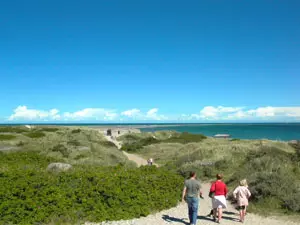 Skagen in Nordjütland
Photo: © nordlicht verlag
Skagen at a glance
- Grenen: At the headland, the Skagerrak and Kattegat meet; a roughly one-kilometre path leads from the car park across loose sand to the tip.
- Swimming: Swimming directly at the tip of Grenen is prohibited because of strong currents. Enjoy the meeting of the seas from the beach.
- Råbjerg Mile: Denmark’s largest migrating dune moves about 15 metres northeast each year.
- Art: Skagens Museum displays works by the artists’ colony that took shape in Skagen in the late 19th century.
- Lighthouse: The Grey Lighthouse features an exhibition on the local natural environment; its viewing platform is reached by climbing 210 steps.
- Planning: Sturdy shoes are useful for Grenen and the dune, as both natural attractions are reached via sandy paths.
Experience Grenen on foot, with views of the sea
At the end of Skagen Odde, the Skagerrak and Kattegat meet. At the tip, you can see the opposing waves that shape this stretch of coast. A roughly one-kilometre path leads from the car park to the far end of the beach; it crosses loose sand and takes about 15 minutes on foot. During the season, the Sandormen tractor bus also runs to the tip. Along the way, there are wide views across the dunes and good opportunities to watch coastal birds.
Strong currents make the water at the very tip dangerous, and swimming is prohibited there. A walk along the beach is still an impressive natural experience: you can see waves breaking from two directions and spot seals on the sandbanks. For a more peaceful walk, you can link the route with the paths in the hinterland. North Jutland between Skagen, the Kattegat and the Limfjord offers more landscapes and places to explore during a longer stay in northern Denmark.
Råbjerg Mile: a dune on the move
Southwest of Skagen lies Råbjerg Mile, a sand dune covering almost one square kilometre, with a highest point about 40 metres above sea level. The wind carries sand over the ridge and deposits it on the sheltered side. As a result, the dune moves roughly 15 metres northeast each year. In the hollow behind the dune, the wind has eroded the sand; here, wet areas, small lakes and exposed tree trunks interrupt the open dune landscape. This striking change in scenery makes the walk especially vivid.
A signposted car park lies right at the foot of the dune. If you arrive on the Skagensbanen railway, you can get off at Bunken station and take walking trails through the Bunken Klitplantage; the route passes through woodland and open dunes. Råbjerg Mile and Grenen can be combined in one day if you allow plenty of time for the sandy paths. Another good base in this natural area is Bunken, between the coasts of the Skagerrak and Kattegat.
Art, lighthouse and the town’s history
The distinctive landscape drew numerous painters to Skagen in the late 19th century. Michael and Anna Ancher, P. S. Krøyer and other artists captured the light, coastline and fishermen’s lives in their work. Skagens Museum displays works by the artists’ colony; artists’ homes such as Anchers Hus and Drachmanns Hus complement a museum visit with glimpses into their living and working environments. In town, you can combine these stops with a visit to the harbour and the characteristic yellow houses.
The Grey Lighthouse (Det Grå Fyr) combines coastal navigation with an exhibition about local nature and birdlife. From the top, you can look out over Grenen and the town; access is via 210 steps. Make the lighthouse a separate stop if you want to combine the views and exhibition with a walk along the coast. For accommodation close to the sights and trails, see places to stay in Skagen. The nearby district of Nordby offers another place to stay in town.
How to plan your visit
For a half-day visit, you could either explore Grenen on the Sandormen or stroll around town and visit the museum. A full day could include Grenen in the morning, a break in Skagen, and the Grey Lighthouse in the afternoon. Råbjerg Mile lies south of town and adds a distinct nature walk to your trip. If you have several days, you can spread these attractions out and include the coastal towns nearby. The combination of loose sandy paths, museum visits and viewpoints makes it easy to plan a varied itinerary.
Frequently asked questions about Skagen
Can you swim at Grenen?
Swimming directly at the tip of Grenen is prohibited because of the strong currents. Watch the seas meet from the beach; for swimming, choose a designated beach area nearby.
How far is it from the car park to the tip of Grenen?
The path across the loose sand is about one kilometre long and takes around 15 minutes. During the season, the Sandormen tractor bus runs to the tip.
How is Råbjerg Mile different from the dunes at Grenen?
Råbjerg Mile is a large, freely migrating sand dune whose mass shifts northeast each year. Grenen is a long headland where the Skagerrak and Kattegat meet.
Photo © nordlicht verlag
