
Valdemarsvik and the Gryt Archipelago: Landscape and Nature
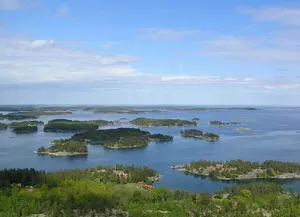 Schären von Gryt
Photo: © Valdemarsviks kommun
Valdemarsvik and the Gryt Archipelago: Quick Facts
- The Gryt Archipelago lies in the southern part of the Östergötland archipelago and extends to Valdemarsviken Bay.
- Agriculture and livestock farming have shaped the cultural landscape over many generations.
- Fångö, Bokö and Harstena are among the larger islands with permanent residents.
- The landscape includes forested islands, rocky shores, smaller skerries and shallow sea areas.
- Nature reserves protect both woodland and traditionally managed cultural landscapes.
An archipelago of islands and working farmland
The Gryt Archipelago lies in the southern half of Östergötland’s archipelago coast. To the north is the Sankt Anna archipelago, while to the south it merges into the Tjust archipelago. Gryt also has many islands, but feels less intricately fragmented than Sankt Anna: alongside small rocky islets, larger forested islands and extensive shallow-water areas define the scenery. This gives the region both open coastal views and sheltered waters.
The landscape today is also the result of human work. Agriculture and livestock farming have continued for generations, and livestock are still kept on the larger islands. Traditional buildings, open pastures and grazed woodland bear witness to this way of life. Where land had fallen into disuse, the municipality has taken steps in some areas to restore the cultural landscape. Flower-rich meadows and open grazing land sit alongside woodland, rock and coastal vegetation.
Wooded islands, nature reserves and birdlife
On the larger islands, hilly pine forests alternate with deciduous trees in the hollows. Alongside valuable woodland are protected areas with different priorities: Bokö Nature Reserve is characterized by its restored traditional cultural landscape, while Väggö primarily protects woodland. Parts of Gryt Nature Reserve are among the province’s oldest protected areas. The shallow sea areas are also important for aquatic biodiversity and coastal birdlife.
Gryt and northern Tjust are home to important bird cliffs. Common terns and the auk species found in the province are among the birds that nest there. White-tailed eagles are also once again regularly seen in this coastal area; during the period when environmental toxins were a major concern, the region was one of the few places in Sweden where they successfully raised young. Häradskär is known for its ornithological migrant-bird counts and bird-ringing studies.
Getting your bearings in Valdemarsvik
Valdemarsvik lies at the end of the long Valdemarsviken Bay and serves as a reference point for the municipality’s coastal communities. When planning a trip, it is worth comparing it with Västervik to the south and Norrköping to the north. The Gryt Archipelago lies in southern Östergötland. For a stay in the mainland town, choose from accommodation in Valdemarsvik.
Frequently asked questions about the Gryt Archipelago
How does Gryt differ from Sankt Anna?
Both areas have many islands and are shaped by agriculture and traditional land use. Gryt is less intricately fragmented, with larger forested islands and extensive shallow-water areas defining the landscape.
What history has shaped the islands?
Agriculture and livestock farming shaped pastures, woodland and settlements over many generations. Alongside the natural coastal and woodland areas, this cultural landscape is an important part of the region’s character.
