
The island of Anholt in the Kattegat
Anholt lies in the Kattegat between Jutland and Sweden. This Danish island, covering around 22 square kilometres, combines long stretches of coastline with dunes and the extensive Ørkenen heath. The ferry from Grenå takes just under three hours.
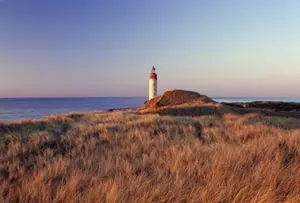 Leuchtturm auf der Insel Anholt
Photo: © VisitDenmark / Niels Thye
Anholt at a glance
- Location: An island in the Kattegat, between the Danish peninsula of Jutland and Sweden.
- Size: Around 22 square kilometres, with approximately 25 kilometres of coastline.
- Nature: Dunes, beach ridges and heath define Ørkenen, one of Northern Europe’s largest lichen heaths.
- Population: Around 160 people live on the island year-round.
- Getting there: The ferry connects Grenå and Anholt; the crossing takes around two hours and 45 minutes to three hours, depending on the direction.
- Getting around: Anholt has no public transport service. You can get around on foot, by bicycle or by taxi.
- Length of stay: Spending several days gives you time to cover the long distances, explore natural areas and stay in the island village.
Ørkenen: dune heath and a peaceful coastal landscape
Ørkenen means “the desert”, but the landscape consists of dunes, beach ridges and low-growing vegetation. Marram grass, crowberry, heather and creeping willow cover large areas, with orchids, ferns and juniper growing among them. The heath feels vast and open, with some rises reaching up to 25 metres. Low rainfall and slow-growing plants mean that old tracks remain visible for a long time. The area is protected, and is best explored on foot.
The paths through Ørkenen pass through sensitive heath and dune habitats. Plan your walk so that you stay on existing paths and tracks, and allow enough time for the return journey. Bicycles are not suitable for the heath: they are neither practical nor rideable there. When choosing a route, walking time, terrain and weather matter more than the straight-line distance between two points.
Binoculars are available at the Sælspotten observation station, where you can watch seals in the Totten protected area. Totten, at the eastern tip of the island, is closed to the public so the animals can retain a quiet refuge. You can observe nature from the station without entering the protected area. If you continue exploring the coast, use this marked access point and plan your inland return via the lighthouse.
The rest of the coastline also offers room for long beach walks and swimming breaks. The island’s roughly 25 kilometres of coastline are spread across a small island of open beaches, dunes and heath. Depending on the sand and water level, beach paths can be much harder to walk than firm paths in the island village. Expect to move more slowly by the water, and bring enough drinking water for the entire route.
The island village, harbour and natural areas as different bases for your stay
The harbour is where the ferry arrives and departs. Staying here puts you close to the ferry terminal and lets you fit in the first or last part of your island visit without adding much extra walking. The village of Anholt offers a sense of everyday island life and is a practical base for shopping and shorter walks. Ørkenen and the more remote coastal stretches, by contrast, are ideal for days when the hike itself is the main focus.
Motor traffic is prohibited across most of the island, although there are some vehicles and services on Anholt. There is no public bus service. Walking gives you independence from timetables, but you will need to allow enough time to get between the village, harbour and more remote destinations. For longer distances, you can consider a bicycle or taxi, though bicycles will not get you all the way across sand or through Ørkenen. When choosing accommodation, consider the journeys you plan to make each day.
For a relaxed stay, avoid trying to fit a long island hike into your arrival or departure day. Set aside a full day on the island for the lighthouse walk or a longer coastal route, leaving time for breaks and the return journey. With several nights on the island, you can explore the beach, village and heath on separate days. A shorter walk on arrival day works better if the ferry gets in early enough to leave you with plenty of daylight.
Planning walks and viewpoints
Anholt Fyr stands in the northeastern part of the island, near Ørkenen. From the harbour, you can reach it by walking through the heath or along the beach; there is no continuous paved path to the tower. Visiting the lighthouse is therefore a long hike, so allow several hours and bring sturdy footwear and plenty of drinking water. There is no drinking water, toilet or waste bin at the destination. The tower is open to visitors on selected days; the hike through the landscape is possible regardless.
Planning two full days on the island
If you have two full days, a clear division of activities works well. On the first day, walk from the harbour to the island village: take care of any errands, have a break and get your bearings before adding a shorter coastal or heath walk. If you arrive by ferry, take its arrival time into account and plan your return so you are not relying on a bus connection. Plan meals and shopping around the season, as many businesses are open for only part of the year.
The second day is ideal for the longer trip to Anholt Fyr. Set off early from the harbour and choose either the route through Ørkenen or the one along the beach; whichever you take, build in time for the return, walking breaks and a buffer. Bring plenty of drinking water and provisions, as there are no facilities at the lighthouse. Set a turnaround time and keep clear of the closed Totten protected area; you can watch seals with the binoculars provided at Sælspotten. This way, you can spread the island village, coastal landscape and lighthouse over two days.
Ferry travel and length of stay
The ferry runs from Grenå on Jutland’s east coast to Anholt. Depending on the direction and sailing, the operator lists the crossing as taking around two hours and 45 minutes to three hours. Departure times vary by date and season. Travelling there and back in a single day leaves only a short time on the island; staying overnight gives you more time for walks and breaks. Plan your visit using the current Grenå–Anholt ferry timetable.
Grenå is the mainland departure point for the crossing. Find information about the harbour, beach and how to get there in the article about Grenå. Anholt is part of the diverse coastal region of East Jutland, but its long ferry crossing and extensive nature trails set it apart from the easily accessible mainland destinations. Ebeltoft is another possible stop on Djursland; its old town and harbour offer a different element to complement the island’s natural landscapes.
Anholt can be planned as a destination in its own right when choosing accommodation. The overview of accommodation on Anholt complements your plans for exploring nature and getting to the island. If you are visiting other destinations on Djursland, you could plan to stay in Grenå, where the ferry departs, and in Ebeltoft before or after your island visit.
Seasons and provisions on the island
The season affects what is open in the village. Many businesses operate for only part of the year, and the choice of shops and places to eat is more limited in quieter months than in the height of summer. Plan shopping and meals according to when you are travelling and where you are staying. This is especially important for longer hikes, as there are no places to stock up along the trails. Pack drinking water and provisions for the entire outing.
Long summer days give you more flexibility for extended walks, while shorter days call for an earlier return to the village or harbour. Wind, rain and soft sand can affect walking times. Set a firm turnaround time for a trip to the eastern tip, and choose a shorter route inland if the weather is changeable. This keeps your walk manageable without losing sight of the natural areas or the return journey.
Frequently asked questions about Anholt
How long does the ferry to Anholt take?
The ferry from Grenå to Anholt takes around two hours and 45 minutes; the return journey takes about three hours. The timetable varies by date and season, so the specific departures determine how much time you will have on the island.
How can I explore Ørkenen?
Ørkenen is best explored on foot. Dunes, beach ridges and low-growing heath vegetation define this protected area. Binoculars at the Sælspotten observation station let you watch seals; Totten itself is closed to the public as a protected area.
How many days should I allow for a stay?
Staying for several nights gives you time to explore the island village, Ørkenen and coastal trails, with time left for breaks. The long ferry journey and lack of a public bus service make a day trip too short for extended hikes; when deciding how long to stay, consider ferry days, the season and how far you want to walk.
