
Rewal Coast (Rewahl)
The Rewal Coast comprises six small seaside resorts between Pobierowo and Pogorzelica. They lie close together but differ in their beaches and main attractions: cliffs shape the western stretches, while east of Niechorze a wooded spit and the coastal lake Liwia Łuża begin.
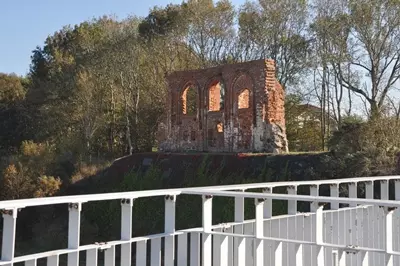 Kirchenruine in Trzęsacz 2018
Photo: © nordlicht verlag
Rewal Coast at a glance
- Towns: Pobierowo, Pustkowo, Trzęsacz, Rewal, Niechorze and Pogorzelica are part of Rewal Municipality.
- Coastline: The municipality describes around 19.8 kilometres of coastline, including cliffs, a spit and dune sections.
- Routes: The seasonal narrow-gauge railway runs along the coast between Trzęsacz and Pogorzelica; beaches and paths connect other stretches.
- Choosing a base: Trzęsacz and Rewal are convenient for the coastal railway and viewpoints; the lighthouse and fishing museum are in Niechorze.
Understanding the coast: cliffs in the west, a spit in the east
The municipality’s coastline is not the same everywhere. From the lighthouse in Niechorze to Pobierowo, the Rewal moraine ridge shapes the coast, where steeper cliffs rise above the sea. East of Niechorze, towards Pogorzelica, a sandy spit stretches between the Baltic Sea and the coastal lake Liwia Łuża. Farther east, it gives way to wooded dunes. When choosing accommodation, this geography is more useful than a general promise of “near the beach”: if you want broad, gentler beach access, look more closely at the eastern dune resorts; in the cliff area, access to the beach is more dependent on specific stairways.
The municipality notes that steeper coastal sections erode during storms, and beaches there can become narrower. Use designated access points to reach the water, and avoid closed-off or damaged cliff edges. The municipality lists designated launch points for water sports equipment at the fishing harbours in Rewal, on Saperska Street, and in Niechorze, on Pocztowa Street. These are not general boat access points, nor do they mean that boats are allowed in swimming areas: water sports users must keep their distance from swimmers, and designated bathing areas are off-limits to watercraft.
Pobierowo and Pustkowo: woodland beaches and a quieter town centre
Pobierowo is a good choice if you want to combine a beach stay with coastal woodland and a wider range of amenities. The town lies on the western part of the municipal coast; local paths lead through the woods to beach access points. The tourist office is at the bus stop on Jana z Kolna Street, which can be a useful landmark when you arrive. Pobierowo makes a good base if you want to explore the western coast and combine outings with cycling.
The smaller Pustkowo offers a quieter alternative. At the access point at the junction of Nadmorska and Leśna streets, the Bałtycki Krzyż Nadziei—a replica of the Giewont Cross—stands directly opposite a path down to the beach. Between the cross and Spacerowa Street is Przyjaciół Pustkowa Park, with winding paths, benches and a ground model of the solar system. You can combine a short walk through town with a visit to the beach without planning a longer excursion. The local municipality also mentions family activities and beach sports, though specific events vary by season.
Trzęsacz and Rewal: church ruins, cliffs and the coastal railway
Trzęsacz is the main historical stop on the coastal route. On the cliff stands the surviving fragment of a late-medieval church wall; the rest of the building collapsed into the sea as the coast eroded. The town pairs the cliff-top viewpoint with the Na Klifie Multimedia Museum, which tells the story of the town and the changing coastline. The neo-Gothic church from 1896 is also right by the narrow-gauge railway station. If you are stopping briefly, you can plan the ruins, viewpoint and museum as one loop.
Rewal itself has a town centre with beach access, a fishermen’s monument, viewpoints and Whale Park for families. The promenade runs along the coast and makes for a pleasant walk if you don’t want to travel between towns. The theme park is a different kind of outing from a nature walk; if time is limited, decide in advance whether the beach, the views or entertainment is your priority. This seaside resort is centrally located on the coastal railway route, making it a possible base if you want to visit both Trzęsacz and Niechorze.
Niechorze and Pogorzelica: lighthouse, fishing and the coastal lake
The lighthouse in Niechorze is 45 metres tall and dates from 1866. Its viewing terrace is reached by climbing more than 210 steps and offers views over the coast and the landscape behind it. The Muzeum Rybołówstwa Morskiego (Maritime Fisheries Museum) adds insight into the region’s fishing history. Beside the lighthouse is an ethnographic park with reconstructed fishermen’s houses and equipment used in coastal fishing. You can combine these stops with a walk towards the beach; allow time for the climb as a separate part of your visit.
East of the lighthouse, the landscape opens out towards Liwia Łuża. This shallow coastal lake lies behind a spit and is important as a bird sanctuary; much of its shoreline is covered with reeds. It’s a place for nature watching and quieter walks, not a regular swimming lake with unrestricted access all around its shore. Pogorzelica adjoins the wooded dune coast and is better suited to longer beach walks and woodland trails. If you want to spend a whole day by the sea, you can easily combine beach and forest there; the lighthouse and fishing museum, on the other hand, are in Niechorze and need a separate visit around town.
Getting around the six seaside resorts
The Nadmorska Kolej Wąskotorowa (Coastal Narrow-Gauge Railway) provides a seasonal link along the coast. The route from Trzęsacz to Pogorzelica is 9.9 kilometres long and serves five towns with seven stations. Niechorze has separate stops at the lighthouse and in the town centre; Trzęsacz, Rewal and Pogorzelica are also on the route. It’s a practical option for a one-way walk: ride part of the way, then walk back along the coast instead of moving your car between nearby towns. Pobierowo and Pustkowo are not on this section of the line, so you’ll need to reach them separately on foot, by bike or by road.
The railway runs seasonally, so don’t rely on it as year-round local transport. You can also combine the towns on a cycling trip, but the cliff edges and beach access points vary from place to place. Designated access points and seasonal rules apply at bathing areas; a red flag means swimming is prohibited. The municipality operates seasonal and year-round tourist information offices in Niechorze, Rewal, Pobierowo and Trzęsacz. In Trzęsacz, the information point is at the Na Klifie Museum; in Niechorze, it is at the fishing museum.
Which base is right for your stay?
Choose Pobierowo if your stay will focus more on woodland, the beach and the western part of the municipality. Pustkowo suits visitors looking for a smaller town with beach access and a park. Rewal is centrally located for the coastal railway, promenade and trips in either direction. Trzęsacz is especially appealing for its cliff-top history and museum; Niechorze brings together the lighthouse and fishing museum. Pogorzelica is a good choice for dune woodland and longer walks along the eastern beach. Accommodation in Rewal makes a central base for the western and central towns; if the lighthouse or eastern dunes are your main focus, compare locations in Niechorze or Pogorzelica directly.
The Rewal Coast lies between Dziwnów and Trzebiatów. If you’re looking for a different harbour and river setting, you could add Dziwnów to the west or Trzebiatów inland. The guide to West Pomerania puts these destinations in context; for a beach holiday, however, they are no substitute for the six seaside resorts on the Rewal Coast.
For a two-day introduction, a clear division works well. On the first day, combine Trzęsacz and Rewal: take the railway between the two towns, then walk along the cliff and enjoy Rewal’s beach promenade. On the second day, start in Niechorze with the lighthouse and fishing museum, then head towards Liwia Łuża or continue to Pogorzelica. Pobierowo and Pustkowo are outside this railway section and work better as a separate day on the western beaches.
The coastal railway’s sequence of stops can help with planning even without a fixed timetable: Trzęsacz is at the start of the route, followed by Rewal and Śliwin. In Niechorze there is one stop by the lighthouse and another in town; Pogorzelica is the eastern terminus. The stations are located at kilometre 0.0 in Trzęsacz, 1.4 in Rewal, 2.8 in Śliwin, 6.0 at the lighthouse in Niechorze, 6.9 in the town centre, 8.7 at Pogorzelica Sandra and 9.9 in Pogorzelica. This lets you choose between the two Niechorze stops depending on your destination. These are short intermediate stops, not equivalent museum visits. So decide first which sights you actually want to visit, then use the railway for the section that suits your plans. Walking back along the beach or through coastal woodland makes for a different day out than riding back to your starting station.
Frequently asked questions about the Rewal Coast
Where are the lighthouse and church ruins?
The 45-metre lighthouse is in Niechorze; the remains of the late-medieval church wall stand on the cliff in Trzęsacz. Both are on the narrow-gauge railway, but in different towns.
Which towns does the coastal railway connect?
The seasonal route between Trzęsacz and Pogorzelica runs through Rewal and Niechorze, with seven stations along its 9.9 kilometres. Pobierowo and Pustkowo are part of the municipality but are not on this railway line.
Where is the beach wide and gently sloping?
The coastline varies: cliffs stretch from Niechorze to Pobierowo, while east of Niechorze a sandy spit runs along dunes and woodland. Use the designated stairways; after storms, beaches beneath the cliffs may be narrower.
