
Culinary Tourism
When someone goes on a journey… well, they can “tell a tale” about it, as the German poet Matthias Claudius put it more than 200 years ago. They can—and will—also report on all the wonderful things they ate and drank.
And that brings us to the subject at hand!
What would a trip to Holland be without the cheese market in Alkmaar? Or a visit to the Golden City of Prague without a stop at the traditional U Fleků pub for its dark beer? Also in this category are the Danish city of Aalborg with its aquavit, and of course Spreewald gherkins, Pilsner beer, Königsberg meatballs and Brunswick sausage.
Today, however, very few places in Europe can boast such distinctive culinary delights that bear the name of their city or region. Nevertheless, it is not only specialists who talk about “culinary tourism”.
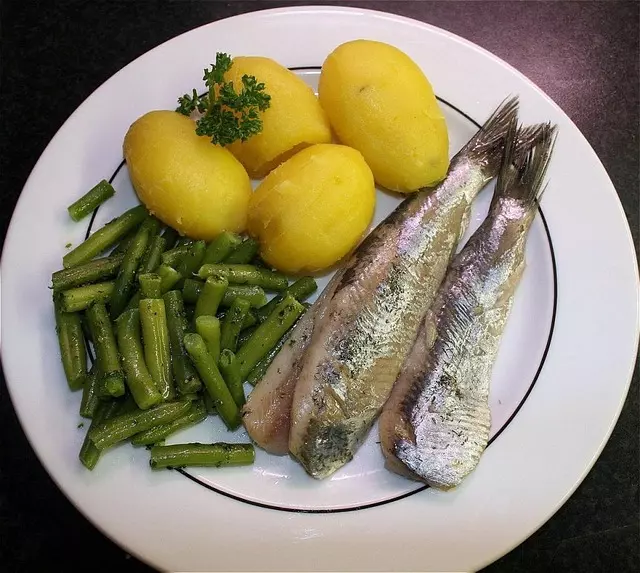 Ein Klassiker im Ostseeurlaub: Matjeshering
Photo: © pixabay.com/Lebensmittelfotos/CC0
Ein Klassiker im Ostseeurlaub: Matjeshering
Photo: © pixabay.com/Lebensmittelfotos/CC0
Regional identity
Regional identity is one of the starting points. The term refers not only to food, but to all kinds of distinctive features that set one region apart from all others. Within this context, culinary delights are becoming increasingly important. Indeed, regional specialities can even become the main reason people choose to travel to a particular place. This raises expectations for what is on offer. In most cases, a region’s culinary identity has developed over time or is shaped by its local characteristics (fish on the coast, wine in wine-growing regions). But there is also a growing trend to create such attractions without any established tradition behind them.
The Baltic Sea’s culinary diversity
The Baltic coast alone offers numerous starting points for culinary specialities. These include Kiel sprats, smoked fish from Bornholm, fine-dining restaurants in Copenhagen, as well as the notorious “surströmming” (fermented fish) from Sweden’s northern coast and Poland’s national dish, bigos. The Baltic Sea, too, has plenty to offer culinary tourists.
