
From Acupuncture to Ayurveda
Acupuncture
This treatment, which involves inserting fine needles into the skin, was developed in China around 2,500 years ago. It is based on the assumption that the body has channels (meridians) along which 361 acupuncture points are located. It is believed that these points influence the flow of energy (qi). Acupuncture came to Europe in the 17th century. Today, health insurance providers also recognize it as a treatment for back and knee pain.
Treatment takes about 30 minutes and should be carried out with no more than 16 needles at a time. Moxibustion—that is, burning small amounts of mugwort on the needles—is intended to enhance its effects. Its mode of action is observed on two levels. As well as interrupting pain signals to the brain, it relieves pain and stimulates the immune system. Acupressure is expected to have a similar effect, with the corresponding points massaged rather than needled.
Anti-aging
Alongside approaches based on genetics, these “measures against aging” promote so-called wear-and-tear theories, aiming to increase individual life expectancy through a health-conscious lifestyle. The goal is to have a biological age lower than one's chronological age. Biological age encompasses the condition of the body's cells and blood vessels, sexual potency, short-term memory, lung elasticity, and general appearance.
The anti-aging concept essentially shares the goals of conventional preventive medicine: guiding people toward a healthy lifestyle, as also advocated by the wellness concept. Four anti-aging strategies are used to influence biological age: exercise, nutrition, mental techniques, and hormone therapy. The model is based on early detection, prevention, and changing course in response to age-related illnesses.
Other scientists speak of seven factors that affect longevity: moderate alcohol consumption, not smoking, a stable partnership, regular exercise, maintaining an appropriate weight, the ability to deal positively with problems, and freedom from depression.
Aromatherapy
This term refers to the use of fragrances and essential substances to stimulate the mind and body. Fumigation with dried plants, grasses, resins, fruits, and bark—as a means of purification, as offerings to the gods, and also to treat illness—was practiced thousands of years ago in ancient Egypt, China, and India (Ayurveda).
The healing essences of plants are found in their roots, leaves, flowers, resin, and bark. Rose oil is among the most expensive essential oils: about one tonne of petals is needed to produce half a kilo of oil. Essential oils are vaporized in aroma lamps or used for massages, rubs, inhalations, and aromatic baths. They act through the sense of smell, through the skin (massage oils, bath additives, wraps, compresses), and when taken internally at therapeutically prescribed doses. The oils can have a relaxing, stimulating, antispasmodic, or germicidal effect on the body and mind. The stimulating effect of spruce-needle or rosemary oil as a bath additive has been demonstrated, as has the relief of coughs through inhaling nutmeg, thuja, or lemon oil. Essential oils should be handled with care. Side effects may include headaches, nausea, or allergic reactions. Applying oils undiluted can cause chemical burns to the skin.
Breathing therapy
The use of specific breathing techniques is intended to improve physical and mental well-being. The therapy is based on the interaction between breathing and the autonomic nervous system. Breathing, which is controlled by the autonomic nervous system, can in turn influence and harmonize the nervous system. Conscious breathing seeks to compensate for deficiencies and helps people breathe in a controlled and proper way, even in stressful situations. Breathing exercises promote oxygen uptake in the lungs and release muscle tension.
Ayurveda
Ayurveda (ayus: life, veda: knowledge) is the foundation of ancient Indian healing, with the aim of maintaining the health of healthy people and treating the sick. Ayurveda is a comprehensive system of health principles based on the idea that the cosmos, with its five elements—“fire, water, earth, air, and ether”—is reflected in the human body. Three complementary regulatory systems (doshas) are believed to govern the human organism and regulate all physical and mental processes. Each person is said to have a different balance of these doshas. The aim of treatment is to create a balance among the doshas in order to counter symptoms of illness and the accumulation of toxic waste in the body.
Important elements of Ayurveda include synchronized massages, oil poured over the forehead, and herbal steam baths. According to Ayurvedic principles, external oil applications help draw toxins out through the skin or mucous membranes. Ayurvedic teachings hold that medicine should always be preventive and regard Ayurveda as a complement to conventional medicine.
Ayurveda has a positive effect on the autonomic nervous system and has proven useful for stress-related health problems or complaints, such as migraines, neuralgia, and gastritis. People who are acutely ill or have heart problems should avoid Ayurveda. Offered as wellness treatments, often also in the cosmetic field, the most common applications are synchronized massages, oil poured over the forehead, and oil massages. These treatments are associated with pleasant sensations, a nourishing effect on the skin, and a general relaxation response.
Photo: Dr. Jerzy Dyczynski
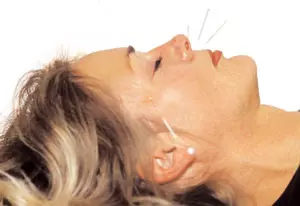 Akupunktur (Foto: Dr. Jerzy Dyczynski)
